Starlink Mini & Roam 2026: Updated Plans, New Prices, and What Tesla Owners Should Do Right Now
30-Second Brief
The News: Starlink is actively promoting its Mini and Roam service plans as the go-to mobile connectivity solution for travelers, backed by significant price drops and upgraded data allowances rolling out in early 2026.
Why It Matters: If you use your Tesla for road trips, overlanding, or remote work on the road, Starlink Mini + Roam is now cheaper and more capable than ever — and it pairs directly with your car's power system.

Starlink just pushed its Mini and Roam plans back into the spotlight — and for good reason. A wave of pricing and data changes in early 2026 has made satellite internet more accessible for mobile users than at any point since launch. Whether you're a Tesla owner who lives out of their car on weekends or a digital nomad who needs a reliable connection far from any cell tower, the current Starlink lineup deserves a serious look.
📊 What Changed
| Item | Before | Now (2026) |
|---|---|---|
| Starlink Mini Hardware Price (U.S.) | $599 (launch, June 2024) → $249 | $199 — lowest ever |
| Roam 100GB Plan — Data Cap | 50GB high-speed | 100GB high-speed at same $50/mo price |
| Roam 100GB — After Cap | Throttled; extra data purchasable | Unlimited low-speed (<1 Mbps); no add-on option |
| Roam Unlimited Plan Price | Varied | $165/month |
| Regional Roam (same continent) | — | $150/month |
| Global Roam (all continents) | — | $200/month |
| International Trip Duration Limit | Unclear | Up to 2 months per trip |
| In-Motion Speed Support | Limited | Up to 100 MPH |
| Country Coverage | 130+ | 150+ countries and territories |
📡 Starlink Mini — Key Specs at a Glance
- Size & Weight: ~11.75" × 10.2", 2.56 lbs — fits in a backpack
- Download Speeds: 50–250 Mbps (real-world tests: 177–230 Mbps)
- Upload Speeds: 8–30 Mbps
- Latency: 25–45 ms
- Power Draw: 20–40W average; ~15W idle
- Power Bank Compatible: 4–6 hours on a 100W USB-C bank (with DC adapter)
- Durability: IP67 rated; operates from -22°F to 122°F
- Wi-Fi: Built-in dual-band Wi-Fi 5 router — no separate hardware needed
🚦 Owner's Action Plan
Follow these steps based on how you use your Tesla.
⚠️ Known Limitations to Factor In
- No extra high-speed data on Roam 100GB: The old ability to purchase additional high-speed GB has been removed. Once you hit 100GB, you're on unlimited low-speed (<1 Mbps) for the rest of the billing period. Heavy video streamers or remote workers should move to Roam Unlimited instead.
- International trips capped at 2 months: Roam plans limit continuous international use to two months per trip. Extended international travel requires re-evaluation of your plan or using Global Priority tiers (from $250/month for 50GB).
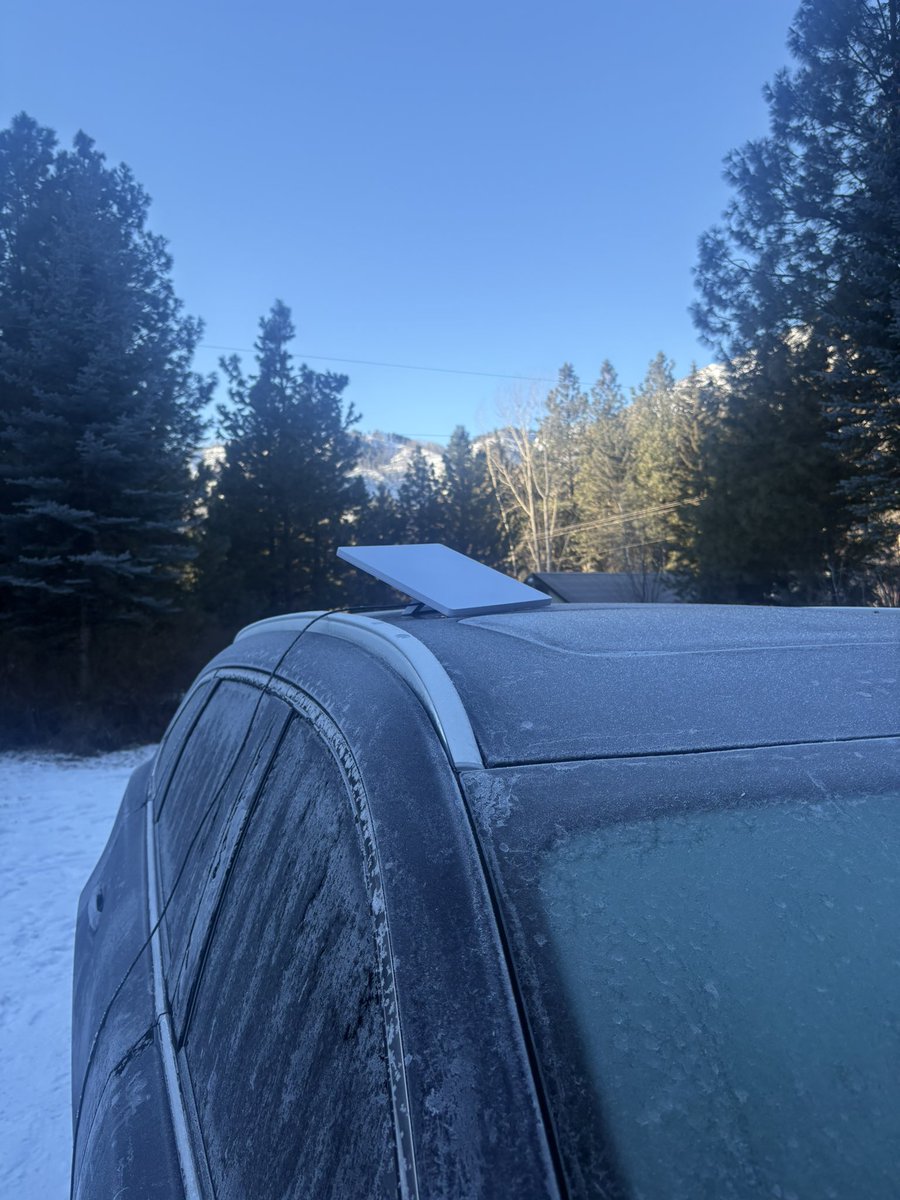
- No motorized mount: Unlike the standard Starlink dish, the Mini requires manual pointing. In dense forests or canyons, coverage gaps are more likely.
- Speed deprioritization on Roam Unlimited: During peak hours in congested areas, Roam Unlimited speeds may be throttled in favor of Residential subscribers.
📰 Deep Dive
The timing of Starlink's Mini and Roam push is no accident. According to a February 2026 survey cited by SatNews, mobile Starlink use is shifting decisively from leisure to professional — meaning the customer buying a Roam plan today is increasingly someone who needs it to work, not just to stream Netflix at a campsite. Starlink's aggressive pricing response to that trend is clear: the Mini hardware has shed 67% of its original launch price in under two years, while the Roam 100GB plan's data allowance doubled at no extra cost.
The looming V3 satellite rollout — expected in the first half of 2026, with each Starship launch adding an estimated 60 Tbps of network capacity — suggests current congestion and speed deprioritization issues will ease considerably over the next 12 months. Starlink is also targeting production of over 16 million kits annually in 2026, meaning hardware availability should no longer be an invitation-only affair as it was at the Mini's June 2024 U.S. debut.
For Tesla owners specifically, the Mini's physical profile is a practical fit. At 2.56 lbs and roughly the footprint of a large tablet, it slides into a Model Y frunk or Cybertruck bed without drama. The 20–40W power draw is trivial for a vehicle with a 75+ kWh battery. The real consideration is satellite visibility: highway driving at legal speeds (well under the 100 MPH in-motion limit) keeps the dish connected, but winding mountain roads with heavy tree cover will interrupt the signal just as they interrupt cellular service. Plan your workflow accordingly.
Starlink is also cutting subscription costs internationally — reports indicate reductions of 15–40% in multiple markets in early 2026. If you're a Tesla owner living outside the U.S. or planning extended international trips, it's worth re-checking regional pricing directly on Starlink's site, as your local cost may have dropped since you last looked.
Related Gear
Gear up your Tesla with tested, custom-fit BASENOR accessories — shop Tesla accessories →
Sources & reporting notes
The links below identify the material source records used for this report.
- @Starlink on X (2026-02-24T22:47:52.000Z) — Direct source
Source links are preserved as published or accessed. See our editorial standards and corrections policy.
The BASENOR Editorial Desk covers Tesla, SpaceX, and related technology, curating reporting from primary sources — official accounts, regulatory filings, and software release data. Every article passes source-record and fact-checking review before publication. About the newsroom.
This report was curated by the BASENOR Editorial Desk from the sources listed above. Read our editorial standards or email editorial@basenor.com to report an error.