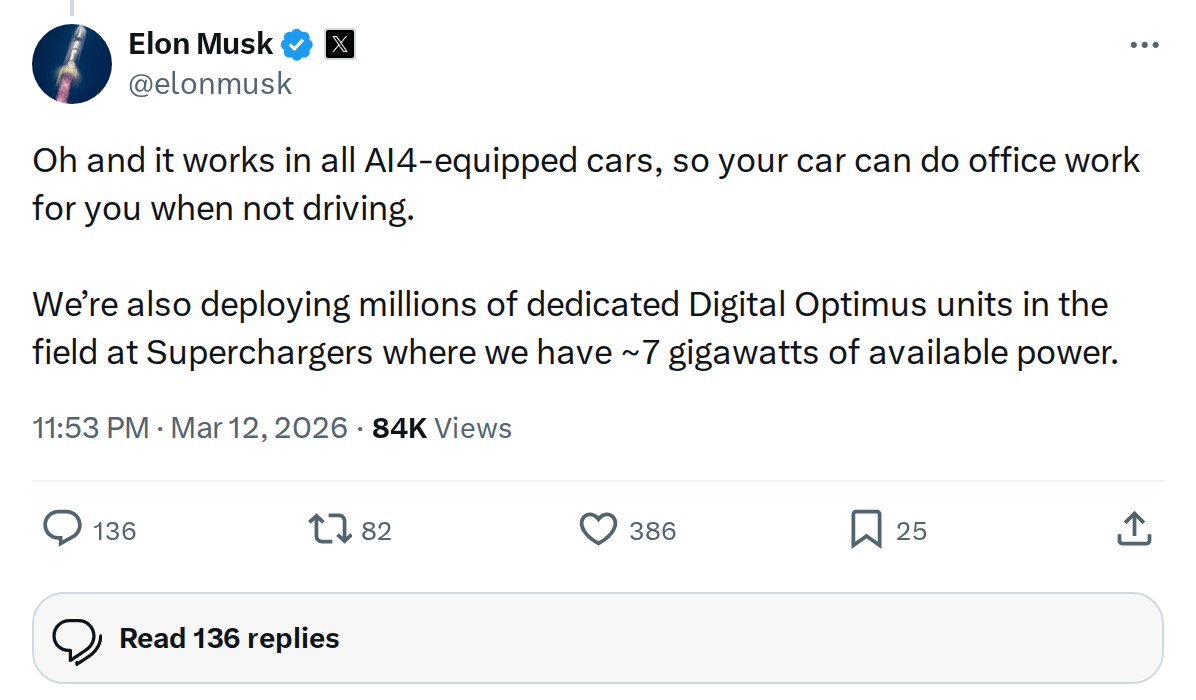
The News: Elon Musk confirmed that all AI4-equipped Tesla vehicles will be able to perform 'office work' when not driving, as part of the broader Tesla/xAI 'Digital Optimus' initiative.
Why It Matters: Your parked Tesla could soon become an active AI compute node — earning its keep even when you're not behind the wheel.
Source: @elonmusk on X
Tesla AI4-Equipped Cars Are Getting 'Office Work' Capabilities — Here's What That Actually Means
In a single tweet, Elon Musk just reframed what your parked Tesla is capable of. As part of a broader announcement around Tesla and xAI's joint 'Digital Optimus' initiative, Musk confirmed that every AI4-equipped Tesla will gain the ability to perform 'office work' — complex AI compute tasks — when the vehicle isn't being driven. This isn't a vague future promise. Deployment is already underway.

📊 Key Figures
| Metric | Value | Context |
|---|---|---|
| Digital Optimus units deploying | Millions | At Supercharger locations |
| Available power at Superchargers | ~7 GW | Grid-scale AI compute capacity |
| Hardware required | AI4 chip | All AI4-equipped Tesla models |
What Is 'Office Work' for a Tesla?
The phrase 'office work' is Musk's shorthand for AI inference and compute tasks — the kind of processing that powers large language models, data analysis pipelines, and AI agent workflows. When your Tesla is parked and plugged in (or simply idle), its AI4 hardware — the same chip architecture that enables Full Self-Driving — can be directed to run these workloads remotely.
Think of it as your car moonlighting as a data center node. The AI4 chip is a serious piece of silicon, and the vast majority of AI4-equipped Teslas spend the bulk of their lives sitting still. Tesla is now putting that dormant compute to work.
According to background reporting on the initiative, this project — sometimes referred to internally as 'Macrohard' or 'Digital Optimus' — is a joint effort between Tesla and xAI, Musk's AI company. The goal is to build a distributed compute network that spans both dedicated hardware units deployed at Supercharger stations and the existing fleet of AI4 vehicles already in owners' driveways.
The Supercharger Angle Is Just as Big
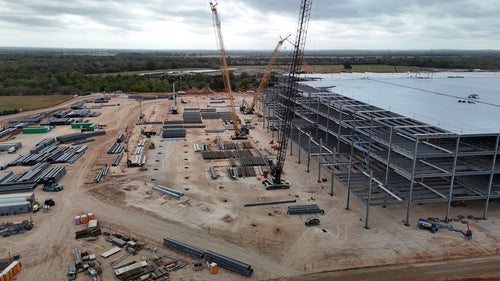
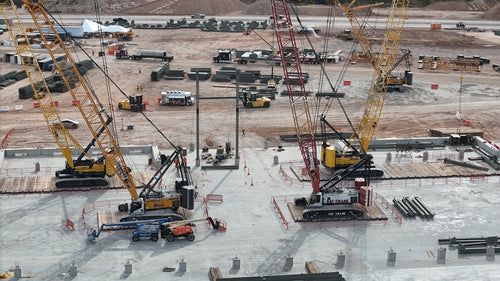
The second half of Musk's tweet is easy to overlook, but it shouldn't be. Tesla is deploying millions of dedicated Digital Optimus units at Supercharger locations, backed by approximately 7 gigawatts of available power across the network. That's a staggering amount of compute infrastructure, and it's being built on top of Tesla's existing charging footprint — one of the largest private power distribution networks in the world.
This means Supercharger stations aren't just becoming charging hubs — they're becoming AI compute hubs. The power infrastructure was already there. Tesla is now layering intelligence on top of it.
🔭 The BASENOR Take
Timeline: Deployment is described as actively underway as of March 2026.
Impact Level: 🔴 High — This changes the value proposition of owning an AI4-equipped Tesla.
Confidence: High — Direct confirmation from Elon Musk; corroborated by multiple reporting outlets.
Analysis: Tesla has always sold its vehicles as appreciating assets — cars that get better over time through software. This is the next logical step: cars that generate value when parked. The open question is how this affects owners practically. Will there be opt-in/opt-out controls? Will owners receive compensation for compute time? What are the battery and thermal implications for vehicles that aren't plugged in? Musk's tweet doesn't answer these, but the fact that deployment is already happening at Superchargers — where power is abundant and vehicles are typically plugged in — suggests Tesla is starting where the infrastructure makes the most sense. Expect a formal product announcement with owner-facing details to follow.
Which Teslas Have AI4?
AI4 hardware is Tesla's latest generation of onboard AI compute. If you've taken delivery of a recent Model 3, Model Y, Model S, Model X, or Cybertruck, there's a reasonable chance your vehicle is AI4-equipped — but the exact rollout timeline varies by market and trim. The clearest way to check is via your vehicle's Software > Additional Vehicle Information screen in the Tesla app or touchscreen, which will list your Autopilot computer generation.
Owners of older vehicles with HW3 (AI3) hardware are not included in this announcement. This gives AI4 a meaningful differentiator beyond just FSD performance — your car's hardware now has a second job.
📰 Deep Dive
The strategic logic here is straightforward once you see it. Tesla has spent years building two things simultaneously: a massive global charging network and a fleet of vehicles packed with cutting-edge AI silicon. Until now, those two assets operated independently. Digital Optimus is the bridge — it turns the charging network into a power backbone for distributed AI compute, and turns the parked fleet into the compute nodes themselves.
For xAI specifically, this is a significant infrastructure play. Training and running large AI models requires enormous amounts of compute, and that compute is expensive and scarce. A distributed network of millions of AI4-equipped vehicles, each contributing processing power during idle hours, represents a novel approach to scaling AI infrastructure without building dedicated data centers from scratch. The ~7 gigawatts of power already available at Supercharger locations gives this network a physical foundation that would take years and billions of dollars to replicate independently.
For Tesla owners, the near-term impact is likely minimal and mostly invisible — your car will handle these tasks in the background without affecting your driving experience. The longer-term implications are more interesting. If Tesla structures this as an owner participation program (similar to how some crypto networks reward node operators), AI4 vehicles could become genuinely income-generating assets. That's speculative for now, but it's the direction this architecture points toward. Watch for a formal product announcement that addresses the owner-facing mechanics of how this actually works in practice.
🤖 Tracking Tesla's humanoid robot? See every Optimus production milestone and appearance in our Tesla Optimus Tracker.
Related Gear
Gear up your Tesla with tested, custom-fit BASENOR accessories — shop Tesla accessories →
Sources & reporting notes
The links below identify the material source records used for this report.
- @elonmusk on X (2026-03-12T15:53:01.000Z) — Direct source
Source links are preserved as published or accessed. See our editorial standards and corrections policy.
The BASENOR Editorial Desk covers Tesla, SpaceX, and related technology, curating reporting from primary sources — official accounts, regulatory filings, and software release data. Every article passes source-record and fact-checking review before publication. About the newsroom.
This report was curated by the BASENOR Editorial Desk from the sources listed above. Read our editorial standards or email editorial@basenor.com to report an error.