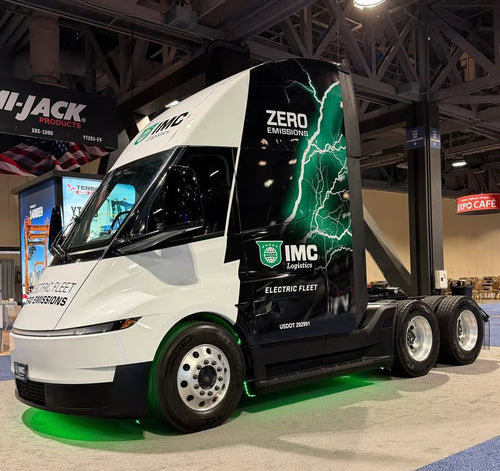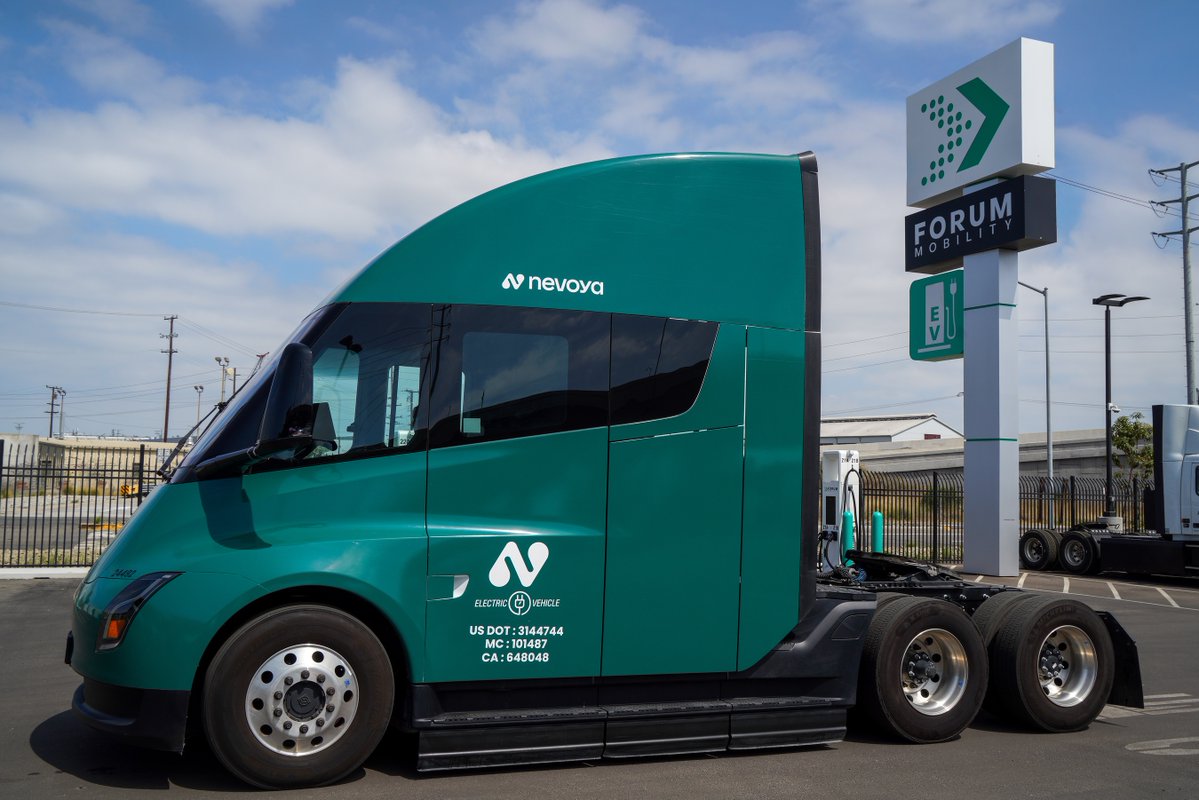
Tesla's electric-trucking rollout took a concrete step forward this week. The company has partnered with California-based Forum Mobility to operate public Megacharging sites at three new zero-emission truck depots across the state, adding 30 megawatts of heavy-vehicle charging capacity. As part of the same deal, Forum Mobility has contracted for more than 330 Tesla Semis — one of the largest disclosed fleet orders for the Class 8 truck to date.
The news was surfaced by Tesla investor Sawyer Merritt on Wednesday, and follows Forum Mobility's earlier deployment of two Tesla Megachargers at its FM Harbor site at the Port of Long Beach, which began operating in December 2024.

The Three New Depot Sites
According to details published alongside the announcement and corroborated by industry reporting, the three new depots span Southern and Northern California:
- FM Francis — Ontario, in the Inland Empire logistics corridor
- FM Adeline — Oakland, serving the Port of Oakland drayage market
- FM Coliseum — Oakland, adjacent to the Coliseum industrial zone
Each depot will run a mixed-standard architecture, combining Tesla's Megawatt Charging System (MCS) with conventional CCS ports. That dual-standard approach matters: it lets Forum Mobility serve Tesla Semi fleets at MCS rates while still supporting non-Tesla Class 8 electric trucks from other OEMs on CCS — a practical hedge for a depot operator whose customers use multiple brands.
The stalls are also being built with pull-through lanes, so drivers don't need to uncouple trailers to plug in. Per specs published by Forum Mobility, MCS chargers on site can deliver roughly a 60% range top-up in about 30 minutes on a Semi.
Key Figures
| Metric | Value |
|---|---|
| New Megacharging capacity | 30 MW across 3 depots |
| New depot locations | Ontario, Oakland (×2) |
| Tesla Semis contracted by Forum Mobility | 330+ |
| Total Forum Mobility charging capacity (operational + under construction) | 40+ MW |
| Existing site (FM Harbor, Long Beach) | 9 MW, 2 MCS + 44 CCS, live since Dec 2024 |
| Carrier customers under contract | 25 |
How We Got Here
Forum Mobility launched in 2022 with a narrow bet: California's Advanced Clean Fleets rule would force drayage operators — the trucks that shuttle containers between ports and inland warehouses — to electrify faster than any other Class 8 segment. Rather than sell trucks or chargers, Forum Mobility built charging-as-a-service depots and signed carriers to multi-year contracts.
The Port of Long Beach site went live in December 2024 with two Tesla Megachargers and 44 CCS stalls, according to Forum Mobility's public announcements. Fleet reservations for the Tesla Semi grew from there, and the 330+ figure disclosed this week is a significant escalation. The bulk of those Semis will be based at Forum Mobility's FM Santa Fe site in Rancho Dominguez, which will also serve other commercial carriers on a public-access basis.
For Tesla, this is one of the clearer signals yet that the Semi's commercial ramp is finally moving from anchor customers like PepsiCo to a broader third-party fleet base. It also gives Tesla something the Semi program has needed for years: real public MCS infrastructure that isn't tied to a single operator's private yard.
Why It Matters for the Tesla Semi Ramp
The Semi has been production-constrained, not demand-constrained, and the piece of the puzzle that's held back external orders is charging. Class 8 electric trucks need dedicated megawatt-class infrastructure — Superchargers won't do it — and until now, most Tesla Semi deployments have relied on private depot chargers at customer facilities.
Public Megacharging changes the economics. A carrier can now sign with Forum Mobility, run Tesla Semis on drayage routes between the Ports of Long Beach, Los Angeles, and Oakland, and charge at a shared depot without building their own electrical service upgrade — a process that can otherwise take 18 to 36 months for utility interconnection. That lowers the barrier for smaller carriers who couldn't justify the capex of a private site.
The 30 MW figure is also meaningful in context. Utility interconnections at that scale typically require substation coordination, and the fact that Forum Mobility is bringing three sites online — with partial funding from California and local agency grants, per the company — suggests the grid-side work is well past the planning stage.
What to Watch Next
Forum Mobility has publicly outlined expansion beyond California into the Inland Empire, Central Valley, and out-of-state markets including Las Vegas, Phoenix, Houston, Dallas, Seattle/Tacoma, and Chicago. Whether Tesla Megachargers travel with them to those markets — or whether the future depots go CCS-heavy — will be the next signal on how deep the Tesla-Forum Mobility partnership runs.
The other open question is delivery cadence. Forum Mobility now has reservations for 330+ Semis, but Tesla's Nevada Semi factory is still ramping toward volume production. How quickly those trucks actually arrive at FM Santa Fe will determine whether the charging capacity coming online in 2026 has trucks to plug in — or whether the chargers sit ahead of the fleet for a while.
Related Gear
Gear up your Tesla with tested, custom-fit BASENOR accessories — shop Tesla accessories →
Sources & reporting notes
The links below identify the material source records used for this report.
- @SawyerMerritt on X (2026-09-17T14:04:01.000Z) — Direct source
Source links are preserved as published or accessed. See our editorial standards and corrections policy.
The BASENOR Editorial Desk covers Tesla, SpaceX, and related technology, curating reporting from primary sources — official accounts, regulatory filings, and software release data. Every article passes source-record and fact-checking review before publication. About the newsroom.
This report was curated by the BASENOR Editorial Desk from the sources listed above. Read our editorial standards or email editorial@basenor.com to report an error.