The News: Tesla is targeting a $25,000 price point for the Cybercab — the first vehicle built using its new unboxed manufacturing process — and it will operate as an autonomy-only vehicle with no steering wheel or pedals.
Why It Matters: If Tesla can deliver a capable autonomous EV at $25,000, it could do to robotaxis what the Model 3 did to premium EVs — make them mainstream. That reshapes the entire personal transportation market.
Source: @wholemars on X
The $25,000 Number Is the Whole Story
When Whole Mars Catalog — one of the most plugged-in Tesla observers on X — calls the Cybercab's price point the most important thing about the vehicle, it's worth paying attention. The $25,000 figure isn't just a marketing number. It's a strategic signal about what Tesla is building and who it's building it for.

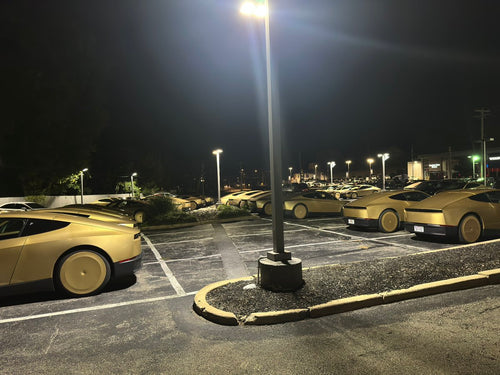
Elon Musk confirmed the ~$25,000 target during Tesla's Q3 2024 earnings call, refining an earlier "under $30,000" figure from the Cybercab's unveiling. Volume production is planned to begin in 2026 at Giga Texas, and the first Cybercab reportedly rolled off the line in February 2026. The vehicle will have no steering wheel, no pedals — autonomy isn't optional, it is the product.
The Model 3 Playbook, Applied to Autonomy

The comparison to the Model 3 and Model Y is apt — and deliberate. When Tesla launched the Model 3, it took a product category that had been synonymous with six-figure luxury and priced it below the average new car transaction price in the US. The result was the best-selling EV in history. The Model 3 and Y together didn't just grow Tesla's market share; they redefined what mass-market electric vehicles looked like.
The Cybercab is attempting the same move, one category up. Autonomous vehicles have, until now, been associated with expensive sensor-laden prototypes operated by well-funded tech companies in limited geofenced zones. A $25,000 autonomous EV from the world's most experienced electric vehicle manufacturer is a categorically different proposition.
How the Unboxed Process Makes $25,000 Possible
The price target isn't achievable through conventional automotive manufacturing. That's where Tesla's "Unboxed Manufacturing Process" — also internally referred to as Global Automotive Modular Evolution (GAME) — becomes the critical enabler. First unveiled at Tesla's Investor Day in 2023 and patented since, this approach fundamentally reimagines how a car gets built.
Traditional automotive assembly is linear: a body-in-white moves down a single production line, with components added sequentially. The unboxed process breaks the vehicle into independent modules — front section, rear section, battery pack, floor — that are built simultaneously in parallel cells. Those modules are then joined in a final assembly stage.
⚙️ Unboxed Process: Key Advantages
| Feature | Traditional Process | Unboxed Process |
|---|---|---|
| Assembly flow | Linear, sequential | Parallel modular cells |
| Joining method | Welding | High-strength industrial adhesives |
| Paint application | Full-body paint shop required | Parts painted before final assembly |
| Alignment | Manual calibration | Automated cells with precision mechanisms |
| Scale target | Varies | Up to 2 million robotaxis/year |
Eliminating full-body paint shops alone is a significant cost reduction — paint shops are among the most capital-intensive elements of any auto plant. Replacing welding with engineered adhesives reduces tooling complexity. Building modules in parallel compresses total production time. Each of these changes individually would be incremental; together, they're what makes a $25,000 autonomous vehicle financially viable at scale.
📊 Key Figures
| Metric | Value | Context |
|---|---|---|
| Target price | ~$25,000 | Below avg. new car price in US |
| First unit off line | Feb 2026 | Giga Texas |
| Volume production start | 2026 | Reports suggest April 2026 |
| Long-term production target | 2M units/year | Enabled by unboxed process |
| Unboxed process unveiled | 2023 | Tesla Investor Day |
🔭 The BASENOR Take
Timeline: Volume production reportedly targeting 2026 at Giga Texas, with first units already confirmed off the line in February 2026.
Impact Level: 🔴 High — This is a potential category-defining product, not an incremental update.
Confidence: ⭐⭐⭐⭐ — Price confirmed by Musk on earnings call; manufacturing process is patented and publicly documented. Production timeline carries the most uncertainty.
📰 Deep Dive
The framing from @wholemars is worth sitting with: the first most important thing about the Cybercab is its price. Not its autonomy, not its design, not its technology stack — its price. That's a deliberate hierarchy. Autonomous vehicles have existed in various forms for years. What hasn't existed is an autonomous vehicle that a broad swath of American consumers could realistically purchase. At $25,000, the Cybercab would undercut the average new car transaction price in the United States, which has hovered above $47,000 in recent years. That's not a small gap.
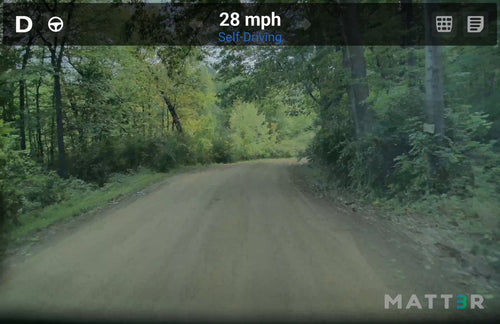
The autonomy-only constraint — no steering wheel, no pedals — is both a limitation and a statement of intent. It limits the initial addressable market to buyers who are comfortable fully ceding control to the vehicle's software. But it also means Tesla isn't hedging. Every design and engineering decision in the Cybercab is optimized for autonomous operation, not retrofitted around it. That's a fundamentally different product philosophy than adding driver-assist features to a conventional car.
The unboxed manufacturing process is the piece that makes the business model coherent. Tesla's 2M units/year production ambition for robotaxis is an extraordinary number — for context, the entire US light vehicle market is roughly 15-16 million units annually. Hitting that target requires a manufacturing process that scales faster and cheaper than anything the traditional auto industry has deployed. Whether the unboxed process can deliver at that scale remains the central open question. The Cybercab's early production units will be the first real-world test of the technology's viability, and the industry will be watching closely.
For current Tesla owners, the Cybercab's trajectory matters even if you never intend to buy one. The unboxed process, if successful, will almost certainly migrate to future mainstream Tesla models. The cost efficiencies that make a $25,000 robotaxi possible are the same efficiencies that could eventually make a $25,000 conventional Tesla possible — something the company has been working toward for years. The Cybercab isn't just a new product; it's a manufacturing proof of concept with implications across the entire Tesla lineup. For more on Tesla's self-driving ambitions, see our FSD coverage.
🚕 Following the Robotaxi rollout? See every operating city, launch date and announced market in our Tesla Robotaxi Tracker.
Related Gear
Gear up your Tesla with tested, custom-fit BASENOR accessories — shop Tesla accessories →
Sources & reporting notes
The links below identify the material source records used for this report.
- @wholemars on X (2026-03-14T01:50:41.000Z) — Direct source
- @wholemars on X (2026-03-14T01:26:05.000Z) — Direct source
Source links are preserved as published or accessed. See our editorial standards and corrections policy.
The BASENOR Editorial Desk covers Tesla, SpaceX, and related technology, curating reporting from primary sources — official accounts, regulatory filings, and software release data. Every article passes source-record and fact-checking review before publication. About the newsroom.
This report was curated by the BASENOR Editorial Desk from the sources listed above. Read our editorial standards or email editorial@basenor.com to report an error.