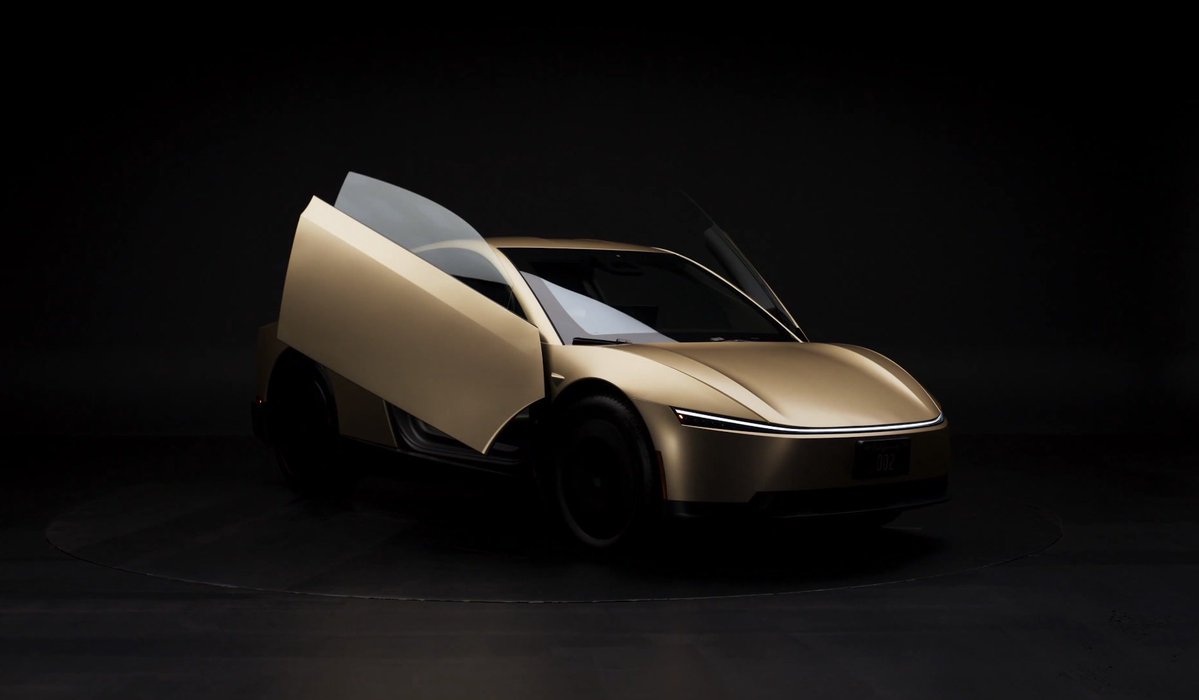
Tesla's VP of AI, Ashok Elluswamy, has signaled that the Cybercab — the company's purpose-built, fully autonomous two-passenger vehicle — will 'soon' join the active robotaxi fleet operating in Austin, Texas. The statement marks the first direct executive confirmation that Cybercab deployment in a live commercial environment is imminent, moving the program from production milestone to real-world service.

Where the Program Stands
Tesla's robotaxi operation in Austin has been running since June 22, 2025, initially using Model Y vehicles. Unsupervised operations — meaning no safety driver onboard — began in January 2026, with the service subsequently expanding to Dallas and Houston by April 2026. According to available data from May 2026, the active unsupervised fleet currently sits at approximately 20 vehicles: 14 in Austin, 3 in Dallas, and 3 in Houston. That figure is down from a peak reached in late March and early April, suggesting Tesla has been managing the fleet size carefully rather than scaling indiscriminately.
On the hardware side, Cybercab production is no longer a question mark. The first unit rolled off the line at Gigafactory Texas on February 17, 2026, and Tesla confirmed official start of production on April 24, 2026, targeting hundreds of units per week. The vehicle is purpose-built for this exact use case: no steering wheel, no pedals, two-passenger capacity, Hardware 5 (AI5) platform with a vision-only sensor suite, and wireless inductive charging as the primary energy source.
What Makes the Cybercab Different from the Model Y Fleet
The Model Y robotaxis currently operating in Austin are retrofitted consumer vehicles — they were designed with a driver in mind and adapted for autonomous service. The Cybercab is the opposite: every design decision was made around driverless operation from the ground up. With roughly 80 structural parts (compared to hundreds in a conventional vehicle), it's engineered for lower manufacturing cost and simpler maintenance at fleet scale. The approximately 60 kWh battery pack targets around 300 miles of range, and the wireless charging capability means vehicles can top up without any physical connection — a meaningful operational advantage for a commercial fleet that needs to minimize downtime.
The AI5 platform running the Cybercab also represents a generational step beyond the Hardware 3 and Hardware 4 systems in existing fleet vehicles, giving Tesla's autonomy stack more computational headroom as FSD continues to evolve.
The FSD V15 Dependency
Elluswamy's 'soon' is encouraging, but the broader scaling picture has a known dependency. Elon Musk indicated in April 2026 that aggressive fleet expansion is tied to the release of FSD V15. Until that version is ready and validated, the pace of growth — both for the Model Y fleet and the incoming Cybercab units — is likely to remain measured. That puts aggressive scaling on a timeline of late 2026 to early 2027 at the earliest, according to previous statements.
What Elluswamy's comment does confirm is that Cybercab units are operationally ready to enter service in Austin, and that the transition from production line to paying passengers is no longer a matter of 'if' but 'when.' For an autonomous vehicle program that launched commercially less than a year ago and has already logged enough miles to be reported as approximately 1.8 times safer than human drivers in Austin, adding a purpose-built platform to the mix is a significant next step. The real test will be how quickly Tesla can scale Cybercab volume once the first units prove out in live conditions.

Marcus covers Tesla's software releases, FSD rollouts, and OTA changes. Background in automotive engineering. Based in Austin.
Sources verified at publish time. Spotted an inaccuracy? Email editorial@basenor.com.