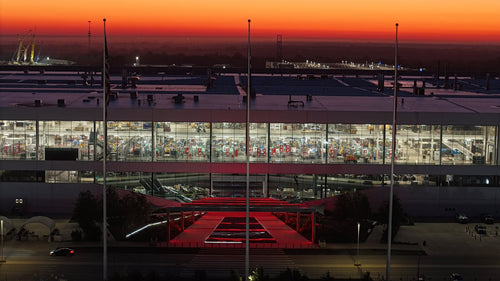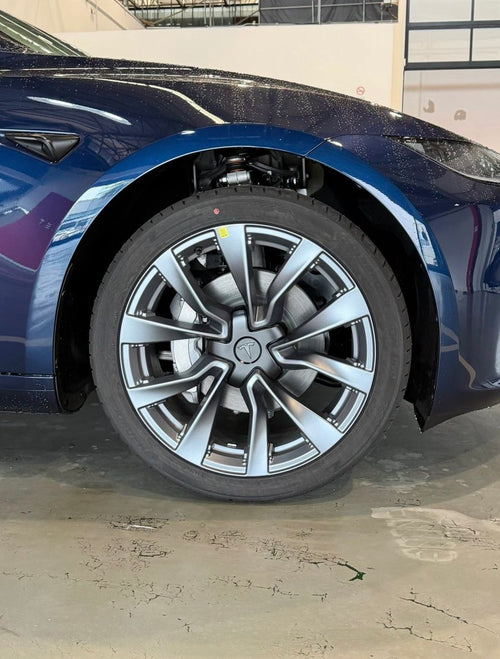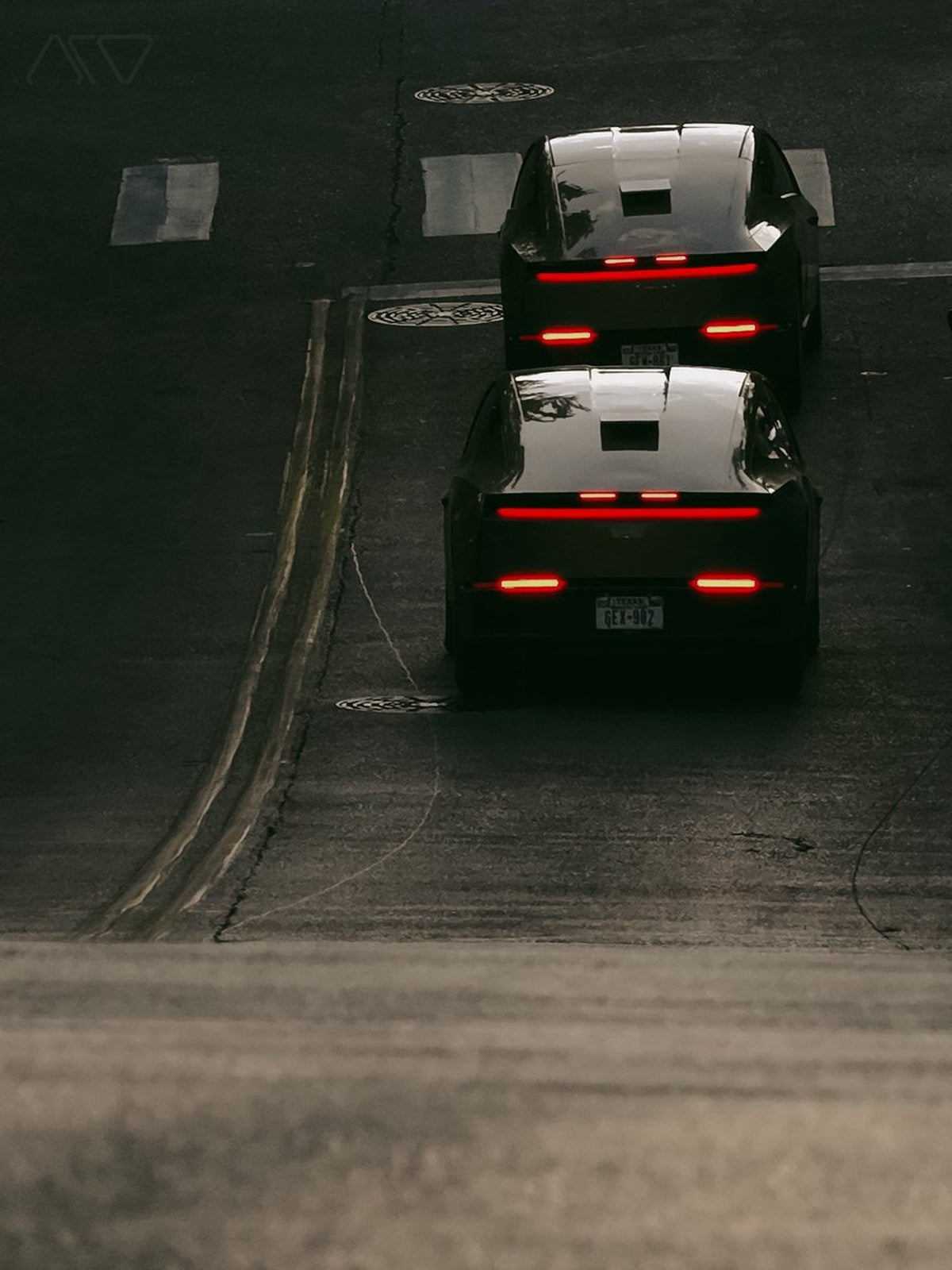
New photos circulating on X show a Tesla Cybercab prototype with a Starlink Mini satellite antenna mounted directly on its trunk lid — the first time Tesla and SpaceX hardware have been publicly photographed together on a production-bound test vehicle. The sighting raises real questions about how Tesla plans to keep its robotaxi fleet connected, and whether satellite internet could become a standard feature rather than a testing tool.

What exactly was spotted on the Cybercab?
A Starlink Mini antenna — SpaceX's compact, portable satellite dish — mounted on the trunk lid of a Tesla Cybercab prototype. The Starlink Mini measures roughly 298 x 259 x 38.5 mm and weighs about 1.1 kg, making it small enough to sit flush on a vehicle's body without dramatically altering its profile. Multiple photos from different angles confirm the antenna is physically attached, not just resting on the surface.
Why would a Cybercab need satellite internet?
The short answer: cellular coverage isn't everywhere, and a robotaxi can't afford to go dark. A Starlink Mini connection — capable of download speeds up to 100 Mbps — would give the Cybercab a high-bandwidth fallback independent of local cell towers. That matters for three things specifically: real-time fleet telemetry (the operations center needs to know what every vehicle is doing), over-the-air software updates (you can't push a critical FSD patch if the car has no signal), and potentially a redundant data link for the autonomous driving system itself. A Tesla patent filing published in December 2025 (Pub. No. U.S. 2025/0368267) explicitly referenced Starlink integration for "uninterrupted connectivity" and "remote monitoring for Robotaxi" to enhance fleet management.
Is this confirmed as a production feature, or just a test rig?
Unknown — and that distinction matters enormously. Test vehicles routinely carry external hardware that never makes it to production. The Starlink Mini could be bolted on purely to simulate high-bandwidth connectivity during development, with the intention of switching to an integrated internal antenna (or a different solution entirely) before consumer delivery. Tesla has not issued any official statement on the spotted hardware. What we do know is that volume production of the Cybercab began at Gigafactory Texas in April 2026, and over 500 units are reportedly active in testing environments — so these are not early mules. The presence of Starlink Mini on trunk-mounted brackets at this stage of testing is notable.
Could Starlink Mini actually ship on production Cybercabs?
It's technically plausible but commercially complicated. The Starlink Mini hardware itself starts at $199, and the service plan adds ongoing cost — neither of which fits cleanly into a robotaxi fleet economics model where Tesla, not the passenger, controls the subscription. A more likely production path would be an integrated internal antenna that connects to Starlink's network without the external puck. That said, SpaceX has been aggressively expanding Starlink's direct-to-device and mobility tiers, and a fleet agreement between Tesla and SpaceX — two companies that share an owner — would be a straightforward business arrangement. The patent filing suggests the engineering teams have at least been thinking seriously about it.
What are the Starlink Mini's practical specs for a moving vehicle?
The Mini is rated IP67 — dust-tight and protected against short water immersion — which means it can handle rain and road conditions. It draws 25–40W on average, a negligible load for a 48 kWh battery pack. Wi-Fi 5 connectivity handles the local link between the antenna and the vehicle's internal systems. The bigger question for a moving vehicle is latency and handoff between satellites, but Starlink's low-Earth orbit constellation has demonstrated consistently low latency in mobile deployments, including on moving trains and aircraft.
What should Cybercab reservation holders take from this?
Don't read too much into the hardware choice — trunk-mounted Starlink Mini is almost certainly a testing convenience, not the final form factor. What the sighting does confirm is that Tesla is actively engineering satellite connectivity into the Cybercab's operational stack, not treating it as an afterthought. If that work matures into a production feature — whether integrated or external — it would meaningfully differentiate the Cybercab from any robotaxi competitor dependent solely on cellular. That's worth watching as production ramps and Tesla begins disclosing more about how its fleet management infrastructure actually works.
🚕 Following the Robotaxi rollout? See every operating city, launch date and announced market in our Tesla Robotaxi Tracker.
Related Gear
Gear up your Tesla with tested, custom-fit BASENOR accessories — shop Tesla accessories →
Sources & reporting notes
The links below identify the material source records used for this report.
- @TeslaNewswire on X (2026-07-10T04:54:08.000Z) — Direct source
Source links are preserved as published or accessed. See our editorial standards and corrections policy.
The BASENOR Editorial Desk covers Tesla, SpaceX, and related technology, curating reporting from primary sources — official accounts, regulatory filings, and software release data. Every article passes source-record and fact-checking review before publication. About the newsroom.
This report was curated by the BASENOR Editorial Desk from the sources listed above. Read our editorial standards or email editorial@basenor.com to report an error.