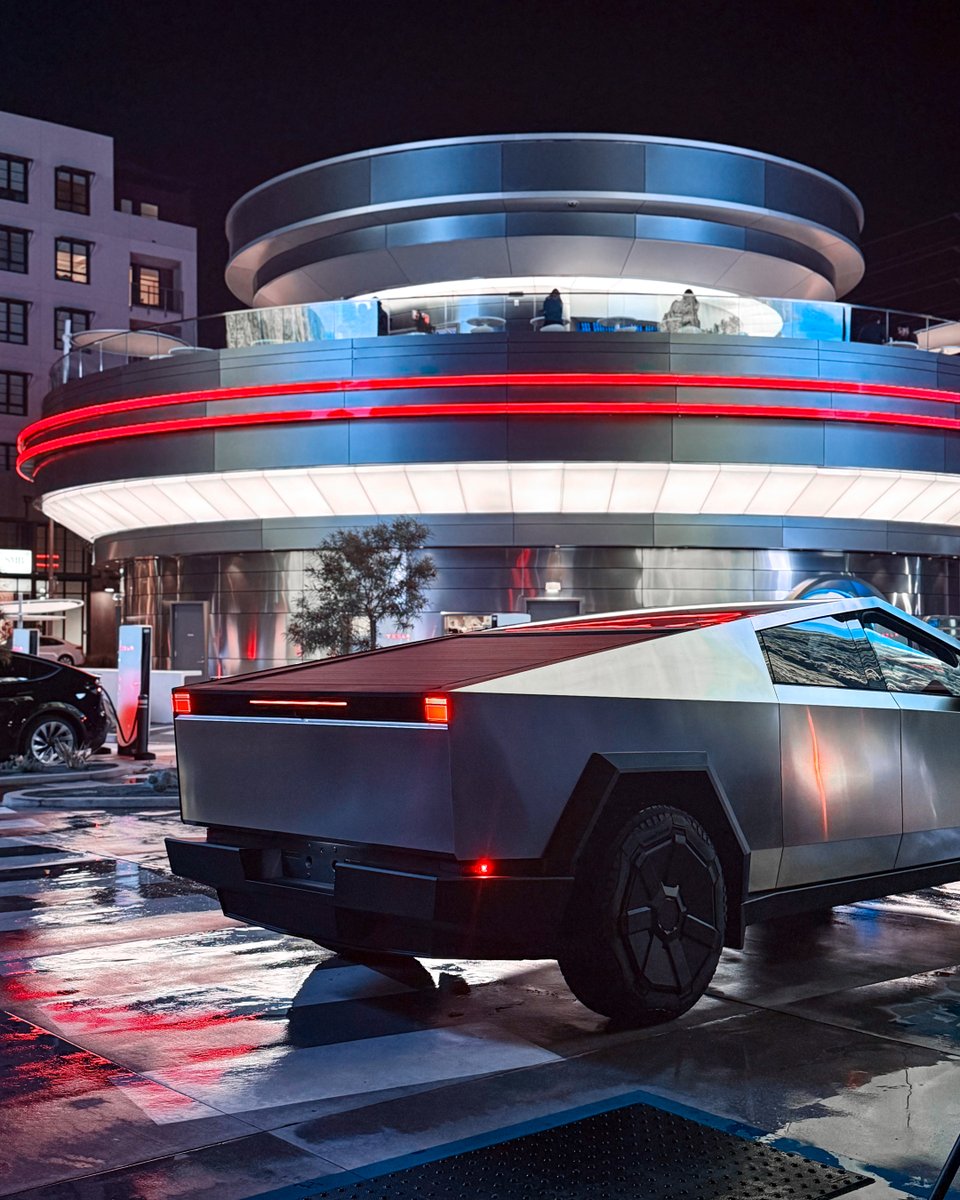
The News: Tesla has confirmed the iconic Tesla Diner and Drive-In in Hollywood, Los Angeles, is constructed using recycled stainless steel panels sourced directly from Cybertruck production.
Why It Matters: This reveals a genuine 'circular' manufacturing loop inside the Tesla ecosystem — surplus Cybertruck steel doesn't go to waste, it becomes the skin of one of the most talked-about Tesla venues in the world.
Source: @tesla_na on X
Tesla Diner Built From Recycled Cybertruck Steel: The Full Story
When you pull up to the Tesla Diner and Drive-In at 7001 Santa Monica Boulevard in Hollywood, the gleaming stainless steel exterior isn't just a design choice — it's a second life. Tesla has officially confirmed that the diner's cladding is made from recycled stainless steel panels left over from Cybertruck manufacturing, a detail that reframes the entire venue as something far more significant than a branded burger joint.

📊 Key Figures
| Metric | Detail | Context |
|---|---|---|
| Location | 7001 Santa Monica Blvd, Hollywood, CA | Two-story structure, opened July 21, 2025 |
| Supercharger Stalls | 80 V4 Superchargers | One of the largest single Supercharger locations in the US |
| LED Screens | Two screens (up to 66 ft) | Drive-in film and curated content |
| Steel Origin | Steel Dynamics Inc., Sinton, Texas | Same alloy used in Cybertruck and SpaceX Starship |
| Original Concept | Announced by Elon Musk in 2018 | Construction began 2023; opened July 2025 |
| Operating Hours | 24/7 | No cash accepted; alcohol not currently served |
The Steel That Binds Cybertruck, Starship, and Now Your Lunch
The stainless steel used across Tesla and SpaceX's most ambitious hardware projects isn't your standard industrial alloy. According to Tesla Chief Designer Franz von Holzhausen, the same ultra-hard, corrosion-resistant steel that forms the Cybertruck's exoskeleton — sourced from Steel Dynamics Inc. in Sinton, Texas and put through a third-party refining process — is also the material that clads SpaceX's Starship rocket.
Now, panels that were produced as part of the Cybertruck manufacturing process but not used in vehicle assembly have been repurposed as the exterior skin of the Tesla Diner. It's a material genealogy that connects a burger joint on Santa Monica Boulevard directly to both the world's most capable pickup truck and humanity's most powerful rocket.
Von Holzhausen confirmed the detail, underscoring that this wasn't an afterthought — it was a deliberate design decision rooted in Tesla's broader philosophy of eliminating waste across its manufacturing operations.
What the Diner Actually Is
The Tesla Diner isn't simply a charging stop with a food truck. The two-story venue — which opened on July 21, 2025 and operates 24/7 — features 80 V4 Supercharger stalls, making it one of the most capable charging hubs in the United States. The drive-in section includes two large LED screens (measuring up to 66 feet) that show films and curated video content while owners charge.
The menu leans into American diner classics — burgers, milkshakes, wagyu beef chili, and breakfast tacos — with some items served in Cybertruck-shaped boxes. Robot servers are part of the experience. The concept itself dates back to a 2018 announcement by Elon Musk, with construction finally beginning in 2023 before the venue opened to the public last summer.
🔭 The BASENOR Take
| Timeline | Concept (2018) → Construction (2023) → Opening (July 2025) → Steel story confirmed (Feb 2026) |
| Impact Level | 🟡 Medium — Brand and narrative significance; no direct owner action required |
| Confidence | 🟢 High — Confirmed by @tesla_na official account and corroborated by Franz von Holzhausen |
📰 Deep Dive
The recycled steel detail isn't just a feel-good sustainability footnote — it's a window into how Tesla thinks about its manufacturing ecosystem. Most automotive companies treat production waste as a cost to be minimized and disposed of. Tesla's approach here is different: leftover Cybertruck panels become architectural cladding for a high-profile public venue. It's a closed loop that simultaneously reduces material waste and creates a compelling brand narrative.
The choice of steel is significant on its own merits. The same alloy that makes the Cybertruck's body panels resistant to dents, corrosion, and small-caliber firearms (as famously demonstrated at the Cybertruck unveil) now forms the exterior walls of a diner on one of Hollywood's most trafficked boulevards. That's a material with an unusual pedigree, and the diner's exterior will age far better than conventional aluminum or painted steel cladding — likely looking identical in 30 years.
For Cybertruck owners specifically, there's something satisfying about this story. Every Cybertruck on the road is produced from the same source steel as the SpaceX Starship — already a compelling fact. Now that lineage extends to a physical landmark in Los Angeles that any owner can visit, charge at, and eat in. The diner becomes a tangible expression of the Cybertruck's manufacturing identity rather than just a marketing venue.
The broader implication is worth watching: if Tesla can find high-visibility uses for Cybertruck manufacturing surplus, it signals a maturation in how the company manages its supply chain and brand simultaneously. The Tesla Diner may be the first example of this, but it's unlikely to be the last.
🚀 Following the Starship program? See every test flight, official outcome and the next launch window in our SpaceX Starship Tracker.
Related Gear
Gear up your Cybertruck with tested, custom-fit BASENOR accessories — shop Cybertruck accessories →
Sources & reporting notes
The links below identify the material source records used for this report.
- @tesla_na on X (2026-02-24T22:14:29.000Z) — Direct source
Source links are preserved as published or accessed. See our editorial standards and corrections policy.
The BASENOR Editorial Desk covers Tesla, SpaceX, and related technology, curating reporting from primary sources — official accounts, regulatory filings, and software release data. Every article passes source-record and fact-checking review before publication. About the newsroom.
This report was curated by the BASENOR Editorial Desk from the sources listed above. Read our editorial standards or email editorial@basenor.com to report an error.