A Tesla owner named Joe has completed a self-driven journey across all 48 contiguous United States using Tesla's Full Self-Driving Supervised system — with zero human interventions from start to finish. The feat, shared by Whole Mars Catalog on X, adds to a growing list of real-world milestones that are quietly redefining what FSD can do outside of a controlled test environment.

The Bigger Picture
This all-48-states drive follows a series of increasingly ambitious FSD milestones in 2026. In March, Tesla owner David Moss completed what Tesla officially recognized as one of the first verified coast-to-coast drives — 2,732.4 miles from Los Angeles to Myrtle Beach, South Carolina, in 2 days and 20 hours, using FSD v14.2 on a Model 3 with AI4 hardware. Elon Musk and Tesla's Director of AI Software Ashok Elluswamy both publicly congratulated Moss on the achievement.
Then, just days before this latest milestone, on May 28, 2026, a team that included Moss completed the first zero-intervention cross-Canada drive — 3,760 miles (6,051 km) from Vancouver to Halifax over 4 days and 21 hours. Tesla confirmed that milestone on X on May 29.
Now, a single owner has stitched together all 48 lower states into one continuous FSD-supervised journey. The sheer geographic diversity involved — different road types, weather conditions, traffic patterns, and infrastructure quality across nearly every corner of the continental U.S. — makes this a meaningful stress test of the system's generalization.
What This Actually Demonstrates
It's worth being precise about what these milestones prove and what they don't. Tesla's FSD Supervised remains a Level 2 advanced driver-assistance system. The driver must remain attentive and ready to intervene at any moment — the system is not legally or technically autonomous in the SAE sense. Zero interventions means the driver chose not to take over, not that the car was operating without human oversight.
That said, the practical significance is hard to dismiss. Completing multi-thousand-mile drives across varied terrain without a single moment where the driver felt compelled to grab the wheel is a qualitative leap from where FSD stood even 18 months ago. The consistency across Supercharger stops, city streets, rural highways, and state-line transitions speaks to how broadly the neural network has generalized.
FSD Supervised is currently available in the U.S., Canada, Mexico, Puerto Rico, Australia, New Zealand, South Korea, the Netherlands, Lithuania, and China, with a monthly subscription of $99.
The Trajectory
Three major zero-intervention milestones in roughly three months — coast-to-coast U.S., cross-Canada, and now all 48 states — suggests these aren't isolated flukes. They reflect a system that is becoming reliable enough for owners to attempt increasingly ambitious routes with genuine confidence. The question now is whether Tesla can translate this real-world performance into the regulatory recognition and commercial deployment that would make Robotaxi a near-term reality rather than a demonstration.
For current FSD subscribers, these drives are worth watching closely — not as proof the system is perfect, but as a benchmark for how far the gap between supervised and unsupervised has narrowed. For our full FSD coverage, see our self-driving coverage.
📋 Tracking Tesla software? See every firmware, FSD and app version in one place in our Tesla Software Update Tracker.
Related Gear
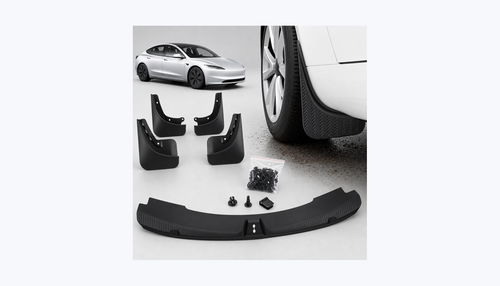
Gear up your Model 3 with tested, custom-fit BASENOR accessories — shop Model 3 accessories →
Sources & reporting notes
The links below identify the material source records used for this report.
- @wholemars on X (2026-05-31T21:34:12.000Z) — Direct source
Source links are preserved as published or accessed. See our editorial standards and corrections policy.
The BASENOR Editorial Desk covers Tesla, SpaceX, and related technology, curating reporting from primary sources — official accounts, regulatory filings, and software release data. Every article passes source-record and fact-checking review before publication. About the newsroom.
This report was curated by the BASENOR Editorial Desk from the sources listed above. Read our editorial standards or email editorial@basenor.com to report an error.