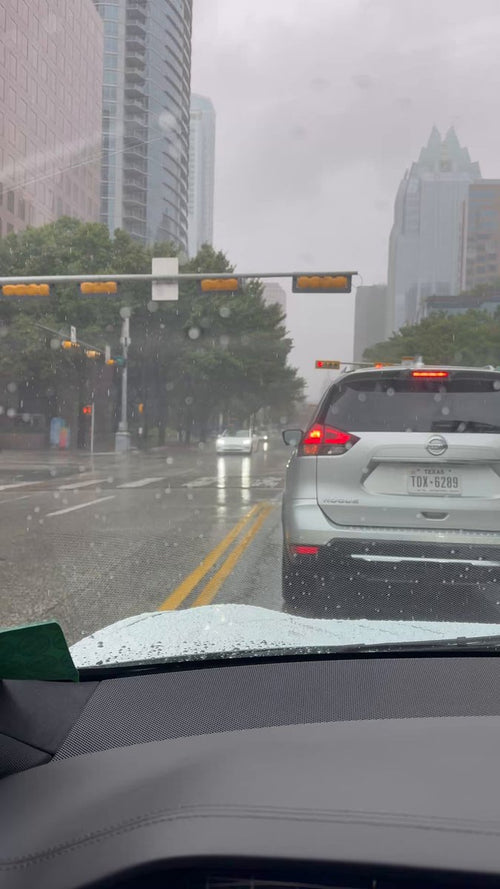
The News: Tesla FSD's 'Mad Max' speed profile is demonstrating genuinely impressive autonomous traffic navigation — passing slow vehicles and rerouting around multi-minute traffic jams without any driver input.
Why It Matters: This is the most assertive FSD behavior Tesla has shipped to date, and owners with the right settings enabled are already seeing real commute time savings.
Source: @wholemars on X
Tesla FSD Mad Max Mode: Autonomous Lane Changes, Traffic Passes, and Live Rerouting in Action
Tesla's Full Self-Driving (Supervised) system has always had speed profiles — but Mad Max mode is a different animal entirely. A viral clip from @wholemars shows the system doing two things that most self-driving software simply cannot: independently passing slow-moving vehicles like an experienced driver, and — at the 1:00 mark — autonomously rerouting onto a side road to avoid a 15-minute traffic jam, all without the driver touching the screen.

📊 What Is Mad Max Mode, Exactly?
Tesla reintroduced Mad Max as an official speed profile for FSD (Supervised) in October 2025 with the FSD v14.1.2 update. It sits above the 'Hurry' profile and is designed for scenarios where you want the car to prioritize speed and traffic flow above comfort-oriented caution. According to Tesla's own description, the mode is built for "Highway Domination, navigating dense gridlock, or in areas known for aggressive city traffic."
In practice, that means the vehicle may operate above posted speed limits where safe, perform rolling stops, change lanes more frequently and assertively, and — as this clip shows — proactively pass slower vehicles without waiting for driver prompting.
| Profile | Speed Behavior | Lane Changes | Best For |
|---|---|---|---|
| Chill | Below posted limit | Minimal | Relaxed commutes, passengers |
| Average | At posted limit | Moderate | Everyday driving |
| Hurry | Slightly above limit | Frequent | Time-sensitive trips |
| Mad Max | Above posted limit where safe | Aggressive, proactive passing | Dense traffic, highway runs, running late |
🔁 The Rerouting Feature: What's Actually Happening
The traffic jam rerouting shown in the clip isn't just a party trick — it reflects a meaningful architectural shift in how FSD handles navigation. Starting with FSD v14.2.2.5 (part of software version 2026.2.9.1, which began rolling out in March 2026), Tesla deployed a new routing engine that integrates navigation directly into the vehicle's vision neural network. Rather than relying purely on map data, the car can factor in what it's actually perceiving on the road — and adjust the route in real time.
The system also pulls from third-party data sources including Google Maps and Waze, combined with Tesla's own fleet data, to predict optimal routes before congestion becomes obvious. When it identifies a faster path, it doesn't ask — it just takes the turn. That's the behavior visible at the 1:00 mark in the clip: the car spots a 15-minute jam ahead and exits onto a side road autonomously.
⚠️ The Regulatory Context You Should Know
Mad Max mode is not without controversy. The NHTSA opened an investigation into the profile in October 2025, citing reports of the system operating at speeds above posted limits and exhibiting behavior that may violate traffic safety laws. That investigation is ongoing.
This doesn't mean the feature is unsafe — but it does mean owners should understand what they're enabling. Mad Max is a tool for specific scenarios, not a set-and-forget commute mode. You remain legally responsible for the vehicle's behavior at all times under FSD Supervised.
🚦 Owner's Action Plan
Verdict: Recommended — with conditions
- Check your software version first. The rerouting behavior shown in the clip requires the newer routing engine introduced in v14.2.2.5 / software 2026.2.9.1 or later. Go to Controls → Software to confirm your version before expecting identical behavior.
- Enable FSD (Supervised) if you haven't already. Mad Max is a speed profile within FSD — it requires an active FSD subscription or purchase. Confirm FSD is active under Controls → Autopilot → Full Self-Driving.
- Set your speed profile to Mad Max. While FSD is active, tap the steering wheel icon on the left side of the touchscreen → select Speed Profile → choose Mad Max. You can also access this from the FSD settings menu.
- Enable automatic rerouting. Go to Navigation → Route Preferences and ensure automatic rerouting is turned on. This allows FSD to act on faster routes without prompting you.
- Choose your scenarios carefully. Mad Max is best suited for highway driving, dense city traffic where assertive lane changes are normal, and situations where saving time is the priority. It is NOT the right profile for school zones, residential streets, or anywhere pedestrian density is high.
- Stay engaged. FSD remains Supervised — the NHTSA investigation is a reminder that the system can and does push legal boundaries in this mode. Keep hands near the wheel and eyes on the road.
⚠️ Known Regulatory Status
NHTSA opened a formal investigation into Mad Max mode in October 2025 for potential violations of traffic safety laws. The investigation is ongoing. Tesla owners using this profile should be aware that operating above posted speed limits — even autonomously — carries legal responsibility for the driver.
📰 Deep Dive
What makes this clip significant isn't just that FSD passed a slow car — it's the combination of behaviors happening seamlessly in sequence. The system identified a slower vehicle ahead, calculated that passing was appropriate, executed the maneuver cleanly, and then — independently — recognized that the route ahead was going to cost 15 minutes and chose a better path. That's not a single feature. That's a stack of perception, prediction, and decision-making working together in real traffic.
The architectural reason this is now possible is the integration of the routing engine into the vision neural network, introduced in the March 2026 update. Previous versions of FSD treated navigation and driving as somewhat separate concerns — the map said where to go, and the driving stack figured out how to get there. The newer approach lets what the car sees influence where it goes, which is a fundamentally more capable design. A car that can see a jam forming and reroute before it's on the map is more useful than one that waits for Waze to catch up.
The NHTSA investigation is worth keeping in perspective. Regulators investigating a new autonomous driving profile is normal and expected — it doesn't indicate imminent recall or shutdown of the feature. What it does signal is that Tesla is operating at the edge of what current traffic law contemplates for automated systems. As FSD coverage has shown over the past year, that regulatory friction is likely to intensify as the system becomes more capable, not less. Owners who use Mad Max should treat it as a performance tool that demands more attention, not less.
📋 Tracking Tesla software? See every firmware, FSD and app version in one place in our Tesla Software Update Tracker.
Related Gear
Gear up your Tesla with tested, custom-fit BASENOR accessories — shop Tesla accessories →
Sources & reporting notes
The links below identify the material source records used for this report.
- @wholemars on X (2026-04-26T23:57:40.000Z) — Direct source
Source links are preserved as published or accessed. See our editorial standards and corrections policy.
The BASENOR Editorial Desk covers Tesla, SpaceX, and related technology, curating reporting from primary sources — official accounts, regulatory filings, and software release data. Every article passes source-record and fact-checking review before publication. About the newsroom.
This report was curated by the BASENOR Editorial Desk from the sources listed above. Read our editorial standards or email editorial@basenor.com to report an error.