30-Second Brief
The News: A well-known Tesla commentator flagged that an ongoing NHTSA investigation into FSD's degradation detection system will likely result in a voluntary Tesla recall resolved via OTA software update.
Why It Matters: Approximately 3.2 million Tesla vehicles with FSD are covered by the probe — and if a recall is issued, your car's software could be updated automatically.
Source: @wholemars on X

What's Actually Happening With Tesla's FSD Investigation
If you own a Tesla with Full Self-Driving (Supervised), pay attention. The National Highway Traffic Safety Administration (NHTSA) has escalated its investigation into FSD's degradation detection system to an engineering analysis — the final investigative stage before the agency decides whether to mandate a recall.
Whole Mars Catalog, a closely followed Tesla commentator, flagged on March 19 that this situation will likely result in a voluntary recall resolved through an OTA software update — consistent with how Tesla has handled previous regulatory actions.
📊 What's Under the Microscope
| Detail | Status |
|---|---|
| NHTSA Investigation Stage | Engineering Analysis (final pre-recall phase) |
| System Under Review | FSD (Supervised) — Degradation Detection |
| Vehicles Potentially Affected | ~3.2 million Tesla vehicles with FSD |
| Incidents Under Review | 9 crashes (1 fatal, multiple injuries) |
| Recall Announced? | ❌ Not yet — still under investigation |
| Expected Fix Method | OTA software update (if recall issued) |
The Core Issue: What Is FSD Degradation Detection?
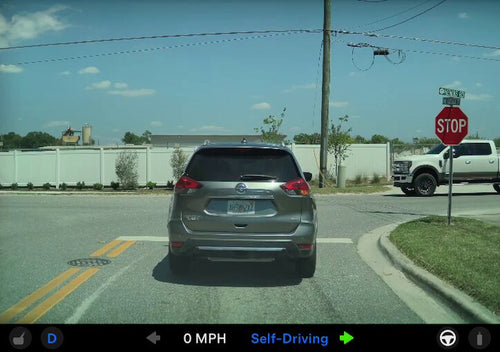
Tesla's FSD system includes a degradation detection subsystem designed to recognize when the vehicle's cameras can't reliably see the road — think heavy sun glare, thick fog, blowing dust, or heavy rain. When degradation is detected, the system is supposed to alert the driver and reduce reliance on autonomous features.
NHTSA's concern is whether this detection system performs reliably enough across real-world conditions. The agency has identified nine crashes linked to degradation detection performance, including one fatal incident. Notably, Tesla's own post-incident analysis indicated that an updated version of the degradation detection system, had it been installed at the time, "may have affected" only three of those nine incidents — suggesting Tesla has already developed improvements internally.
⚠️ Incidents Under NHTSA Review
Source: NHTSA engineering analysis documents, March 2026
🚦 Owner's Action Plan
Verdict: Informational — No recall has been issued yet. No action is required today, but here's how to stay ahead of it.
- Check if you have FSD. Go to Controls → Software → Additional Vehicle Information on your touchscreen. If your vehicle has FSD (Supervised) enabled, you're in the affected population.
- Keep your software up to date. Go to Controls → Software and ensure "Software Updates" is set to Advanced so you receive updates as soon as they're available. If a recall OTA is issued, you want it immediately.
- Exercise extra caution in low-visibility conditions. Sun glare, fog, dust, and heavy rain are exactly the scenarios under scrutiny. If FSD prompts you to take over, do so promptly. Don't wait for a second alert.
- Monitor your Tesla app for recall notifications. If NHTSA mandates a recall, Tesla is required to notify registered owners. Make sure your contact info in the Tesla app is current.
- Check NHTSA's database. You can look up your VIN at nhtsa.gov/vehicle/recalls to monitor any formal recall filings tied to your vehicle.
Why an OTA Fix Is the Likely Outcome
Tesla has a well-established track record of resolving NHTSA-flagged issues through over-the-air software updates rather than physical service visits. In fact, Tesla's own internal analysis already points to an updated degradation detection algorithm — meaning the fix likely already exists in some form. The question is whether NHTSA accepts it as sufficient, and whether Tesla issues the update voluntarily or waits for a mandate.
For owners, the practical outcome is the same either way: a software update arrives silently overnight, and the issue is addressed without a dealer visit. But the formal recall designation matters — it creates a paper trail, triggers owner notification requirements, and ensures NHTSA can verify the fix's effectiveness. For more on how Tesla handles FSD-related regulatory actions, see our FSD coverage.
📰 Deep Dive
The escalation to an engineering analysis is significant. NHTSA doesn't reach this stage casually — it means the agency's preliminary evaluation found enough evidence of a potential safety defect to justify deeper scrutiny. This is the last formal step before NHTSA either closes the investigation (finding no defect) or formally requests a recall. Given the nine documented crashes and the fatal incident in the record, a closure without action seems unlikely.
What's telling is Tesla's own admission in its post-incident analysis. By acknowledging that an updated degradation detection system "may have affected" three of the nine incidents, Tesla has effectively signaled that it knows the current system has room for improvement — and that it has already developed a better version. This is actually a favorable position for Tesla: it demonstrates proactive engineering rather than denial, and it gives NHTSA a concrete fix to evaluate.
The voluntary recall framing matters too. If Tesla moves first — filing a voluntary recall before NHTSA mandates one — it retains more control over the messaging, timeline, and fix parameters. Tesla has done this repeatedly in the past, and it tends to result in faster resolutions and less regulatory friction. Whole Mars Catalog's read that this will likely go the voluntary route is consistent with Tesla's historical playbook.
For the 3.2 million owners in the affected pool, the realistic near-term experience is: a software update arrives, the release notes mention improved camera degradation detection, and that's the end of it. The bureaucratic machinery of a formal recall runs in the background, but the owner experience is largely seamless. The more important takeaway right now is to not disable FSD alerts, stay engaged behind the wheel in challenging visibility conditions, and ensure your car is set to receive updates automatically.