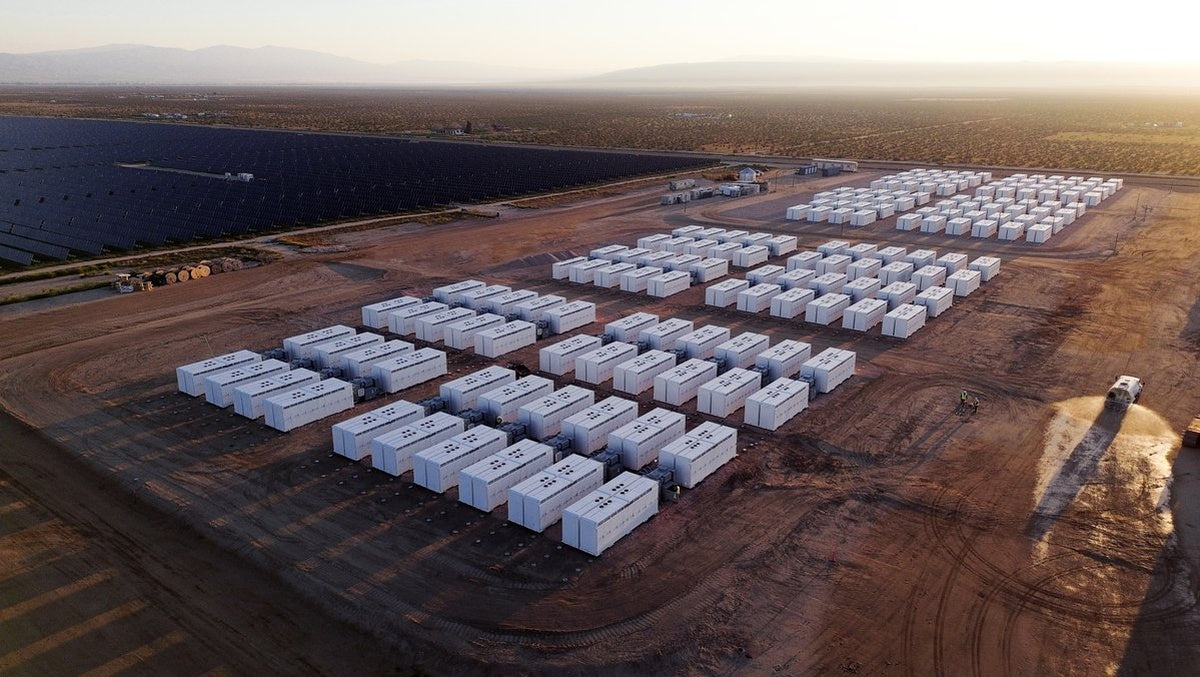
Tesla's energy business is running hotter than most observers realized. In the past six weeks alone, more than $9 billion of new Megapack projects have been announced, totaling over 43 GWh of battery energy storage — enough capacity to help power roughly 5.9 million homes. The headline deal: a Megapack order worth up to $3 billion from Esyasoft, an energy technologies manufacturer, for more than 15 GWh of systems spanning the UK, Western Europe, the GCC, and India.
Announced today by Tesla Energy & Charging VP Mike Snyder and amplified by Tesla-watcher Sawyer Merritt, the surge reframes what has quietly become one of Tesla's fastest-growing lines of business — and a segment that increasingly looks less cyclical than the automotive side.

The Esyasoft Deal in Context
The Esyasoft agreement is one of the largest single Megapack contracts Tesla has ever disclosed by GWh. At 15+ GWh, it eclipses most utility-scale battery deployments announced globally in 2025 and pushes Tesla deeper into three fast-growing storage markets: the Gulf Cooperation Council (where solar-plus-storage is becoming baseload for new grid buildouts), India (where renewable firming is a national priority), and Western Europe (where storage economics have been supercharged by volatile power prices).
Snyder's framing — quoted alongside the announcement — positions Esyasoft as a strategic partner rather than a one-off buyer, suggesting the deal is structured for phased delivery across multiple years and geographies.
Key Figures
| Metric | Value |
|---|---|
| New Megapack orders (past 6 weeks) | >$9 billion |
| Total storage booked (past 6 weeks) | >43 GWh |
| Esyasoft contract value | Up to $3 billion |
| Esyasoft storage capacity | 15+ GWh |
| Homes powerable by 43 GWh | ~5.9 million |
| Q2 2026 storage deployed (reported) | 13.5 GWh |

How We Got Here
The Esyasoft news doesn't arrive in a vacuum. Over the past several months, Tesla Energy has stacked a series of large contracts that, in aggregate, now define the company's forward book:
- NatPower (Italy & UK): On June 23, 2026, Tesla and independent energy firm NatPower announced the first phase of a program to build 25 GWh of storage across Italy and Britain, with construction costs estimated at $4–5 billion, according to Electrek. The broader partnership targets over 100 GWh and potential revenue topping $15 billion over 20 years.
- xAI: In April 2026, xAI purchased an additional $269 million of Megapack product, bringing its total Megapack spend to roughly $1 billion since 2024, according to Electrek.
- Energy Solutions Group (Belgium): An $80 million order for a 76 MW / 304 MWh system in Sambreville, with grid connection targeted for 2027.
- Clearway Energy Group (US): As of mid-2025, Clearway had contracted 490 MW / 1,356 MWh of Tesla storage on top of an existing 520 MW / 1,680 MWh order, with deliveries scheduled through 2026 across California and Colorado.
Stack those against the fresh 43 GWh in six weeks, and the picture is unambiguous: Tesla is signing storage contracts faster than most of its rivals are commissioning them.
Why the Order Book Is Accelerating
Three structural forces are compressing at once. First, AI datacenter power demand is forcing hyperscalers and grid operators to bolt storage onto every new interconnect — xAI's own spending is the clearest example. Second, European power prices remain volatile enough that arbitrage economics for grid-scale batteries have improved materially since 2024. Third, the GCC and India are building out solar capacity at a pace that only works with firming storage attached.
Tesla's positioning in that mix is helped by a product transition. The company is expected to launch its next-generation Megapack 3 later in 2026, delivering roughly 5 MWh per unit — a 28% capacity bump over the current Megapack, according to reporting from Electrek. A larger unit means lower installation cost per MWh and faster site buildout, both of which matter enormously to buyers signing multi-GWh contracts.
What It Means for Tesla
Tesla's energy business generated close to $12.8 billion in revenue in 2025, and Q2 2026 deployments of 13.5 GWh were up 53% sequentially and 40% year-over-year. A 43 GWh order book booked in six weeks — even spread across multi-year delivery windows — implies revenue recognition well beyond current run-rate as those projects energize.
For investors watching the automotive side plateau, the Megapack line is starting to look like the growth engine Tesla has been telegraphing for years. For grid operators, the message is different: Tesla now has a backlog large enough that ordering slots for 2027 and 2028 are becoming the constraint, not manufacturing capacity.
What to Watch Next
- Megapack 3 launch details and Lathrop/Shanghai Megafactory throughput updates later in 2026.
- Whether the Esyasoft 15 GWh volume translates into named projects in specific GCC and Indian states over the next two quarters.
- Q3 2026 deployment numbers — the leading indicator of whether the $9B backlog is starting to convert to revenue.
- Any follow-on NatPower phases, given the 100 GWh program ceiling.
The energy story is no longer a footnote to Tesla earnings calls. On the current trajectory, it's about to be the headline.
Related Gear
Gear up your Tesla with tested, custom-fit BASENOR accessories — shop Tesla accessories →
Sources & reporting notes
The links below identify the material source records used for this report.
- @SawyerMerritt on X (2026-07-07T13:56:55.000Z) — Direct source
- @SawyerMerritt on X (2026-07-07T13:39:01.000Z) — Direct source
Source links are preserved as published or accessed. See our editorial standards and corrections policy.
The BASENOR Editorial Desk covers Tesla, SpaceX, and related technology, curating reporting from primary sources — official accounts, regulatory filings, and software release data. Every article passes source-record and fact-checking review before publication. About the newsroom.
This report was curated by the BASENOR Editorial Desk from the sources listed above. Read our editorial standards or email editorial@basenor.com to report an error.