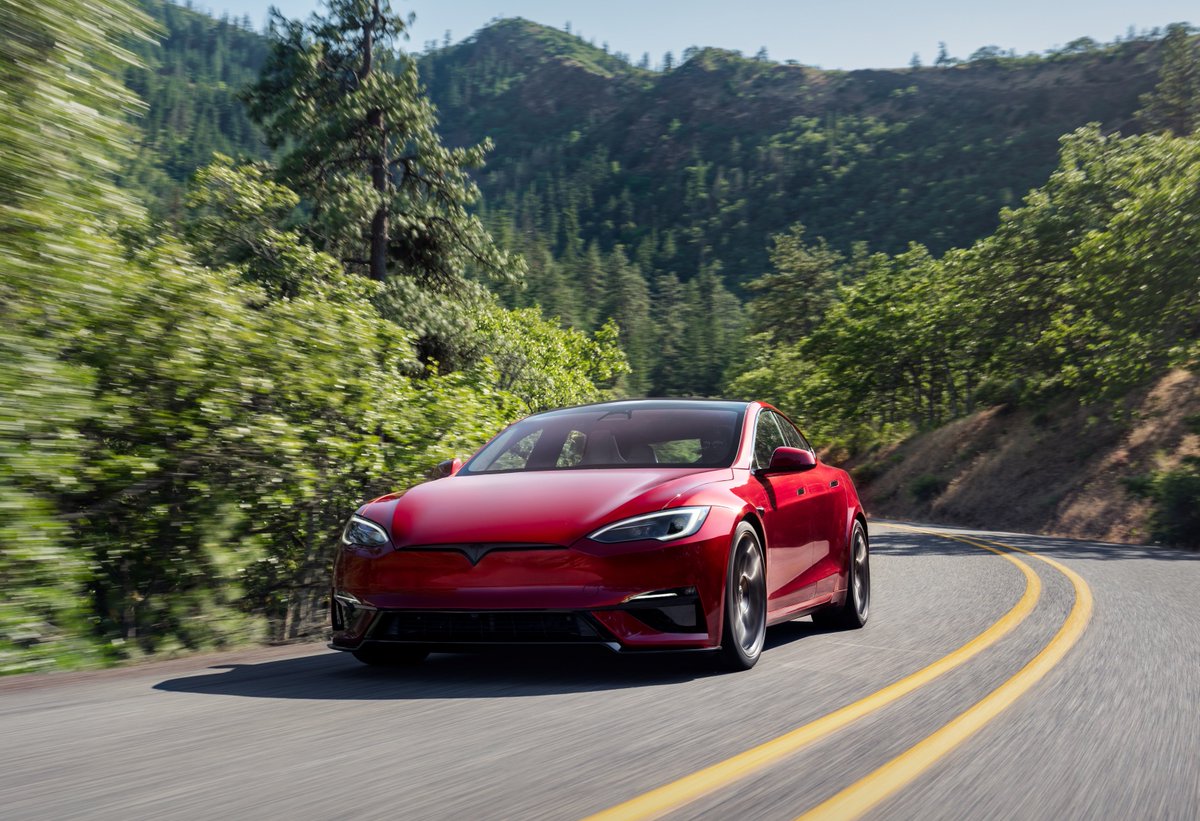
Ferrari officially unveiled the Luce in Rome on May 25 — its first all-electric production car — and the spec sheet landed right in Tesla Model S Plaid territory. On paper, the gap is smaller than you might expect. Here's how the two performance sedans compare across the metrics that actually matter.

The Numbers, Head to Head
| Spec | Tesla Model S Plaid | Ferrari Luce |
|---|---|---|
| Power | 1,020 hp | 1,050 hp |
| Motors | 3 (tri-motor AWD) | 4 (one per wheel) |
| Battery | 100 kWh (gross) | 122 kWh (gross) |
| 0–62 mph | 2.1 sec | 2.5 sec |
| Top Speed | 200 mph (322 km/h) | 193 mph (310 km/h) |
| Range (WLTP) | ~611 km (est.) | 530+ km |
| Charging | 250 kW (V3 Supercharger) | 350 kW (800V) |
| Starting Price (US) | ~$90,000 | ~$640,000 |
5 Things the Numbers Actually Tell You
1. The Plaid is still the faster car off the line
Despite the Ferrari's extra motor and larger battery, the Model S Plaid reaches 62 mph in 2.1 seconds versus the Luce's 2.5 seconds. That 0.4-second gap is significant in a drag race context — and the Plaid also edges out the Luce on top speed, hitting 200 mph versus 193 mph. Tesla's tri-motor architecture, refined over several years of real-world Plaid ownership, clearly hasn't been surpassed on raw acceleration metrics.
2. Ferrari has the bigger battery — and faster charging
The Luce's 122 kWh pack is roughly 22% larger than the Plaid's 100 kWh unit. Ferrari also built the car around an 800V architecture supporting up to 350 kW DC fast charging, compared to Tesla's 250 kW ceiling on V3 Superchargers. In practical terms, the Luce should recover range faster at a compatible charger — though its WLTP range estimate of 530+ km still trails the Plaid's approximately 611 km figure, suggesting the bigger battery is partly offset by greater vehicle weight (the Luce tips the scales at around 4,982 lbs).
3. Four motors versus three — and why it matters beyond horsepower
Ferrari's decision to put one motor at each wheel isn't just a spec-sheet flex. Individual wheel torque vectoring at that level enables a fundamentally different handling dynamic — something Ferrari's engineers have been promising will make the Luce feel like a Ferrari despite the electric drivetrain. The Plaid's tri-motor setup is no slouch, but Tesla has not pursued per-wheel motor control in the same way. Whether that translates to a meaningfully better driving experience on road remains to be seen until first deliveries in October 2026.
4. The price gap is enormous — and that reframes the whole comparison
The Model S Plaid starts at roughly $90,000. The Ferrari Luce is expected to start around $640,000 in the US market, with UK pricing around £440,000. That's more than seven times the price for roughly comparable straight-line performance. For most buyers in the performance EV space, the Plaid remains the benchmark precisely because it delivers supercar numbers at a fraction of the cost. The Luce is competing with Rolls-Royce and Bentley as much as it's competing with Tesla.
5. Ferrari's EV era is real — and Tesla set the benchmark it's chasing
The Luce was designed in collaboration with Jony Ive and Marc Newson of LoveFrom, and its battery pack is built in Maranello. Ferrari has been deliberate and slow in its EV transition, and the Luce represents the brand's full commitment to the format. The fact that its headline specs — power, acceleration, range — are being measured directly against a Tesla that launched years earlier says something about where the industry's reference point sits. U.S. deliveries aren't expected until Spring 2027, so Plaid owners have time before the Luce becomes a real-world comparison.
Editor's View
The Ferrari Luce is a genuinely impressive engineering achievement, and the spec proximity to the Plaid is a testament to how much the EV performance ceiling has compressed. But the comparison also flatters Tesla: a car that's been on sale for years, costs a fraction of the price, and still wins on acceleration and top speed. The more interesting question for Tesla owners isn't whether the Luce beats the Plaid — it's whether Ferrari's entry signals that the next generation of Model S needs to raise the bar before 2027 arrives.

David covers the EV industry, regulatory developments, and accessory ecosystem. 15+ years writing about consumer tech. Based in London.
Sources verified at publish time. Spotted an inaccuracy? Email editorial@basenor.com.