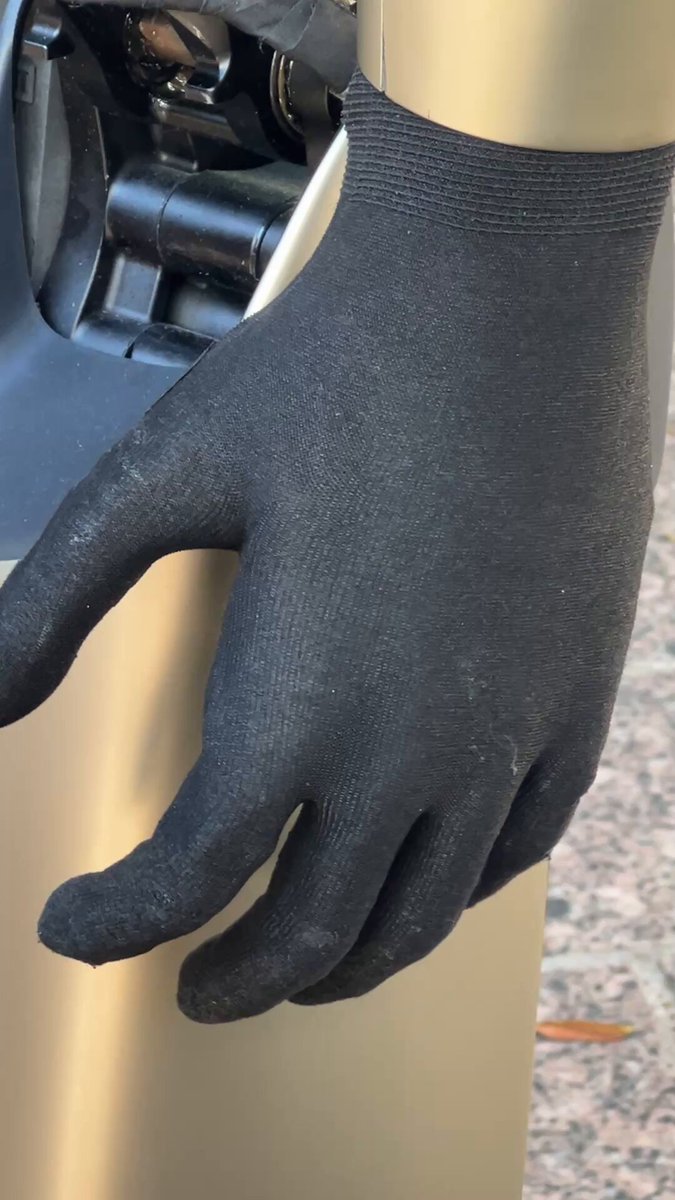
The News: Tesla has revealed close-up footage of the next-generation Optimus Gen 3 hands, featuring 22 degrees of freedom (DoF) and 50 total actuators — a radical leap in humanoid robot dexterity.
Why It Matters: This is the hardware that will determine whether Optimus can actually work alongside humans on factory floors and, eventually, in homes. The numbers here are not incremental — they represent a fundamental redesign.
Source: @TeslaNewswire on X
Tesla Pulls Back the Curtain on Optimus' Most Advanced Hands Yet
Tesla's Optimus program just gave us the clearest look yet at what the Gen 3 humanoid robot's hands are actually capable of — and the engineering specs behind them are genuinely remarkable. The next-generation hand system packs 22 degrees of freedom in the hand alone, plus an additional 3 DoF in the wrist and forearm, for a combined 25 DoF per arm. For context, the human hand has roughly 27 DoF. Tesla is closing the gap fast.

📊 Key Figures
| Metric | Gen 2 | Gen 3 | Change |
|---|---|---|---|
| Hand Degrees of Freedom | 11 DoF | 22 DoF | +100% |
| Total Actuators (per arm) | ~6 | 25 | +4.5x |
| Total Actuators (per robot) | ~12 | 50 | +4.5x |
| Tactile Fingertip Sensors | No | Yes | New |
| Actuator Location | In hand | Forearm | Redesigned |
The Engineering Leap: What 22 DoF Actually Means
Degrees of freedom is the engineering shorthand for how many independent directions a joint can move. More DoF means more nuanced, precise movement — the difference between a robot that can grip a box and one that can thread a needle, crack an egg, or sort fragile battery cells without breaking them.
Tesla's Gen 2 hand had 11 DoF — respectable for a humanoid robot at scale, but limited for fine manipulation tasks. The Gen 3 design doubles that count to 22 DoF in the hand itself, and the engineering decisions behind that number are just as significant as the number itself.
Rather than cramming more motors into an already-dense hand, Tesla's engineers moved all 25 actuators per arm into the forearm. The fingers are then driven by a tendon system — cables that transmit force from the forearm actuators to the fingertips, much like the tendons in a human hand. The result: a lighter, faster hand with more range of motion and less inertia at the fingertip.
The Gen 3 hands also introduce tactile fingertip sensors — force-feedback hardware embedded in each fingertip that tells the robot how hard it's gripping. This is what enables Optimus to handle objects as delicate as an egg or a glass vial without crushing them. It's the difference between a robot that can pick things up and one that understands what it's holding.
From Announcement to Factory Floor: The Timeline
This reveal didn't come out of nowhere. Elon Musk first flagged a 22-DoF hand upgrade back in May 2024. By November 2025, he confirmed the 50-actuator architecture. On February 14, 2026 — with characteristic brevity — Musk posted video of the Gen 3 hands in action with the caption 'This bot got hands.' Tesla China followed with a dedicated teaser on March 11, 2026, and now we're getting the close-up footage that shows the hardware in real detail.
According to verified reporting, the Gen 3 hands are considered production-ready as of February 2026. Factory floor deployment for internal data collection is expected within Q2–Q3 2026, with Optimus units already working inside Tesla facilities on tasks like battery sorting, parts handling, and quality inspection.
🔭 The BASENOR Take
Timeline: Gen 3 hands confirmed production-ready February 2026 | Factory deployment expected Q2–Q3 2026
Impact Level: 🔴 High — This is a foundational hardware milestone for the Optimus program
Confidence: ⭐⭐⭐⭐⭐ — Confirmed by Elon Musk directly, corroborated by multiple verified sources
Here's the honest context: humanoid robots have been promised for decades, and the gap between demo videos and real-world utility has historically been enormous. What makes the Gen 3 hand specs worth taking seriously is the combination of factors — not just the DoF count, but the tendon-driven architecture, the forearm-mounted actuators, and especially the tactile sensors. These aren't flashy additions; they're the unglamorous engineering prerequisites for a robot that can actually do useful work.
The 4.5x increase in actuator count is the number that stands out most. More actuators mean finer independent control of each finger segment. Combined with force feedback from the fingertip sensors, Optimus Gen 3 can in theory modulate grip strength in real time — something that sounds simple but is extraordinarily difficult to engineer reliably at scale.
For Tesla owners watching the Optimus program, the relevant question is: when does this translate into something visible? The answer appears to be this year. With production-ready hands and factory deployment targeted for Q2–Q3 2026, the next phase isn't more demos — it's Optimus units accumulating real-world manipulation data inside Tesla's own manufacturing environment. That data is what trains the neural networks that will eventually make Optimus genuinely autonomous.
The competitive implications are significant. Several well-funded humanoid robot programs are racing toward similar dexterity targets, but Tesla's advantage is the closed loop between its AI training infrastructure, its manufacturing environment, and its hardware iteration speed. The Gen 3 hand is a meaningful step toward a robot that doesn't just look capable in a controlled demo — but actually is.

Sarah focuses on Tesla Energy, SpaceX missions, and the broader Musk AI portfolio. Former data analyst in clean energy. Based in San Francisco.
Sources verified at publish time. Spotted an inaccuracy? Email editorial@basenor.com.