📌 UPDATE — April 2, 2026
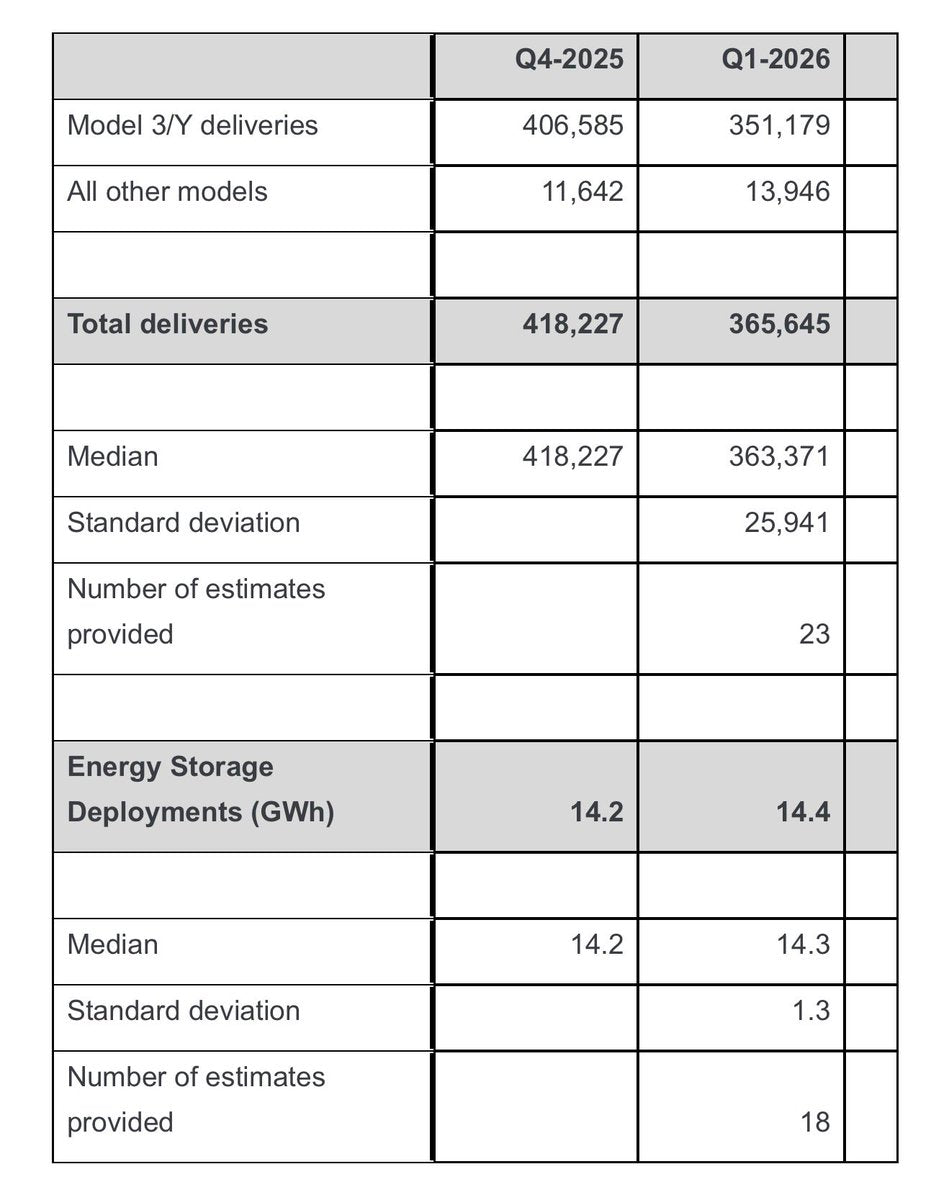
Tesla has officially reported its Q1 2026 results: 408,386 vehicles produced and 358,023 vehicles delivered, alongside 8.8 GWh of energy storage deployments. Deliveries missed the analyst consensus of 365,645 by roughly 7,600 units (~2.1%), while energy deployments fell significantly short of the expected 14.4 GWh — less than 61% of the forecast. Production numbers were robust, but the delivery and energy storage misses are likely to draw scrutiny from investors. Tesla's Q1 Company Update call is scheduled for April 22 at 4:30 PM CT, streamed live on X.

Source: @Tesla on X
📌 UPDATE — April 1, 2026
Tesla is set to release its official Q1 2026 production, delivery, and energy storage deployment figures tomorrow morning, April 2nd, before 9:30 AM ET. While Wall Street's consensus sits at 365,645 deliveries, prominent industry tracker @TroyTeslike is projecting a higher figure of 375,000 units. Energy storage deployment numbers will be released simultaneously. Check back here as we'll update with the official results as soon as they drop.

Source: @SawyerMerritt via X
The News: Tesla has published its official company-compiled Q1 2026 analyst consensus, projecting 365,645 vehicle deliveries and 14.4 GWh of energy storage deployment for the quarter ending March 31, 2026.
Why It Matters: This is Tesla's own aggregation of Wall Street expectations — the benchmark against which actual Q1 results will be judged when delivery numbers drop in early April.
Source: @SawyerMerritt on X — March 26, 2026

📊 Key Figures
| Metric | Q1 2026 Consensus | Context |
|---|---|---|
| Vehicle Deliveries | 365,645 | Tesla IR compiled consensus |
| Energy Storage Deployment | 14.4 GWh | Tesla IR compiled consensus |
| UBS Individual Estimate | 345,000 | Below consensus |
| RBC Capital Individual Estimate | 367,000 | Above consensus |
🔭 The BASENOR Take
Timeline: Q1 2026 results expected early April 2026
Impact Level: 🟡 Medium — sets the bar for Tesla's first quarterly report of 2026
Confidence: High — published directly by Tesla Investor Relations
Tesla publishing its own analyst consensus is a deliberate act of transparency — and a double-edged sword. By releasing the 365,645 figure publicly, Tesla is effectively anchoring market expectations. Beat it, and the stock reacts positively. Miss it, and the headline writes itself.
The spread between individual analyst estimates tells a more nuanced story. UBS sitting at 345,000 — roughly 20,000 units below the consensus — signals meaningful skepticism on the low end, while RBC Capital's 367,000 suggests some analysts see upside. That 22,000-unit gap between the most bearish and most bullish tracked estimates reflects genuine uncertainty about demand conditions in Q1 2026.
The 14.4 GWh energy storage figure is arguably the more interesting number. Tesla's Energy division has been a consistent bright spot, and 14.4 GWh would represent continued strong Megapack deployment momentum. Unlike vehicle deliveries — which face well-documented demand headwinds in some markets — energy storage has a robust, utility-scale order book that is less sensitive to consumer sentiment.
📰 Deep Dive
Tesla's company-compiled consensus is sourced from its Investor Relations page and aggregates estimates from sell-side analysts who cover the stock. Critically, Tesla explicitly states it does not endorse any specific analyst's information, recommendations, or conclusions — the published figure is purely a mathematical aggregation, not a company forecast or guidance.
That distinction matters. Tesla has not issued formal delivery guidance for Q1 2026. The 365,645 number is Wall Street's collective best guess, not a target Tesla has committed to. When actual delivery figures are released — typically within the first few days of April — the comparison against this consensus will drive immediate market reaction more than the absolute number itself.
For owners and enthusiasts, the energy storage figure deserves attention. The Megapack business has been scaling rapidly, and 14.4 GWh in a single quarter would underscore that Tesla's energy segment is no longer a footnote to the automotive business. As Tesla continues expanding Megapack production capacity, the energy division is increasingly becoming a meaningful contributor to both revenue and margin — a structural shift that changes how analysts and investors should think about the company's long-term earnings power.
Q1 actual results will land in early April. Until then, 365,645 is the number every Tesla watcher will be measuring against.

Sarah focuses on Tesla Energy, SpaceX missions, and the broader Musk AI portfolio. Former data analyst in clean energy. Based in San Francisco.
Sources verified at publish time. Spotted an inaccuracy? Email editorial@basenor.com.