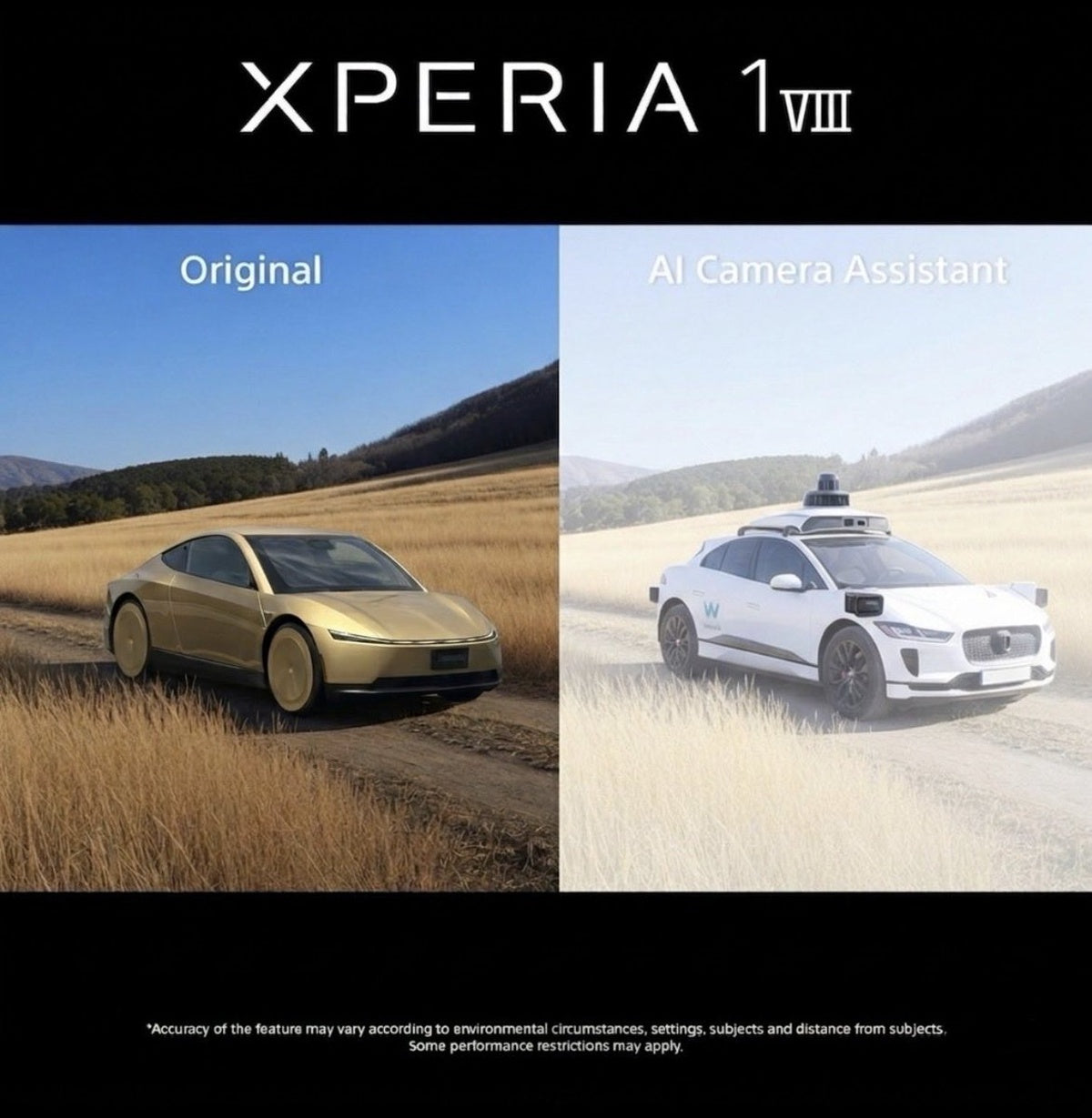
A visual comparison circulating this week puts Tesla's Robotaxi vision evolution in sharp focus — side by side, the 'Original' camera system and the newer 'AI Camera Assistant' reveal just how far the perception stack has come. For anyone tracking Tesla's path to unsupervised autonomy, the gap between the two is hard to ignore.

The Hardware Foundation Behind the Upgrade
The visual leap between the original and AI Camera Assistant systems isn't just a software story — it's rooted in a fundamental hardware shift. Hardware 3 (HW3) vehicles shipped with 1.2-megapixel cameras. Hardware 4 (HW4), which powers the current Robotaxi fleet, steps that up to 5 megapixels, with next-generation cameras expected to reach 10 megapixels. That's a roughly 8x resolution jump from the baseline, with dramatically improved low-light performance as a direct consequence.
Elon Musk confirmed in April 2026 that HW3 vehicles simply lack the memory bandwidth — about one-eighth of what HW4 provides — to run unsupervised FSD. That hardware ceiling is precisely why Tesla is standing up 'microfactories' in major metro areas to handle the volume of HW4 upgrades at scale, rather than routing everything through standard service centers.
What the AI Layer Actually Does
The camera hardware is only half the equation. According to Ashok Elluswamy, Tesla's VP of AI Software, the core challenge for Autopilot has never been sensor count — it's the AI's ability to process and understand what the cameras see. Tesla's self-driving neural network stack comprises 48 distinct networks, requires 70,000 GPU hours to train, and outputs 1,000 predictions per timestep. That computational depth is what the 'AI Camera Assistant' label is pointing at: a system where the intelligence applied to the image is as important as the image itself.
The latest FSD software, version 14.3, reflects this direction with an MLIR rewrite that delivers 20% faster reaction times — a meaningful improvement for a system where milliseconds matter in real-world traffic.
Robotaxi Fleet Context
Tesla's public Robotaxi fleet, operating in Austin, Texas, is already running on this upgraded hardware stack. Notably, those vehicles include camera washer hardware not found on consumer Model Y units — a detail that underscores how the Robotaxi platform is being purpose-built rather than simply adapted from existing production vehicles.
The Spring 2026 software update (version 2026.14 and above) also introduced a dedicated Self-Driving app exclusively for HW4 vehicles, giving owners a new window into FSD usage and subscription management. The gap between what the Robotaxi fleet experiences and what consumer HW4 vehicles receive is narrowing — but the comparison images shared this week are a reminder that the journey from original to AI-native perception has been substantial.
How quickly that AI Camera Assistant capability migrates from the Austin fleet into the broader HW4 owner population will be one of the more closely watched developments over the rest of 2026.
📋 Tracking Tesla software? See every firmware, FSD and app version in one place in our Tesla Software Update Tracker.
🚕 Following the Robotaxi rollout? See every operating city, launch date and announced market in our Tesla Robotaxi Tracker.
Related Gear
Gear up your Tesla with tested, custom-fit BASENOR accessories — shop Tesla accessories →
Sources & reporting notes
The links below identify the material source records used for this report.
- @TeslaNewswire on X (2026-05-15T15:31:56.000Z) — Direct source
Source links are preserved as published or accessed. See our editorial standards and corrections policy.
The BASENOR Editorial Desk covers Tesla, SpaceX, and related technology, curating reporting from primary sources — official accounts, regulatory filings, and software release data. Every article passes source-record and fact-checking review before publication. About the newsroom.
This report was curated by the BASENOR Editorial Desk from the sources listed above. Read our editorial standards or email editorial@basenor.com to report an error.