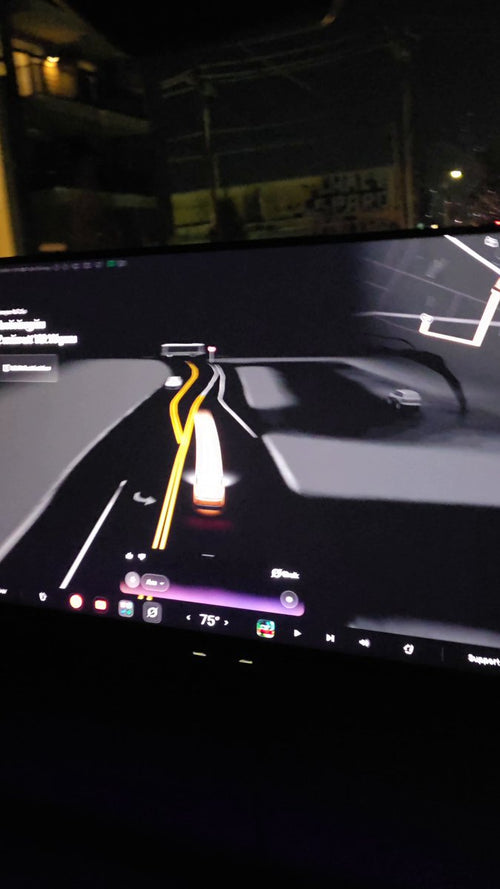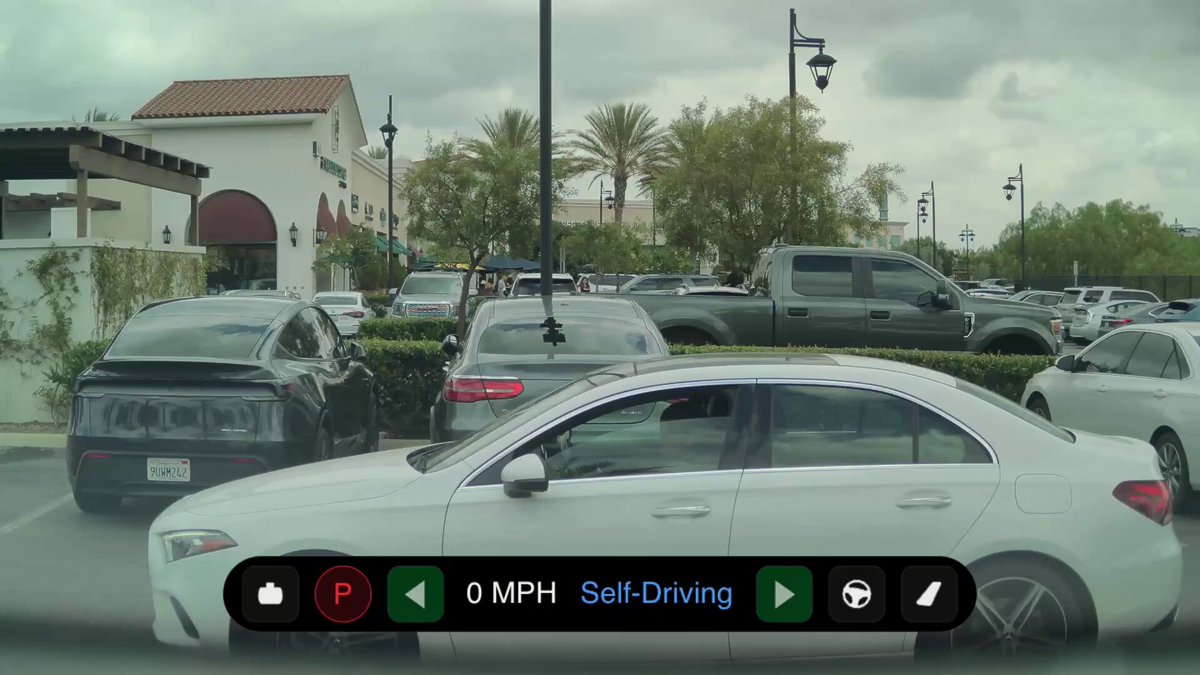
Tesla's FSD v14.3.2 just demonstrated something that wasn't mentioned anywhere in the official release notes: the system can now back up slightly to create enough clearance for a tight right turn — and it does it without any driver input. Tesla owner and longtime FSD observer Ray captured the moment on video, and it's a clean example of the kind of spatial reasoning that separates a capable self-driving system from a merely competent one.

The maneuver itself is deceptively simple: the car approaches a corner, recognizes it doesn't have quite enough room to complete the turn cleanly, reverses a short distance, then executes the right turn without drama. What makes it notable is that this kind of multi-step spatial planning — stop, assess, reposition, proceed — requires the system to hold a 3D model of its surroundings and reason about future geometry, not just react to what's directly in front of it.
What the Official Notes Don't Say
Tesla's published release notes for v14.3.2 highlight an upgraded neural network vision encoder, a rewritten AI compiler with MLIR that delivers 20% faster reaction times, and a unified model shared between FSD, Actually Smart Summon, and Robotaxi. Increased decisiveness in parking and maneuvering scenarios is consistent with those architectural changes — but the specific behavior of backing up to reclaim turning radius is not called out anywhere. It falls into the growing list of user-discovered improvements that ship quietly inside larger model updates.
That pattern is becoming more common with v14.3.2. Community reports also point to smoother lane changes, improved pedestrian recognition, reduced tailgating on highways, and the ability to dodge road debris — none of which appear in Tesla's official changelog. The backing-up maneuver Ray captured fits the same profile: a real behavioral improvement that the release notes simply don't mention.
It's worth noting that v14.3.2 is currently limited to vehicles with Hardware 4 (HW4/AI4), so if you haven't seen the update yet, hardware eligibility is likely the reason. For those who do have it, this is a good reminder to pay attention to how FSD handles constrained spaces — the system may be doing more than you realize.
📋 Tracking Tesla software? See every firmware, FSD and app version in one place in our Tesla Software Update Tracker.
Related Gear
Gear up your Tesla with tested, custom-fit BASENOR accessories — shop Tesla accessories →
Sources & reporting notes
The links below identify the material source records used for this report.
- @ray4tesla on X (2026-05-16T22:41:19.000Z) — Direct source
Source links are preserved as published or accessed. See our editorial standards and corrections policy.
The BASENOR Editorial Desk covers Tesla, SpaceX, and related technology, curating reporting from primary sources — official accounts, regulatory filings, and software release data. Every article passes source-record and fact-checking review before publication. About the newsroom.
This report was curated by the BASENOR Editorial Desk from the sources listed above. Read our editorial standards or email editorial@basenor.com to report an error.