📌 UPDATE — May 9, 2026
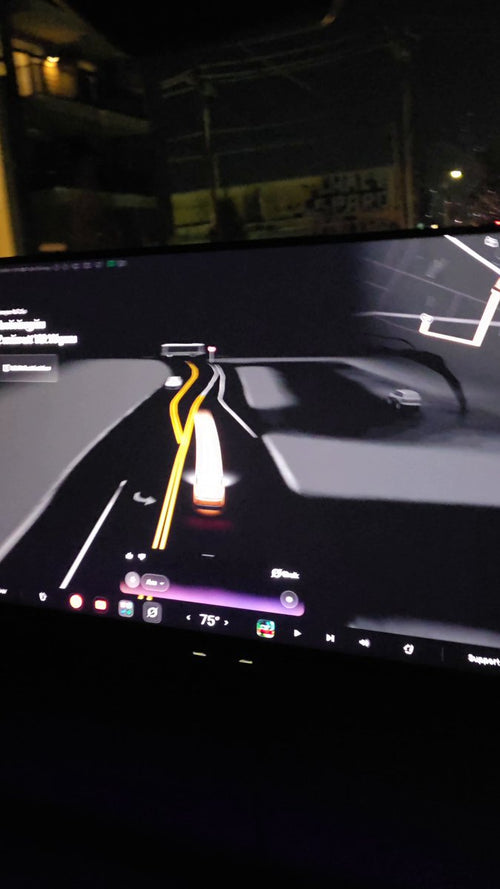
Tesla FSD v14's situational awareness improvements extend beyond hand signals and traffic controllers. A Chinese FSD tester has reported that v14 successfully detected and responded to an emergency vehicle approaching from behind for the very first time — a capability that had previously eluded earlier FSD versions. This marks a notable safety milestone, as reacting appropriately to emergency vehicles in all directions is a core requirement for fully autonomous driving. The reaction was described as prompting genuine excitement from the tester, suggesting the response was both timely and correct.
@ray4tesla · May 9, 2026Chinese tester is ecstatic about FSD v14 responding to an emergency vehicle approaching from behind for the very first time.

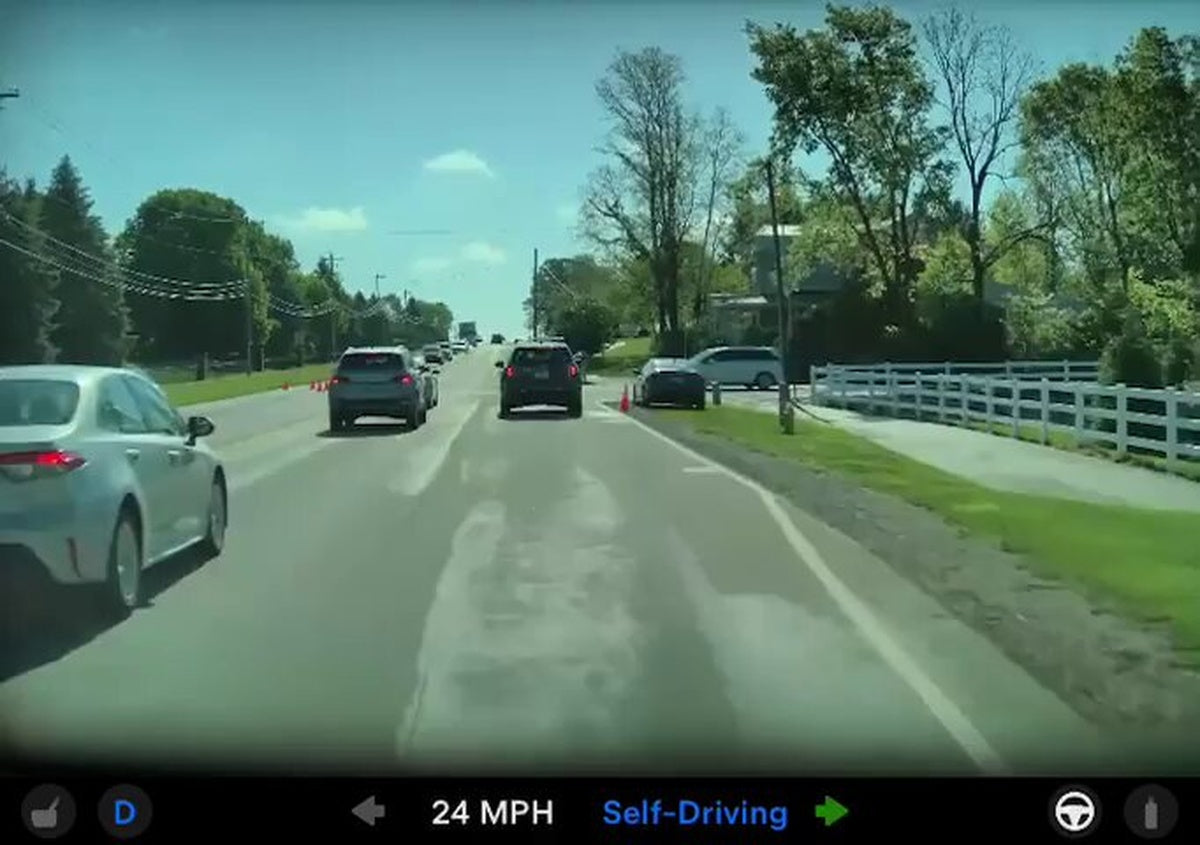
A video circulating from a Reddit user and amplified by Tesla watcher Sawyer Merritt shows Tesla's Full Self-Driving V14 doing something that would have seemed like science fiction just a few years ago: recognizing a human hand signal and stopping to wait. No traffic light, no stop sign — just a person's gesture, correctly interpreted and obeyed.

How Hand Signal Recognition Works in FSD V14
This capability traces back to FSD v14.2.1, where Tesla upgraded its neural network vision encoder to leverage higher-resolution features. According to release notes and confirmed by Elon Musk at the time, the system was specifically updated to handle human gestures — including signals from traffic controllers and pedestrians directing traffic around construction zones, accidents, or other road disruptions.
The practical implication is significant. A Tesla on FSD can now encounter a flagman at a work zone, read the stop signal, and hold position — the same way a human driver would. Earlier in the V14 rollout, videos also captured FSD proceeding through a red light after a traffic controller gave a "go" signal, demonstrating that the system can correctly prioritize human direction over static traffic infrastructure. That's a meaningful threshold for any autonomous system to cross.
Where FSD V14 Stands Right Now
The V14 branch has been in active development since its phased rollout began in late 2025. FSD v14.3 arrived in April 2026 with a rewritten AI compiler and runtime delivering roughly 20% faster reaction times, according to Tesla's release notes. As of early May 2026, v14.3.2 is the most widely distributed version, with v14.3.3 expected to follow shortly.
Hardware compatibility remains a factor. FSD V14 — including the hand signal recognition capability — is currently available for vehicles equipped with Hardware 4 (HW4). A "V14 Lite" build is anticipated for Hardware 3 vehicles in mid-2026, which would extend these capabilities to international markets and older HW3 cars.
On the subscription side, Tesla moved FSD (Supervised) to a subscription-only model in early 2026, ending the one-time purchase option for new buyers after mid-February. The monthly rate sits at approximately $99 USD.
Why This Moment Matters
Handling hand signals isn't just a novelty feature — it's one of the harder edge cases in autonomous driving. Structured environments like highways and well-marked intersections are tractable problems. Unstructured human communication, with all its variation in gesture style, lighting conditions, and context, is a different category of challenge entirely. The fact that FSD V14 is handling it reliably enough to surface in real-world owner videos is a genuine signal of how far the neural network approach has come.
For owners who regularly drive through construction corridors or areas with active traffic control, this is the kind of update that makes FSD meaningfully more usable — not just technically impressive. The question now is how consistently the system performs across the full range of real-world flagging scenarios, and whether future updates will extend this capability to HW3 vehicles on schedule. Check out our FSD coverage for ongoing updates as V14 continues to roll out.
📋 Tracking Tesla software? See every firmware, FSD and app version in one place in our Tesla Software Update Tracker.
Related Gear
Gear up your Tesla with tested, custom-fit BASENOR accessories — shop Tesla accessories →
Sources & reporting notes
The links below identify the material source records used for this report.
- @SawyerMerritt on X (2026-05-09T16:34:52.000Z) — Direct source
- @SawyerMerritt on X (2026-05-09T16:34:52.000Z) — Direct source
- @ray4tesla on X (2026-05-09T20:47:56.000Z) — Direct source
Source links are preserved as published or accessed. See our editorial standards and corrections policy.
The BASENOR Editorial Desk covers Tesla, SpaceX, and related technology, curating reporting from primary sources — official accounts, regulatory filings, and software release data. Every article passes source-record and fact-checking review before publication. About the newsroom.
This report was curated by the BASENOR Editorial Desk from the sources listed above. Read our editorial standards or email editorial@basenor.com to report an error.