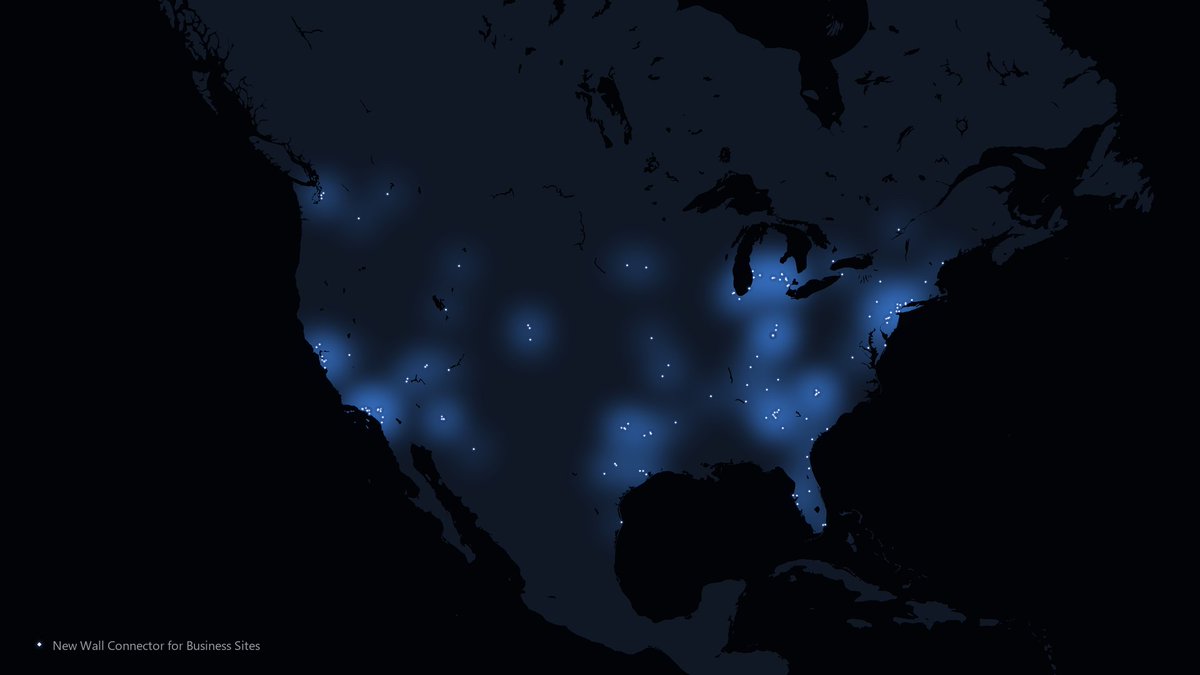
Tesla Charging just posted a significant two-week update to its Wall Connector for Business program: 141 new sites and 910 Wall Connectors added across North America, with the overwhelming majority in the United States. If you manage a commercial property, run a workplace fleet, or simply want to understand where this network is heading, here's what you need to know.

What exactly is Wall Connector for Business?
It's Tesla's commercial Level 2 charging program for workplaces, hotels, apartment complexes, retail locations, and other non-residential properties. Businesses install Wall Connectors on their premises — either accessible to the public or restricted to employees and guests — and those locations get integrated directly into Tesla's in-car navigation system. The property owner handles hardware and installation costs; Tesla provides the software management platform and ongoing support at no additional charge.
How fast does a Wall Connector actually charge?
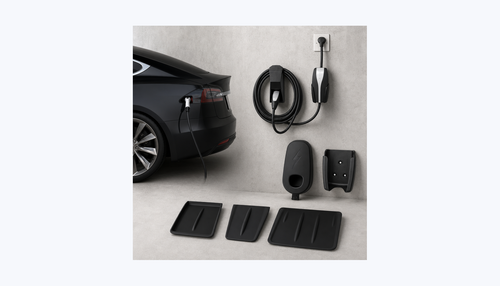
The Universal Wall Connector delivers up to 11.5 kW and 48 amps of Level 2 AC charging. In practical terms, that translates to roughly 30 to 44 miles of range added per hour, depending on the vehicle and the circuit it's connected to. It also supports both NACS and J1772 via a built-in adapter, so it can charge non-Tesla EVs as well — a meaningful selling point for businesses that want to serve a broad customer base.
Can businesses charge guests for using it?
Yes. Property owners have the option to set a per-kWh rate for guest charging. Tesla takes a $0.03 per kWh fee from those transactions. Alternatively, businesses can offer charging as a free amenity — the choice is entirely up to the property owner. The management portal gives operators visibility into usage data and session history.
What does it cost to get set up?
Hardware pricing as of mid-November 2026: the standard Wall Connector runs $635 in the U.S., while the Universal Wall Connector (with the J1772 adapter built in) is $720. In Canada, the Wall Connector is priced at $885 CAD. These figures reflect the fourth price increase for the standard unit in 2026, so businesses evaluating the program should factor in that pricing has trended upward this year. Installation costs vary by site and are handled through a Tesla Certified Installer that Tesla pairs with the business after they order through the commercial portal.
Are there any federal incentives left?
The federal 30C Alternative Fuel Vehicle Refueling Property Credit for commercial EV charger installations expired on June 30, 2026. That credit had covered up to 30% of installation costs for qualifying commercial properties, so its expiration is a real change for businesses running the numbers. State and local utility programs are now the primary incentive pathways — availability varies significantly by location, so it's worth checking with your utility before committing to a deployment.
How do the new sites break down geographically?
Of the 141 sites added in the past two weeks, 139 are in the United States (906 Wall Connectors) and 2 are in Canada (4 Wall Connectors). The U.S. concentration isn't surprising given the relative size of the markets, but the Canadian footprint in this particular batch is notably small. Businesses in Canada interested in the program are still very much able to apply — the lower numbers here likely reflect the pipeline at this specific snapshot rather than a policy distinction.
How does a business actually join the network?
The process starts at Tesla's commercial portal, where property owners submit their interest and site details. Tesla then connects them with a Certified Installer for site assessment and installation. Once the hardware is activated, the location appears automatically in Tesla's navigation for drivers. The Wall Connectors themselves support Wi-Fi connectivity and receive over-the-air firmware updates, so the hardware stays current without manual intervention. Power sharing is also supported, which lets multiple units on the same electrical circuit balance load intelligently — useful for properties that want to deploy several connectors without a costly electrical service upgrade.
At 910 connectors added in a single two-week window, the pace of this program's expansion is worth watching. For EV drivers, more business locations in the navigation system means more reliable charging options away from home. For property owners still on the fence, the window to benefit from federal incentives has closed — but the infrastructure need from employees and guests with EVs is only growing.
Related Gear
Gear up your Tesla with tested, custom-fit BASENOR accessories — shop Tesla accessories →
Sources & reporting notes
The links below identify the material source records used for this report.
- @TeslaCharging on X (2026-11-20T18:39:09.000Z) — Direct source
Source links are preserved as published or accessed. See our editorial standards and corrections policy.
The BASENOR Editorial Desk covers Tesla, SpaceX, and related technology, curating reporting from primary sources — official accounts, regulatory filings, and software release data. Every article passes source-record and fact-checking review before publication. About the newsroom.
This report was curated by the BASENOR Editorial Desk from the sources listed above. Read our editorial standards or email editorial@basenor.com to report an error.