30-Second Brief
The News: Tesla disclosed a deal to acquire an unnamed AI hardware company for up to $2 billion in its Q1 2026 10-Q filing — and industry reporter Fred Lambert suspects the target is DensityAI, founded by former Tesla silicon lead Ganesh Venkataramanan.
Why It Matters: This is Tesla's most significant AI hardware bet since Dojo, and the team behind the suspected acquisition built the very chips that powered Tesla's supercomputing ambitions.
Source: @FredLambert on X
Tesla Buried a $2 Billion Deal in a Single Sentence
Tesla's Q1 2026 earnings cycle came and went without a word about an AI hardware acquisition — no mention in the shareholder letter, nothing on the earnings call. But buried in the "Subsequent Events" section of the company's 10-Q filing, quietly made public around April 23–25, 2026, was a single sentence disclosing that Tesla had entered into an agreement to acquire an AI hardware company for a value of up to $2.00 billion.
Tesla named no names. The filing confirmed only that payment would be made primarily in Tesla common stock and equity awards, and that roughly $1.8 billion of the total is contingent on service conditions and performance milestones tied to the successful deployment of the acquired company's technology.
That structure — a small upfront grant, a massive performance-linked backend — is unusual. It reads less like a traditional acquisition and more like a retention and deployment incentive for a high-value technical team. Which makes the identity of the acquired company all the more intriguing.

Enter DensityAI — The Dojo Alumni Startup
Electrek's Fred Lambert, one of the most plugged-in Tesla reporters in the industry, has a strong suspicion about who Tesla bought. His candidate: DensityAI.
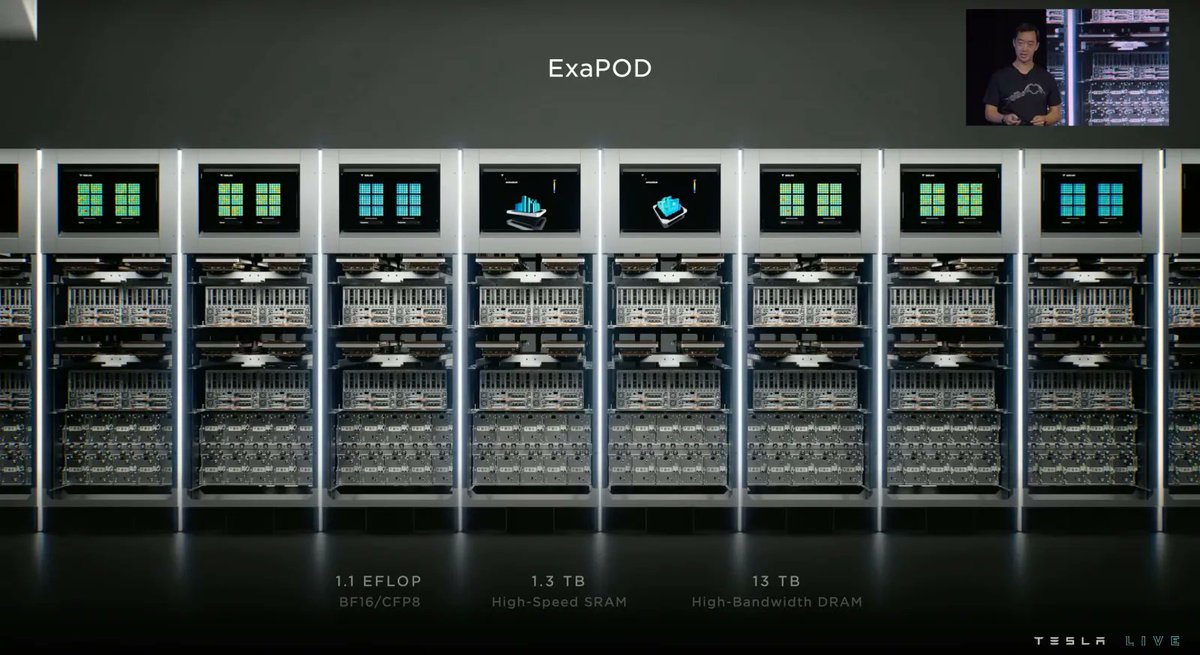
DensityAI was founded by Ganesh Venkataramanan, who led Tesla's silicon efforts and was the driving force behind the Dojo supercomputing initiative — Tesla's in-house AI training chip program. After Tesla wound down the Dojo project around August 2025, more than 20 senior members of the Dojo team followed Venkataramanan out the door and into DensityAI, including co-founders Bill Chang and Ben Floering, both former Tesla engineers.
The startup's focus: chips, hardware, and software for AI data centers serving robotics, AI agents, and automotive applications. In other words, exactly the kind of infrastructure Tesla needs to train and deploy the next generation of FSD and Optimus AI models at scale.
DensityAI was only about two years old at the time of the suspected deal — and many of its team members had been there for less than a year.

📊 Key Figures
| Metric | Value | Context |
|---|---|---|
| Total acquisition value | Up to $2.0B | Paid in Tesla stock & equity |
| Upfront grant (estimated) | ~$200M | Tesla stock to team |
| Performance-contingent payment | Up to $1.8B | Tied to tech deployment milestones |
| DensityAI founding date | ~2 years ago | Post-Dojo wind-down |
| Former Dojo staff who joined DensityAI | 20+ | Including senior engineers |
| Tesla 2026 capex guidance | >$25B | Raised for AI-related projects |
The Pay Structure Tells a Story
Lambert's read on the financial mechanics is worth examining closely. The deal, as he describes it, breaks down roughly like this: the team receives approximately $200 million in Tesla stock upfront, with up to $1.8 billion more contingent on performance — specifically, the successful deployment of the acquired company's technology.
For a team that had been at DensityAI for less than a year, and who left Tesla's stock comp behind when they departed, this represents a potentially enormous financial outcome — but only if they deliver. The structure is designed to keep the team inside Tesla and laser-focused on shipping. It's a golden handcuff, not a golden parachute.
This is also consistent with how Tesla has historically structured talent-heavy acquisitions: pay for results, not just presence.
🔭 The BASENOR Take
Timeline: Acquisition agreement signed April 2026 | Disclosed in Q1 10-Q (April 23–25, 2026) | DensityAI speculation surfaced April 28, 2026
Impact Level: 🔴 High — potential reshaping of Tesla's AI compute stack
Confidence (DensityAI = target): Speculative — no official confirmation from Tesla or DensityAI
Let's be clear about what we know versus what we're inferring. Tesla's acquisition is confirmed — it's in a regulatory filing. The DensityAI connection is Fred Lambert's informed speculation, not a verified report. Tesla has not named the company, and neither DensityAI nor Ganesh Venkataramanan has commented publicly.
That said, the circumstantial case is compelling. The profile fits almost perfectly: a small, elite team of former Tesla chip engineers, building exactly the kind of AI hardware infrastructure Tesla needs, led by the person who built Dojo. The performance-contingent payment structure suggests Tesla wants this team to deploy technology — not just sit on it — which aligns with DensityAI's stated focus on AI data center hardware for automotive and robotics applications.
Strategically, this acquisition — if confirmed — would signal that Tesla is doubling down on in-house AI silicon rather than relying on third-party compute. With Tesla raising its 2026 capital expenditure guidance to more than $25 billion for AI-related projects, a $2 billion bet on a custom chip team is a meaningful but proportionate move. It would also suggest that the Dojo project, despite being wound down in its original form, may be reborn under a new structure — with the same core team, now incentivized at a completely different scale.
For Tesla owners, the downstream implications are real: better AI training infrastructure means faster FSD iteration, more capable Optimus robots, and a Tesla that is less dependent on external compute suppliers for its most critical technology. The full picture won't be clear until Tesla names the company — but the pieces are pointing in one direction.

Sarah focuses on Tesla Energy, SpaceX missions, and the broader Musk AI portfolio. Former data analyst in clean energy. Based in San Francisco.
Sources verified at publish time. Spotted an inaccuracy? Email editorial@basenor.com.