📌 UPDATE — June 3, 2026
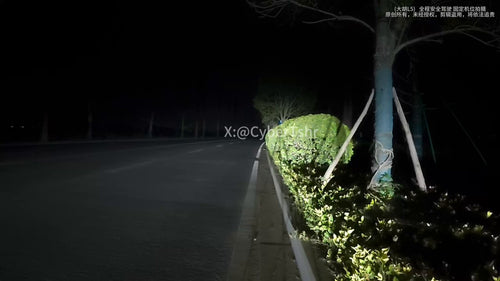
During his CVPR talk, Ashok Elluswamy revealed that Tesla FSD's context length has tripled — jumping from ~10 seconds to ~30 seconds — giving the system a significantly longer memory window to process and predict complex driving scenarios. Elluswamy also shared a striking real-world clip of a driverless Tesla Robotaxi instantly swerving to avoid a cyclist who had fallen off their e-bike, a potential life-saving reaction that drew attention from attendees. Additionally, Elluswamy provided a rare look at the FSD model's full inputs and outputs architecture. Attendees are hoping Tesla will release the high-resolution e-biker video publicly on X.


📌 UPDATE — June 3, 2026
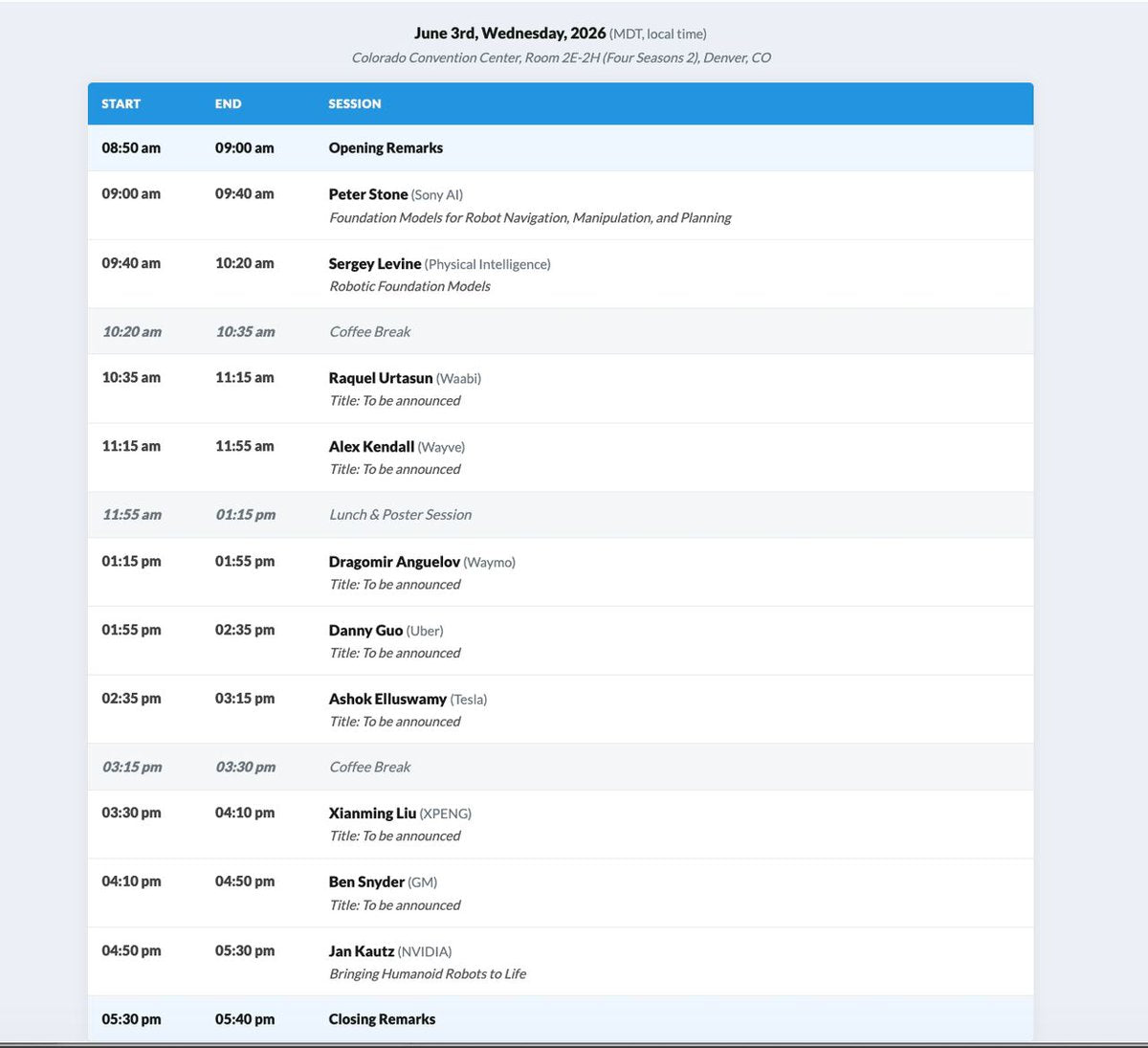
Tesla AI has confirmed that Ashok Elluswamy's CVPR presentation is happening today at 3:30pm local time in Room 603, Denver. The talk will specifically focus on Tesla's approach to foundation models for robotics, covering architecture, large-scale multimodal training, end-to-end control, safety, and deployment — a more detailed agenda than previously reported. Attendees can also visit booth 255 after the session for live demos.

Tesla's head of Autopilot and AI, Ashok Elluswamy, is confirmed as a keynote speaker at CVPR 2026 — the premier academic conference for computer vision — taking place June 3–7 in Denver, Colorado. The lineup puts him back-to-back with XPENG's head of General Intelligence, setting up what could be the most revealing public comparison of the two leading vision-based end-to-end autonomous driving systems in recent memory.

According to the confirmed CVPR 2026 schedule, Elluswamy is slated to present at three separate workshops on June 3 at the Colorado Convention Center. His sessions span the Workshop on Autonomous Driving (WAD), the AUTOPILOT Workshop, and the inaugural Workshop on Deployment of Foundation Models for Embodied AI — where his talk is titled "Building Foundational Models for Robotics at Tesla." That last title is worth noting: it signals Tesla is framing its autonomous driving work not as a standalone product but as part of a broader robotics and embodied AI platform, consistent with the company's push into the Optimus humanoid robot program.
Tesla's end-to-end approach — integrating perception, planning, and control into a single neural network trained on fleet data — has long been the subject of academic curiosity but rarely gets this level of direct public scrutiny. CVPR is where the research community sets the agenda, and Elluswamy presenting alongside a direct competitor gives researchers and engineers a rare side-by-side look at how two of the most deployed vision-only systems actually think about the problem. The AUTOPILOT Workshop specifically focuses on open-world perception and integrated language models for on-road tasks, which maps directly to where Tesla's FSD stack is heading.
For Tesla owners and followers of our FSD coverage, the practical takeaway is that whatever Elluswamy shares on stage will likely offer the clearest public window yet into Tesla's AI architecture — including how the company is thinking about foundation models as a unifying layer across driving and robotics. Whether any of that translates into near-term FSD improvements is a separate question, but the academic community tends to move fast once the methodology is in the open.

Sarah focuses on Tesla Energy, SpaceX missions, and the broader Musk AI portfolio. Former data analyst in clean energy. Based in San Francisco.
Sources verified at publish time. Spotted an inaccuracy? Email editorial@basenor.com.