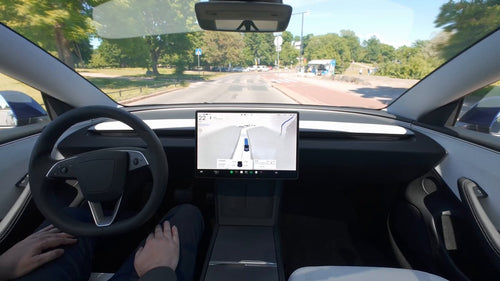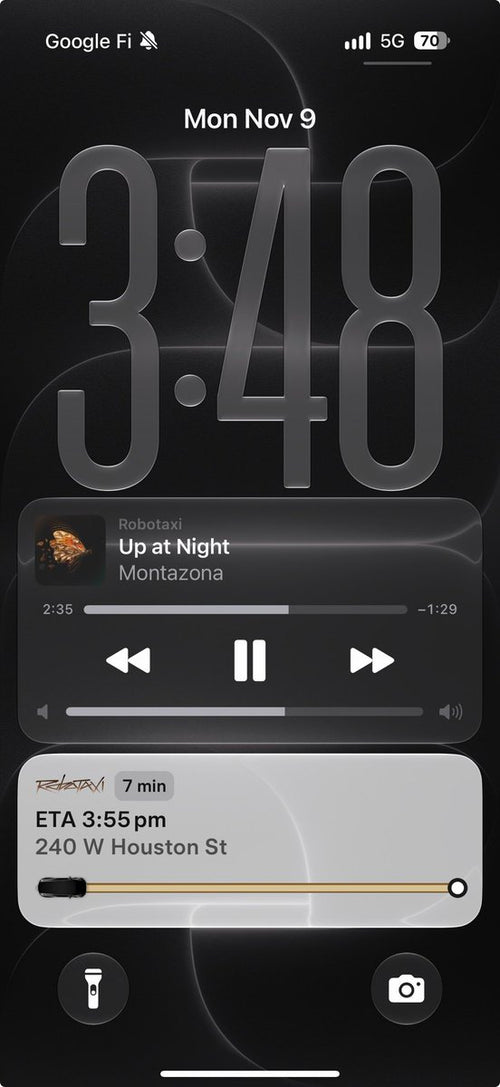
Tesla's leadership is sending a clear signal about where the company's next phase of growth comes from: not new consumer vehicle variants, but transportation as a service. In recent commentary resurfaced this week by Whole Mars Catalog, both Elon Musk and VP of Vehicle Engineering Lars Moravy framed the Robotaxi network — and the Cybercab in particular — as the primary lever for expanding Tesla's Total Addressable Market. That strategic message landed the same morning Tesla's Austin Robotaxi fleet crossed 1,302 vehicles, edging past Waymo's reported 1,297-vehicle footprint in Texas.
The combination matters. Executive framing by itself is forward guidance; a live, growing fleet is evidence that the strategy is already in deployment.
The Strategy: TAM Through Service, Not SKUs
When shareholders earlier this year pressed Tesla on whether more vehicle models — a smaller hatchback, additional body styles, further segmentation — would be the path to growth, Lars Moravy and Elon Musk pushed back. Their answer was that the cleanest way to grow Tesla's addressable market is not to sell more cars to the same car-buying population, but to sell rides to a much larger population that doesn't buy cars at all.

That logic reframes a lot of recurring questions about Tesla's product roadmap. It explains why there is no rush to proliferate consumer nameplates, why the lineup has been trimmed rather than expanded this year, and why capital and engineering attention keep flowing toward autonomy, Cybercab tooling, and fleet operations. If a single autonomous vehicle can generate revenue across many riders per day, the unit economics of adding one Robotaxi are structurally different from the unit economics of selling one more Model Y.
Cybercab Will Be "The Grand Majority"
In a separate clip, Moravy was more specific about the fleet mix going forward:
"Of course, we do have plans to have Robotaxis in various shapes and sizes but obviously Cybercab will be the grand majority of that volume." — Lars Moravy

Two things stand out in that quote. First, Moravy leaves room for a mixed fleet — Model Y, and "various shapes and sizes" — which aligns with how Tesla has actually seeded the Austin service so far. Model Ys are the bridge vehicle: already in volume production, already validated, and useful for scaling the service while Cybercab ramps. Second, the destination state is unambiguous. Cybercab, the two-seat purpose-built autonomous vehicle with no steering wheel or pedals, is the vehicle the strategy is designed around. Everything else is transitional.
That has downstream consequences worth flagging. A fleet dominated by a purpose-built two-seater implies a service optimized for one- and two-rider trips — commutes, airport runs, short urban hops — rather than family or cargo use cases. It also implies that the economics Tesla is modeling assume Cybercab's reportedly lower production cost and simpler interior, not Model Y hardware costs. Any investor or owner trying to back-into Robotaxi margin math using current Model Y bill-of-materials is likely overestimating the long-run cost base.
The Austin Fleet Just Crossed 1,302 Vehicles
While the strategic framing is familiar, the deployment data is the newer development. According to @TeslaNewswire, Tesla added another 20 Model Ys to its Austin Robotaxi service, pushing the total fleet composition to:
| Vehicle | Units | Share |
|---|---|---|
| Model Y | 729 | 56% |
| Cybercab | 573 | 44% |
| Total Austin fleet | 1,302 | 100% |

Per the same report, that figure now exceeds Waymo's 1,297 vehicles operating in Texas. A few caveats are worth noting before reading too much into the headline. The two services operate under different geofences, different safety-monitor protocols, and different pricing structures, so a raw vehicle count is not the same as rides-per-day or revenue parity. Waymo also operates in multiple other markets, so Texas alone doesn't represent its total network.
Still, it's the first time Tesla's Austin fleet has visibly matched a peer on sheer deployed volume, and it happened less than 18 months after the service launched. The composition is the more interesting line of the chart: Cybercab, a vehicle that was still a stage prop two years ago, now accounts for 44% of the Austin fleet. That is a concrete signal that Cybercab has moved out of ramp mode and into volume contribution.
What to Watch Next
Three things will tell us whether this is a line on a slide or a durable business.
Cybercab share crossing 50%. If the next few weeks of fleet additions are weighted toward Cybercab rather than Model Y, that confirms Moravy's "grand majority" framing is already being executed, not just forecast. At current trajectory, Cybercab could be the plurality vehicle in Austin within a quarter.
Geographic expansion. Austin is the proof of concept. The real TAM argument only works if the service can be replicated in additional metros — the Bay Area, Phoenix, and Nevada have all been floated in prior company commentary. Watch for the next city announcement and whether it launches Cybercab-first or Model Y-first.
Utilization, not just fleet size. 1,302 vehicles is a supply number. The variable that actually drives TAM expansion is rides per vehicle per day. If Tesla or third-party trackers start publishing utilization data, that's the metric to anchor on — because the whole strategic thesis is that one autonomous car replaces many sold cars, which only works if that one car is actually moving.
For now, the message from Palo Alto is consistent with the picture on the ground in Austin: Tesla is not trying to win the next phase by shipping more models. It's trying to win it by shipping more rides.
🚕 Following the Robotaxi rollout? See every operating city, launch date and announced market in our Tesla Robotaxi Tracker.
Related Gear
Gear up your Model Y with tested, custom-fit BASENOR accessories — shop Model Y accessories →
Sources & reporting notes
The links below identify the material source records used for this report.
- @wholemars on X (2026-11-11T07:35:30.000Z) — Direct source
- @wholemars on X (2026-11-11T07:40:30.000Z) — Direct source
- @TeslaNewswire on X (2026-11-11T07:46:40.000Z) — Direct source
Source links are preserved as published or accessed. See our editorial standards and corrections policy.
The BASENOR Editorial Desk covers Tesla, SpaceX, and related technology, curating reporting from primary sources — official accounts, regulatory filings, and software release data. Every article passes source-record and fact-checking review before publication. About the newsroom.
This report was curated by the BASENOR Editorial Desk from the sources listed above. Read our editorial standards or email editorial@basenor.com to report an error.