📌 UPDATE — May 27, 2026
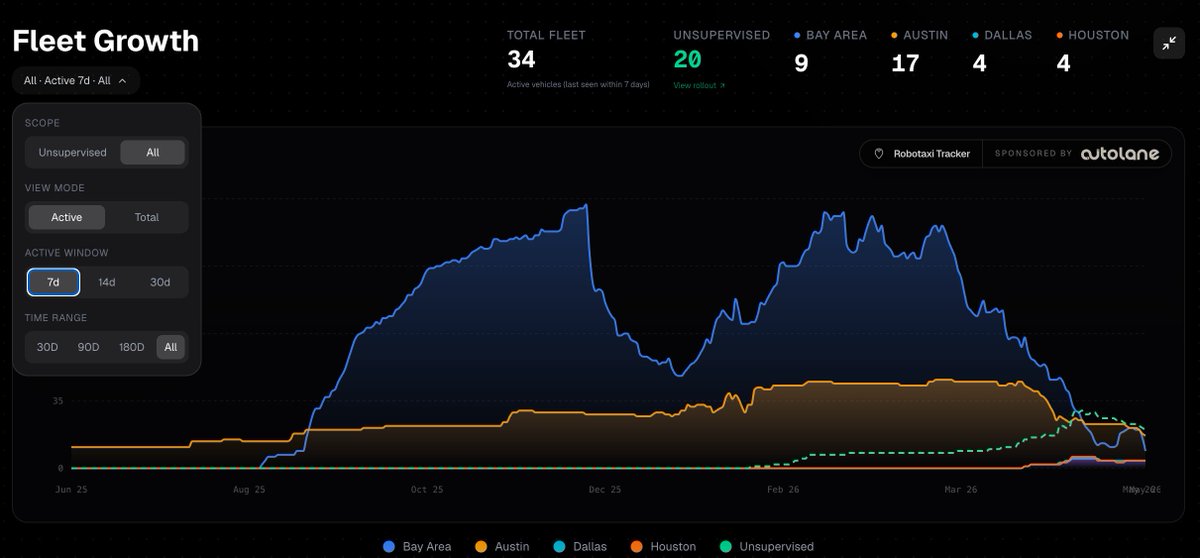
The fleet count has now been confirmed at just 34 total vehicles over a 7-day period — with only 20 actively operating — a figure that puts the gap between analyst predictions and reality in stark relief. Electrek's Fred Lambert published a thread cataloguing how badly forecasters missed: one analyst predicted 3,000 by June 2026, another 10,000–100,000, Bloomberg Intelligence called 35,000 "conservative," and one bull predicted Tesla would surpass Waymo's entire fleet with 26,000 cars within a year. Meanwhile, Waymo has actually exceeded its own stated goal of 3,500 vehicles. Lambert himself admitted he expected "at least a few hundred" vehicles in Texas alone. The consensus miss — off by factors ranging from 100x to 1,000x — is now being widely cited as one of the most dramatic forecasting failures in recent EV industry history.

After a brief period that looked like genuine momentum, Tesla's unsupervised robotaxi fleet is contracting. New analysis shared by Electrek's Fred Lambert shows the active unsupervised vehicle count has dipped to 20 cars across Texas — down from a mid-May peak of 39 — raising real questions about how quickly Tesla can scale its fully autonomous ride-hailing service before year-end.

What the Numbers Actually Show
The data paints a volatile picture. Tesla's unsupervised fleet — meaning vehicles operating with zero human safety driver onboard — hit what now appears to be a peak of 39 vehicles in mid-May 2026, spread across Austin (27), Dallas (5), and Houston (6). That figure has since retreated sharply.
As of May 26, 2026, the active unsupervised count stands at 20 vehicles:
| City | Active Unsupervised Vehicles | vs. Mid-May Peak |
|---|---|---|
| Austin | 14 | ↓ from 27 |
| Dallas | 3 | ↓ from 5 |
| Houston | 3 | ↓ from 6 |
| Total | 20 | ↓ from 39 |
The broader ride-hailing fleet — which includes supervised FSD vehicles and Bay Area operations — has also contracted, falling to 34 total active vehicles. Austin's unsupervised count alone dropped from 19 to 14 in just the last seven days, according to the analysis.
A Blip, Not a Ramp
Lambert's framing is pointed: what looked like a ramp last month was, in his words, "only a blip." That's a meaningful distinction. A genuine ramp would show a sustained upward trend as Tesla validates routes, accumulates safety data, and adds vehicles. A blip suggests the fleet expansion hit a wall — whether that's a software regression, a regulatory pause, a vehicle reallocation, or simply that Tesla is being more cautious than the headline numbers implied.
For context, the fleet had reached 25 cumulative unsupervised vehicles by late April 2026, then surged to 39 by May 13 — a jump that generated significant coverage. The reversal since then has been equally swift, and it undercuts the narrative of steady, compounding progress.
The Gap Between Ambition and Reality
The timing is awkward. On May 18, Elon Musk stated publicly that he expects unsupervised FSD to become widespread across the US by the end of 2026, with Israel named as a near-term international target. Tesla also began Cybercab production in April 2026, with targets to ramp toward hundreds of units per week. Plans to expand commercial robotaxi service to Phoenix, Miami, Orlando, Tampa, and Las Vegas before mid-2026 were also on the table.
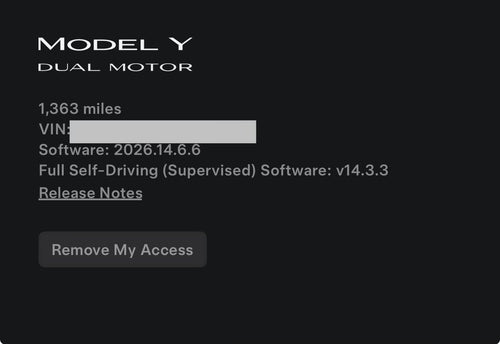
Against those stated ambitions, a fleet of 20 unsupervised vehicles — declining, not growing — is a significant gap. The FSD 14.3 software stack is reportedly considered architecturally sufficient for unsupervised deployment, with remaining work centered on validation and regulatory clearance. That framing suggests the bottleneck isn't the AI itself, but the painstaking process of proving it safe enough to operate without a human fallback.
For consumer Tesla owners hoping to access unsupervised FSD in their own vehicles, the current projections point to a gradual rollout beginning in Q4 2026 at the earliest, prioritizing AI4/HW4 hardware. The stumble in the commercial fleet doesn't necessarily push that date back — but it does little to inspire confidence that Tesla is on a smooth glide path toward it.
The next few weeks of fleet data will matter more than any press statement. If the unsupervised count rebounds and sustains above 30, the blip narrative gets revised. If it stays flat or continues falling, the questions about Tesla's 2026 autonomous ambitions will only get louder.

Marcus covers Tesla's software releases, FSD rollouts, and OTA changes. Background in automotive engineering. Based in Austin.
Sources verified at publish time. Spotted an inaccuracy? Email editorial@basenor.com.