Tesla's Full Self-Driving (Supervised) v14.3.3 is drawing some of the most enthusiastic owner reactions in recent memory — and the reason is simple: it largely stops pestering you to touch the steering wheel. Prominent Tesla commentator Whole Mars Catalog called it 'fucking amazing' overnight, and the background is worth understanding before you assume your car will behave the same way.

What exactly is the 'no nag' change in FSD v14.3.3?
Instead of relying on periodic steering wheel torque checks to confirm you're paying attention, FSD v14.3.3 shifts that responsibility to the cabin camera. The system watches your eyes continuously. As long as it can confirm you're looking forward and alert, it skips the steering wheel prompt entirely. According to reports from owners and statements attributed to Elon Musk, this version was specifically designed to reduce driver nags considerably — making long FSD runs feel far less interrupted.
Does every Tesla get this experience?
No — and this is the critical caveat. The reduced-nag behavior is only available on vehicles equipped with a cabin camera. Older Model 3 and Model S/X vehicles produced before cabin cameras became standard will continue to receive the traditional torque-based steering wheel prompts regardless of software version. If you're unsure whether your car has a cabin camera, check the overhead console area above the rearview mirror.
What conditions does the cabin camera need to work properly?
The system needs a clear, unobstructed view of your eyes at all times. Practically, that means: sufficient cabin lighting (it struggles in very dark conditions), no sunglasses with heavily tinted or mirrored lenses, no hats with low brims that shadow your eyes, and your gaze directed generally forward. If the camera loses confidence in driver attentiveness — even briefly — the system falls back to the conventional torque nag. Think of it as a conditional upgrade, not a blanket removal.
Is this actually new? Didn't Tesla remove nags back in 2024?
Partially. Tesla first moved toward camera-based monitoring with FSD (Supervised) v12.4 in mid-2024, and Elon Musk confirmed at the time that steering wheel nags would be removed. In practice, many owners found the implementation inconsistent — nags still appeared frequently under real-world conditions. Version 14.3.3 appears to represent a more reliable execution of that same intent, with the cabin camera integration robust enough that owners are noticing a genuine qualitative difference in day-to-day use.
What else changed in v14.3.3 beyond the nag reduction?
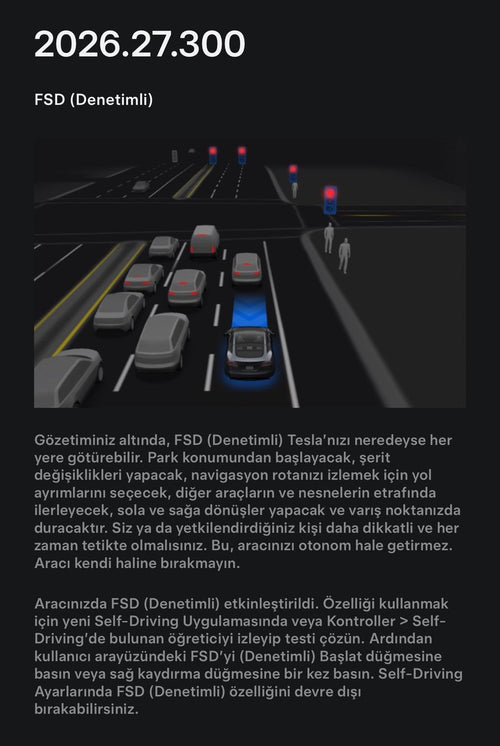
According to verified reports, v14.3.3 is a fairly substantial update beyond just monitoring changes. Notable additions include Actual Smart Summon speeds up to 8 mph (faster than before), more reliable 'Hey Grok' voice command recognition, richer on-screen visualizations, smoother acceleration in 'Mad Max' profile, and an intervention streak counter that tracks how many consecutive miles you've completed without a takeover. For owners tracking their FSD performance, that last feature alone is worth exploring. You can follow all the details in our FSD coverage.
What should owners do right now?
First, confirm whether v14.3.3 has reached your vehicle — check Software in your touchscreen settings. If it has, verify your cabin camera is enabled and unobstructed (Settings → Autopilot → Cabin Camera). On your next FSD drive, ensure the cabin is reasonably lit and avoid eyewear that blocks the camera's view of your eyes. If you're still getting frequent nags after the update, the camera likely can't confirm attentiveness — adjust conditions and try again rather than assuming the feature isn't working.
The shift from torque-based to camera-based monitoring has been in progress for over a year, but v14.3.3 seems to be the version where it finally feels seamless enough to notice. Whether that holds across diverse real-world conditions — night driving, sunglasses, varied lighting — is the question owners will be answering over the coming weeks.
📋 Tracking Tesla software? See every firmware, FSD and app version in one place in our Tesla Software Update Tracker.
Related Gear
Gear up your Tesla with tested, custom-fit BASENOR accessories — shop Tesla accessories →
Sources & reporting notes
The links below identify the material source records used for this report.
- @wholemars on X (2026-05-28T01:19:21.000Z) — Direct source
Source links are preserved as published or accessed. See our editorial standards and corrections policy.
The BASENOR Editorial Desk covers Tesla, SpaceX, and related technology, curating reporting from primary sources — official accounts, regulatory filings, and software release data. Every article passes source-record and fact-checking review before publication. About the newsroom.
This report was curated by the BASENOR Editorial Desk from the sources listed above. Read our editorial standards or email editorial@basenor.com to report an error.