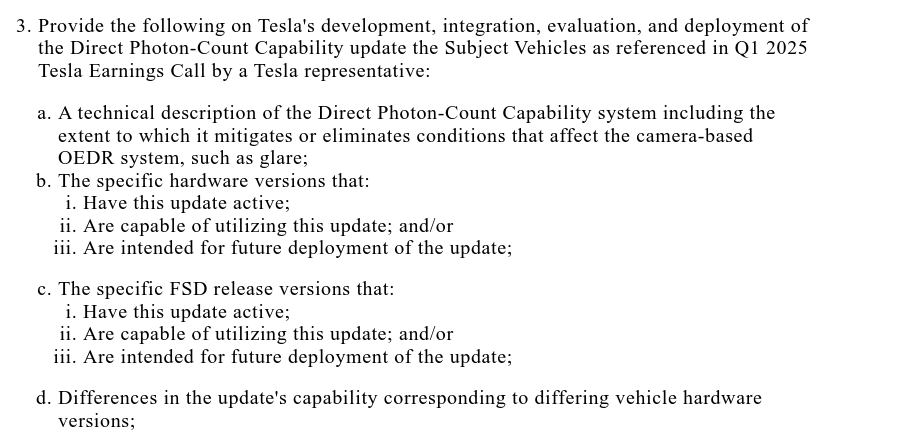
The National Highway Traffic Safety Administration has formally requested information from Tesla regarding its so-called 'photon counting' technology — a term that points directly at the advanced vision or sensor hardware underpinning Full Self-Driving. The inquiry, surfaced by well-known Tesla hardware researcher @greentheonly, is drawing significant attention because Tesla's response — or lack of a transparent one — could finally answer long-running questions about exactly what sensors are doing the work inside FSD-equipped vehicles.

What the NHTSA Request Is Actually About
NHTSA's information request centers on 'photon counting' — a technique associated with highly sensitive optical sensing that can detect individual photons of light. In the context of autonomous driving hardware, this is likely tied to Tesla's vision pipeline or a next-generation sensor system that goes beyond standard camera imaging. The regulator wants to understand how this technology works, presumably as part of its ongoing oversight of FSD and Tesla's camera-only autonomy approach.
@greentheonly, who has a long track record of reverse-engineering Tesla firmware and hardware, flagged the request publicly and made his frustration clear: Tesla has a pattern of filing responses to NHTSA under broad 'confidential business information' claims, which keeps the technical details out of the public record. His wish — that Tesla answer this one transparently — reflects a genuine gap in public understanding of what FSD's sensor stack actually does at a hardware level.

The second thread in the exchange adds another layer: @greentheonly also asked whether anyone holds a Tesla-produced document previously titled something like 'Radar Saves Us' — a reference to internal materials Tesla reportedly created when it still used radar, materials that could now be relevant to arguments about sensor redundancy and safety margins in a vision-only system.

What This Means for FSD Owners Right Now
This is a regulatory information request, not a recall, investigation finding, or safety defect notice. Your FSD subscription is not affected, and there is no action required to keep using the system. That said, this inquiry matters to anyone who drives on FSD regularly, because the outcome could shape how Tesla documents and discloses its sensor capabilities going forward.
Here is what to keep an eye on:
- Watch the NHTSA docket. Tesla's formal response will be filed publicly — at least in part — on NHTSA's website. Searching the docket for Tesla's response to this specific request will tell you how much technical detail Tesla chose to disclose versus redact.
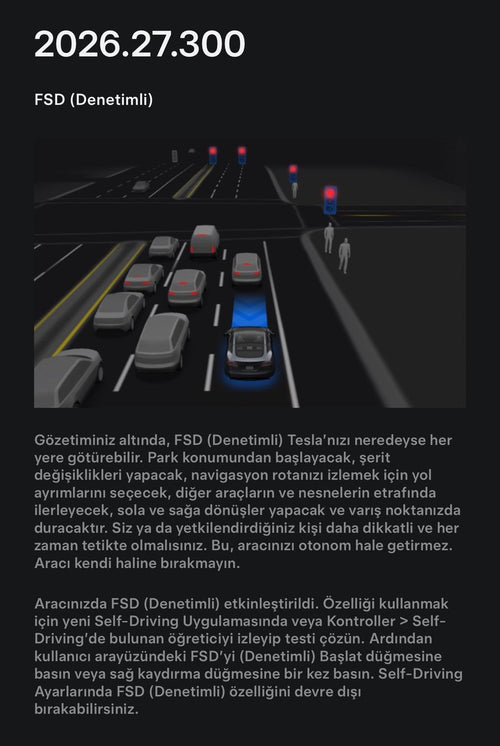
- Note any FSD release notes that reference sensing hardware. If Tesla is being asked to explain photon counting technology, there is a chance future software updates include more explicit documentation of what the hardware is doing. Check all software updates as they drop.
- Follow @greentheonly. He has consistently been the first to surface hardware-level findings from Tesla firmware. If Tesla's NHTSA response leaks or gets partially published, he will likely be among the first to analyze it.
The Bigger Picture on FSD Regulatory Scrutiny
NHTSA's interest in photon counting fits a broader pattern of the agency trying to get a clearer technical picture of what Tesla's autonomy stack actually relies on. Tesla removed radar from its vehicles in 2021, betting entirely on cameras and neural networks — a decision that has been debated ever since in safety and engineering circles. If 'photon counting' represents a new or undisclosed sensing modality that Tesla has been developing or deploying, regulators have a legitimate interest in understanding its role in collision avoidance and FSD decision-making.
The transparency question @greentheonly raises is not academic. NHTSA information requests only produce useful public knowledge when the responding company doesn't bury the technical substance under confidentiality claims. Tesla's track record on this is mixed. Whether this response breaks that pattern is worth watching closely — and it may settle some of the most persistent arguments in the FSD community about what the hardware is actually capable of. For ongoing coverage, see our FSD coverage.
Related Gear
Gear up your Tesla with tested, custom-fit BASENOR accessories — shop Tesla accessories →
Sources & reporting notes
The links below identify the material source records used for this report.
- @greentheonly on X (2026-07-21T18:15:28.000Z) — Direct source
- @greentheonly on X (2026-07-21T18:15:29.000Z) — Direct source
- @greentheonly on X (2026-07-21T18:15:29.000Z) — Direct source
Source links are preserved as published or accessed. See our editorial standards and corrections policy.
The BASENOR Editorial Desk covers Tesla, SpaceX, and related technology, curating reporting from primary sources — official accounts, regulatory filings, and software release data. Every article passes source-record and fact-checking review before publication. About the newsroom.
This report was curated by the BASENOR Editorial Desk from the sources listed above. Read our editorial standards or email editorial@basenor.com to report an error.