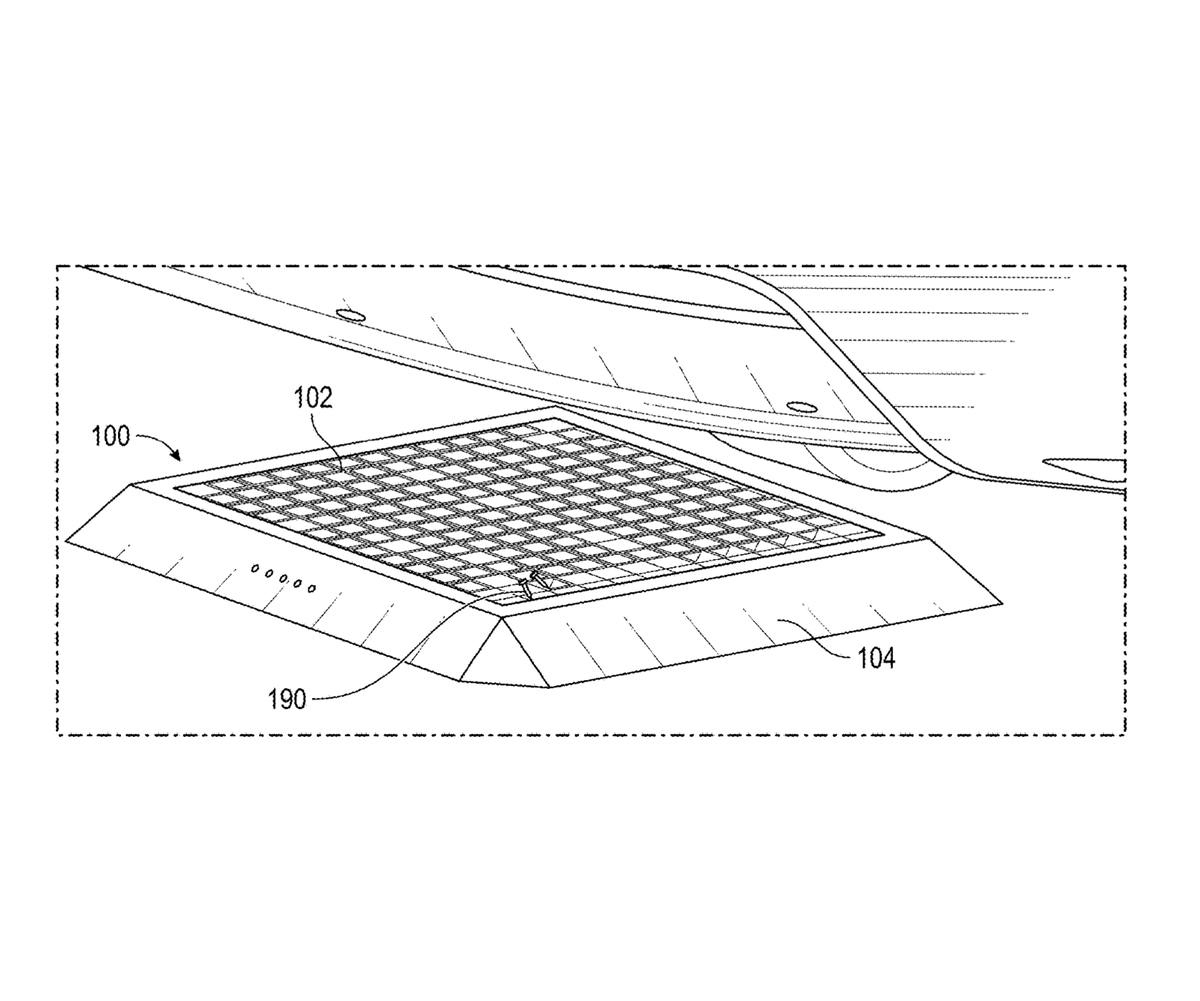
Tesla has published a patent application for a wireless vehicle charging system that goes beyond simple power delivery — it actively monitors the charging pad for foreign objects that could cause damage or create a safety hazard. The core mechanism is more sophisticated than a simple sensor sweep, and it has real implications for how wireless charging might eventually work on your Tesla.

What exactly did Tesla patent here?
The patent application covers a wireless vehicle charging system with an integrated foreign object detection (FOD) capability. Rather than relying solely on a camera or a simple proximity sensor, the system analyzes shifts in the charging pad's resonant frequencies to identify when something — a coin, a key, a piece of foil — has landed on or near the pad. Separately, according to a related patent published on August 15, 2026, Tesla is also exploring temperature sensors embedded directly in the charging pad as a second layer of detection, designed to cut power automatically if an object begins heating abnormally.
Why does resonant frequency matter for detecting objects?
Wireless charging works by inducing an electromagnetic field between a ground pad and a receiver on the vehicle. When a metallic object enters that field, it disrupts the circuit in a measurable way — the resonant frequency of the pad shifts. Tesla's system is designed to read those shifts in real time and distinguish between the vehicle receiver coupling normally versus an unwanted object interfering. It's a passive, continuous detection method that doesn't require additional hardware scanning the area — the pad itself becomes the sensor.
What's the actual safety risk that this solves?
Metallic objects sitting on a wireless charging pad absorb electromagnetic energy and can heat up rapidly — fast enough to damage surfaces, start a fire, or injure someone who touches them. A coin or a set of keys left on a ground pad before a charging session begins is the most common real-world scenario. Without detection, the system would simply begin charging and the object would heat silently. The FOD system is designed to catch this before power transfer starts, or interrupt it mid-session if something lands on the pad after charging is underway.
Does Tesla currently offer wireless charging for its vehicles?
Not for the main drive battery. Tesla does offer wireless charging for phones inside the cabin on several models. The ground-pad wireless charging described in this patent — where the car parks over a pad and charges without plugging in — is not yet a production feature. This patent represents Tesla's ongoing development work in that direction, not an imminent product launch. Patent applications are published well before any corresponding product reaches market, and many patented technologies never make it to production at all.
Which Tesla models would this apply to?
The patent does not specify a particular vehicle. Wireless ground-pad charging is a platform-level technology, meaning it would need to be designed into a vehicle's underbody from the start. Any future Tesla with a compatible receiver coil could theoretically use it. Given that the Model 3 and Model Y are Tesla's highest-volume platforms, they would be the logical candidates if this technology moves toward production — but that remains speculative at this stage.
What should current Tesla owners take away from this?
For now, nothing changes about how you charge your car. This is a look at where Tesla's engineering team is investing R&D attention — specifically, making wireless charging safe enough for everyday use in environments where people drop things. The foreign object problem has been one of the practical barriers slowing wireless EV charging adoption broadly, and Tesla tackling it at the hardware level suggests they're serious about eventually bringing it to market. Keep an eye on future vehicle platform announcements for the first signs of a receiver coil appearing in production specs.
Related Gear
Gear up your Tesla with tested, custom-fit BASENOR accessories — shop Tesla accessories →
Sources & reporting notes
The links below identify the material source records used for this report.
- @SawyerMerritt on X (2026-10-01T15:38:06.000Z) — Direct source
Source links are preserved as published or accessed. See our editorial standards and corrections policy.
The BASENOR Editorial Desk covers Tesla, SpaceX, and related technology, curating reporting from primary sources — official accounts, regulatory filings, and software release data. Every article passes source-record and fact-checking review before publication. About the newsroom.
This report was curated by the BASENOR Editorial Desk from the sources listed above. Read our editorial standards or email editorial@basenor.com to report an error.