Tesla Model 3 Glass Roof: It Does Not Open — What Owners Can Do Instead
If you searched “how to open the sunroof on a Tesla Model 3,” here is the direct answer: the Model 3 glass roof is fixed. It does not slide, tilt, vent, or open like a traditional sunroof. What owners usually want is not an opening roof; it is less heat, less glare, more privacy, or replacement clips for an existing shade.
We are treating this as a correction guide because the wording matters. Calling it an opening sunroof creates the wrong expectation and can lead owners to pull on trim, force shade hardware, or buy the wrong accessory. The right fix is to understand which glass area you are dealing with, then choose the shade or clip solution that matches your Model 3 generation.
Bottom line up front
Fact: Model 3 uses a fixed glass roof. You cannot open it from the screen, app, key card, or a hidden latch.
Best owner fix: if heat or glare is the problem, use a generation-matched roof sunshade; if a shade is sagging, inspect the clips instead of forcing the glass or trim.
Fitment note: 2017-2023 Legacy Model 3 and 2024-2026 Highland roof-shade fitment are not the same. Match by generation before buying.
Does the Tesla Model 3 roof open?
No. The Model 3 roof glass is fixed. Car and Driver's Model 3 specifications list the roof glazing as fixed laminated glass for the first and second rows, and the broader Model 3 background sources describe the vehicle around its all-glass roof design rather than an operable sunroof panel. In everyday owner language, people still say “sunroof” because the roof is glass and lets in light, but functionally it is closer to a fixed panoramic glass roof.
That distinction is important for safety and fitment. If a shade does not sit correctly, the fix is not to “open” the roof or pry the glass. Check the shade orientation, frame position, clips, and whether the accessory was designed for your generation.
Do not force roof trim
If a roof shade is hard to install, stop and re-check the product generation. Highland Model 3 changed enough interior details that legacy assumptions can mislead owners. Forcing clips or trim can create rattles, marks, or a poor seal around the shade frame.
Why owners still search “how to open the sunroof”
Most searches come from three real pain points: heat soak, glare, and privacy. In hot climates, owners report that the glass roof can make the cabin feel uncomfortable when parked or when the sun is high. Reddit discussions around Model 3 roof shades show the same pattern: owners are not trying to create convertible airflow; they want to make the glass roof easier to live with in summer or on long drives.
There is also a naming issue. Older cars often had small sliding sunroofs. Tesla uses large fixed glass panels, so the owner instinct is to ask where the open control is. The better question is: what problem are you trying to solve?
| Owner problem | What not to do | Better fix | Fitment check |
|---|---|---|---|
| Cabin heat through the glass roof | Look for an open/vent setting that does not exist | Use a roof sunshade or windshield shade when parked | Match Legacy vs Highland roof shape |
| Midday glare on front/rear passengers | Force a loose shade into place | Use a framed or clipped shade designed for your roof section | Confirm clip style and panel coverage |
| Existing shade sagging | Pull roof trim or bend the frame | Inspect and replace clips if the shade system uses removable clips | Confirm clip count and color before ordering |
| Privacy while camping or parked | Assume roof glass can be mechanically closed | Add roof/side-window/windshield shade coverage as needed | Check each glass area separately |
Model 3 roof-shade fitment by generation
Model 3 roof-shade fitment should be split into two owner groups. Legacy Model 3 covers 2017-2023 cars. Highland Model 3 covers 2024-2026 cars. The roof is still fixed in both groups, but interior trim and accessory fit can differ. That is why we do not recommend buying a shade only because a listing says “Model 3.” Match the model year first.
For Highland owners, choose a 2024-2026 product. For 2017-2023 owners, use a legacy Model 3 shade or clip system. If you own a 2024 transition-year car, verify by interior generation: Highland has the revised cabin and no turn-signal stalk, while Legacy Model 3 uses physical stalks.
BASENOR shade and clip options we verified
For this guide, we verified live BASENOR product pages before drafting. These products do not make the roof open. They solve the actual owner problems behind the query: heat, glare, privacy, and loose shade hardware.

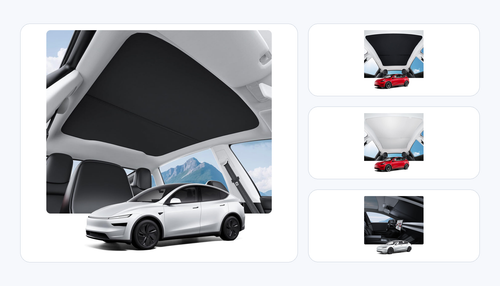
Highland roof sunshade — black
2024-2026 Model 3 Highland Roof Sunshade - Nano Ice-Crystal Retractable Black is the darker option for owners who want the strongest visual shade effect. It is the right lane for Highland heat and glare control, not Legacy fitment.

Highland roof sunshade — grey
2024-2026 Model 3 Highland Roof Sunshade - Nano Ice-Crystal Retractable Grey is for Highland owners who prefer a lighter cabin look while still reducing roof-glass glare.

Replacement clips
2017-2025 Tesla Model 3/Y/S Sunroof Clips Kit - 8PCS Replacement Black is for owners troubleshooting a shade or clip issue. It is not a roof-opening mechanism.
Our lab recommendation
If your complaint is heat or UV exposure, start with shade coverage. BASENOR sunshade material is tested around the same customer need we use in our sunshade guides: 99.2% UV block in our lab test, with the real tradeoff that any removable roof shade adds one more piece to store when you want the full open-glass look.
How to install without creating rattles
- Confirm generation first. Do not install a Legacy shade in a Highland cabin or the reverse unless the product explicitly says it fits both.
- Lay the shade out flat before installing. If it was folded or compressed during shipping, give the frame a few minutes to relax.
- Start from the centerline, then work outward. This keeps tension even and helps prevent one corner from sagging.
- Seat clips gently. A clip should secure the shade; it should not require levering against roof trim.
- Drive a short rattle check. Use a bumpy low-speed road and listen near the roof edge. If you hear movement, reseat the nearest clip instead of adding force.
When a roof shade is the wrong solution
A roof shade helps with overhead heat, glare, and perceived brightness. It does not cool the car by itself like climate preconditioning, and it does not replace windshield or side-window coverage when the sun is coming from the front or side. If your Model 3 gets hot while parked, use the roof shade as one layer with normal Tesla climate habits and, when needed, a windshield shade.
The tradeoff is visibility. Some owners love the full glass-roof feel at night or in mild weather. A darker shade reduces that open-cabin feeling. If that is important to you, choose a removable setup and keep the storage routine simple.
Heat, glare, and UV: what changes after adding a shade
A fixed glass roof is one of the reasons the Model 3 cabin feels open, but it also means overhead sunlight is part of the ownership experience. In our lab, BASENOR sunshade material measured 99.2% UV block. That number does not mean the cabin becomes cold by itself. It means the shade is doing the job it can actually do: reducing direct overhead light and UV exposure while giving the climate system a better starting point.
The biggest improvement is usually passenger comfort. Front-seat drivers notice less glare at the top edge of their vision. Rear passengers notice less direct sun on their head and shoulders. Parents often care about this more than the driver because kids sit under the glass for the entire trip and cannot adjust the seat position the same way an adult can.
The tradeoff is also real. A darker shade changes the airy glass-roof feeling that many owners like. It can also add a few extra seconds when you remove or reinstall it for seasons. We would rather state that plainly than pretend every owner should leave a roof shade installed year-round. In mild weather, some owners remove it. In desert, high-altitude, or long-summer regions, most owners keep it installed because comfort beats the open-glass view.
Legacy vs Highland: quick identification checklist
If you are not sure which Model 3 generation you own, check the cabin before buying roof accessories. Legacy Model 3 covers 2017-2023 production in normal owner shopping language and uses physical stalks. Highland Model 3 covers the 2024-2026 refresh and removed the stalks in favor of steering-wheel buttons and screen-led shifting. That generation split is more reliable than guessing from a registration date alone.
Use this three-step check: first, look for turn-signal stalks. If they are there, you are likely in the Legacy lane. Second, look at the dashboard and ambient-light layout; Highland has the revised cabin. Third, match the product page model-year range to your actual car before checking out. A shade that is almost right can still create edge gaps, sagging, or clip tension.
For mixed-household garages, label the accessory storage bag. We see this mistake with families that own both Model 3 and Model Y, or both a Legacy Model 3 and a Highland. A roof shade can look similar when folded, but fitment is not decided by folded shape. It is decided by glass shape, trim edge, clip position, and frame tension.
Seasonal setup: when to install, remove, or store the shade
Most owners do not need a complicated schedule. Install the roof shade before the first hot-weather stretch, keep it in place through the peak season, and remove it only if you miss the full glass view or need maximum winter light. If your car parks outside at work, the shade earns its keep faster than it does for a garage-kept car that only sees short evening drives.
When storing a shade, do not crush the frame under floor mats or cargo bins. Let the frame sit in its bag, keep clips together, and avoid leaving small hardware loose in the trunk well. Lost clips are one of the easiest ways to turn a good shade into a rattle complaint. If a clip disappears, replace the clip rather than improvising with tape or pushing harder against the roof edge.
After reinstalling, do a two-minute check: look for even edge coverage, confirm no corner is folded under itself, and drive over one low-speed rough patch. If you hear movement, stop and reseat the nearest clip. Rattles are usually alignment problems, not proof that the roof is supposed to open.
Related BASENOR guides for Model 3 owners
If you are building out a Highland cabin, start with our Model 3 Highland accessories guide for broader cabin and storage priorities. If you are unsure whether an accessory fits your generation, use our Tesla accessory fitment guide before buying. The roof-shade decision is one example of the larger rule: Tesla generation changes matter more than generic “Model 3” wording.
FAQ
Can you open the sunroof on a Tesla Model 3?
No. The Model 3 glass roof is fixed. There is no open, tilt, or vent control for the roof glass.
Why do people call it a Model 3 sunroof?
Because it is a large glass roof that lets in light. In function, though, it is fixed panoramic roof glass, not an operable sunroof.
Will a roof sunshade fit both Legacy Model 3 and Highland?
Do not assume that. Check model-year and generation fitment. 2017-2023 Legacy and 2024-2026 Highland accessories can differ.
Can a shade damage the roof glass?
A properly fitted shade should not. Problems usually come from forcing the wrong fitment, bending frames, or using clips incorrectly.
What should I buy if my shade clips broke?
Buy replacement clips that match your shade system and color. Do not use broken clips as a reason to pry roof trim or glass.
Update log
Updated May 2026 with fixed-glass-roof clarification, Highland vs Legacy fitment notes, verified Model 3 shade links, and owner heat/glare troubleshooting.
References & further reading
Trying to solve Model 3 roof heat or glare?
Choose by generation first, then pick the shade color and clip setup that matches the way you use the glass roof.
Shop Model 3 Highland Accessories
Jacob Guo
Founder & Editor-in-Chief
Founder of BASENOR. Industrial designer and Tesla owner since 2019. Writes the foundational fitment guides and design notes explaining why a product was engineered the way it was.