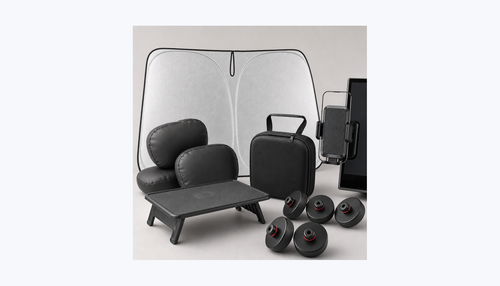
How to Judge Tesla Accessory Influencer Reviews Before You Buy
Influencer videos can show an accessory in real use, but Tesla owners still need to verify fitment, installation, disclosure, and product-page evidence before checkout.
Key Takeaways
- Trust the review only after the fitment claim is specific — the safest reviews name the Tesla model, generation, and year range instead of saying "fits all Teslas."
- Installed evidence matters more than unboxing footage — look for close-up photos or video of the part mounted, removed, cleaned, and used during normal driving.
- Disclosures change how you weigh the opinion — the FTC says influencers should clearly disclose material connections such as paid posts, free products, or affiliate codes.
Quick Verdict: Use Influencer Reviews As A Demonstration, Not A Final Answer
A good Tesla accessory review can answer questions a product page cannot: how a floor mat bends when it comes out of the box, whether a phone mount shakes on broken pavement, how long a screen protector takes to align, or whether a sunshade is annoying to store. That real-use context is valuable. The mistake is treating a single video as proof that the accessory will fit your car, your climate, and your daily routine.
Tesla accessories are unusually fitment-sensitive because Tesla changes interior trim, cargo shapes, screen angles, and control layouts by generation. Legacy Model 3 owners, 2024-2026 Model 3 Highland owners, 2020-2024 Model Y owners, and 2025-2026 Model Y Juniper owners may be watching the same review while needing different parts. Model Y Juniper also retains a physical turn-signal stalk while Model 3 Highland removed it, so a reviewer who casually blends the two generations may be useful for general impressions but weak for fitment judgment.
Before buying from any review, run the claim through five checks: exact fitment, installed proof, material and cleaning evidence, disclosure clarity, and return-risk clues. If the review passes those checks and the product page confirms the same details, the review is useful. If it fails one or more checks, keep researching before you buy.
Why Influencer Reviews Are Useful But Incomplete
Tesla owners watch accessory reviews because photos alone do not explain daily ownership. A product listing can say "waterproof" or "no-drill," but a reviewer can show whether the mat lip catches muddy shoes, whether a console organizer rattles, or whether a mount blocks the touchscreen sightline. That makes creator content especially helpful for items that touch the cabin every day: floor mats, organizers, phone mounts, filters, screen protectors, mud flaps, and sunshades.
The weak point is that most reviews capture one car, one installation, one weather condition, and one reviewer preference. A California owner who parks in a garage may care about sunshade storage less than an Arizona owner. A new Model Y Juniper owner may need different fitment checks than a 2021 Model Y owner. A creator may receive the product for free or earn commission through an affiliate link. None of that automatically makes the review bad, but it means you should read it as one evidence point instead of a verdict.
The best reviews are transparent about the car being used, how long the product was installed, what trade-offs showed up, and whether the creator has a material connection to the seller. The strongest buying decision combines that review footage with the product page, live product images, fitment notes, customer reviews, and a return policy you can live with.
The BASENOR Five-Check Review Test
Use this checklist before trusting a Tesla accessory review enough to buy. You do not need all five checks to be perfect, but every missing check adds uncertainty.
- Fitment generation: Does the review name the exact vehicle and years? "Model 3/Y" is not enough for interior trim, cargo liners, console parts, or screen accessories.
- Installed evidence: Does the creator show the product on the car from multiple angles, including edges, clips, seams, and any contact points?
- Material and cleaning proof: Does the review explain what the product is made from and how it handles dirt, heat, flexing, wiping, or removal?
- Disclosure signal: Does the creator clearly state whether the product was sponsored, gifted, discounted, or linked with an affiliate code?
- Return-risk clues: Does the product page provide real images, clear compatibility notes, installation expectations, and a support path if the fit is wrong?
Product Proof Matrix: What To Verify By Accessory Type
Different accessories need different proof. A floor mat review should focus on coverage, edge height, and cleaning. A phone mount review should focus on vibration, viewing angle, and adhesive or mounting method. Use the matrix below to match the review evidence to the product category.
| Accessory | Review Proof To Look For | Product Page Check | Buy With Care If |
|---|---|---|---|
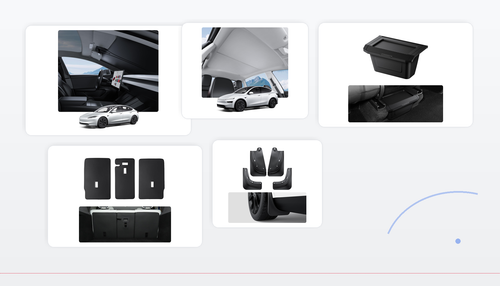
| Floor mats | Edges, pedal clearance, rear-seat coverage, trunk or seat-back coverage | Year range, piece count, product images, waterproof material notes | The review never shows the mats installed in the same generation |
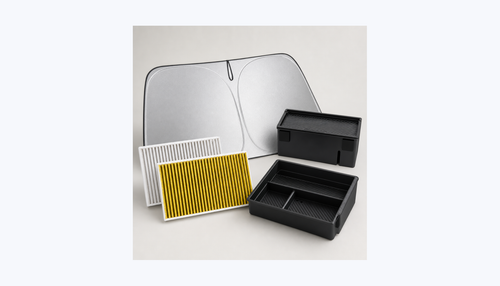
| Cabin air filter | Filter orientation, removal steps, airflow or odor context | Model 3 and Model Y year coverage, two-piece count, activated-carbon detail | The creator recommends replacing a brand-new car filter immediately |
| Phone mount | Road vibration, screen visibility, driver reach, removal marks | Mounting method, excluded generations, dashboard location | The page says it is not for your specific generation |
| Sunshade | Folded size, heat use case, windshield coverage, storage routine | Windshield fitment and material claim | The video shows a roof shade but the product page is windshield-only |
| Mud flaps | Wheel-arch fit, clip position, drilling requirement, paint-spray protection | Model year, no-drill wording, quantity, installed images | The review says universal but never shows the lower rocker-panel edge |


Seven Red Flags Before You Buy From A Review
A review does not need to be negative to protect you. Sometimes the strongest signal is what the creator does not show. Pause before buying if you notice any of these gaps.
- No exact vehicle year: "Works on Model 3 and Model Y" is too broad for many interior and cargo accessories.
- No installed close-ups: If the product is only shown in hand, you cannot judge gaps, coverage, or interference.
- No removal or cleaning footage: For mats, organizers, mounts, and screen protectors, daily maintenance matters.
- No disclosure near the recommendation: Sponsored posts and affiliate codes should be easy to notice, not buried.
- No downside: Every accessory has a trade-off, even if it is small: storage bulk, install time, limited generation support, or cleaning effort.
- Universal-fit language: Tesla generations are close enough to confuse buyers but different enough to cause returns.
- Product page does not match the review: If the product page excludes your car or uses different photos, trust the product page for fitment.
If the review has one red flag, confirm with the product page. If it has several, look for another review or contact support before buying. The goal is not to distrust creators; it is to avoid using entertainment-format content as technical fitment documentation.
What To Verify On The Product Page Before Checkout
Before checkout, open the product page and confirm four things against your car: model, year, generation, and use case. If you drive a 2024-2026 Model 3 Highland, avoid assuming a Legacy Model 3 video applies. If you drive a 2025-2026 Model Y Juniper, confirm the accessory is built for Juniper or clearly cross-generation. If the product page says a mount is not for 2024 Model 3, do not let a generic "Model 3/Y" review override that note.
Also check the image set. A strong product page should include clean product images, installed views when fitment is critical, and enough angles to understand edges or mounting points. For products such as screen protectors, the alignment process matters. For windshield sunshades, folded storage and windshield coverage matter. For console organizers, tray depth, non-slip behavior, and interference with charging cables matter.
Finally, read the support and return terms with the same seriousness as the review. Even a careful buyer can choose the wrong generation when Tesla model names overlap. A clear support path turns a fitment mistake into a fix instead of a sunk cost.
How We Built This Checklist
Accessory sample: Seven active BASENOR product families were reviewed as examples: floor mats, cabin filters, phone mounts, sunshades, console organizers, mud flaps, and screen protectors.
Evidence standard: We prioritized claims a buyer can verify before checkout: exact fitment, installed images, material notes, installation method, and support path.
Disclosure standard: We used FTC influencer-disclosure guidance to explain why paid, gifted, discounted, and affiliate-linked recommendations should be interpreted with context.
Frequently Asked Questions
Sources & Update Log
Last updated: June 2026 — Added FTC disclosure checks, generation-fitment review criteria, and a BASENOR product proof matrix for owner pre-purchase verification.
Sources
- FTC Disclosures 101 for Social Media Influencers — Material-connection disclosure guidance for creators.
- FTC Endorsement Guides: What People Are Asking — Endorsement and affiliate-disclosure context.
- NHTSA-hosted Tesla owner manual filing — Tesla owner-document caution language for accessories and vehicle use.
- Tesla Service documentation — Service context for distinguishing installed parts from cosmetic accessory claims.
About The Author
Daniel Zhang is part of BASENOR Engineering, where the team reviews Tesla accessory fitment, installation behavior, and customer-support patterns across Model 3, Model Y, Model S, Model X, and Cybertruck accessories.
Ready To Verify Fitment?
Shop Tesla Accessories With Real Product Proof
Use reviews for real-world context, then choose accessories with clear fitment, product images, and owner-focused support.
Shop Tesla Accessories