By Daniel Zhang, BASENOR Engineering. Last reviewed: 2026-05-06.
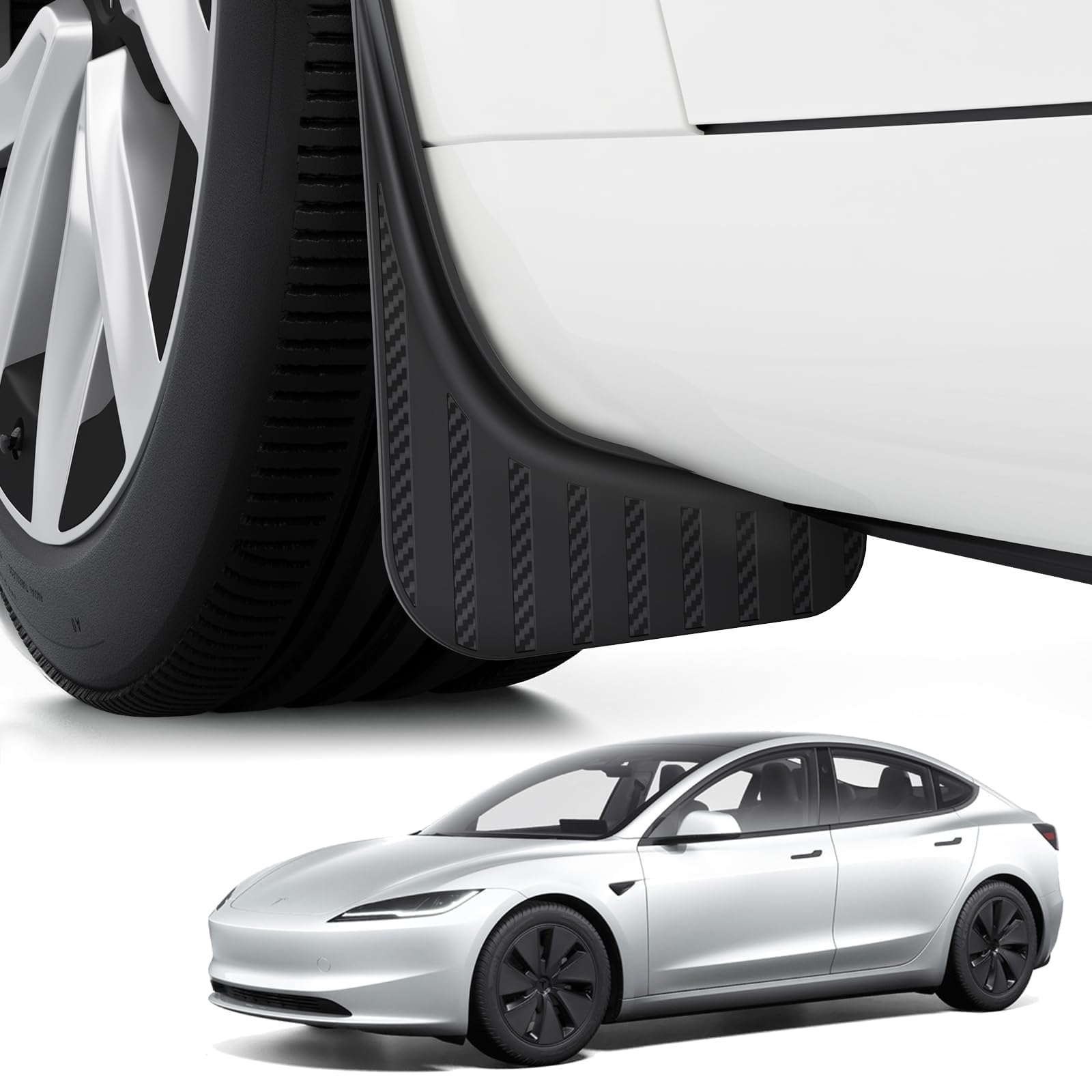
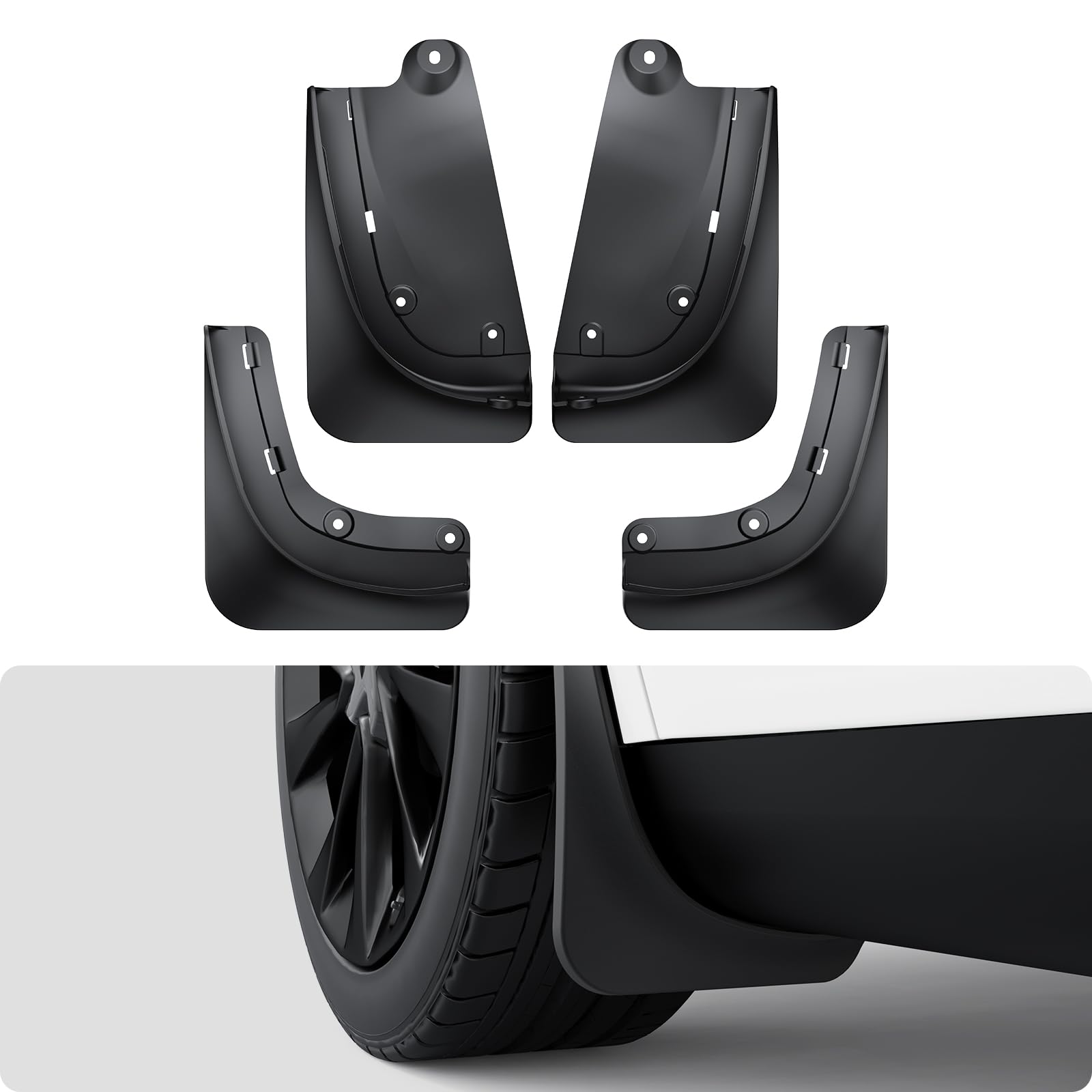
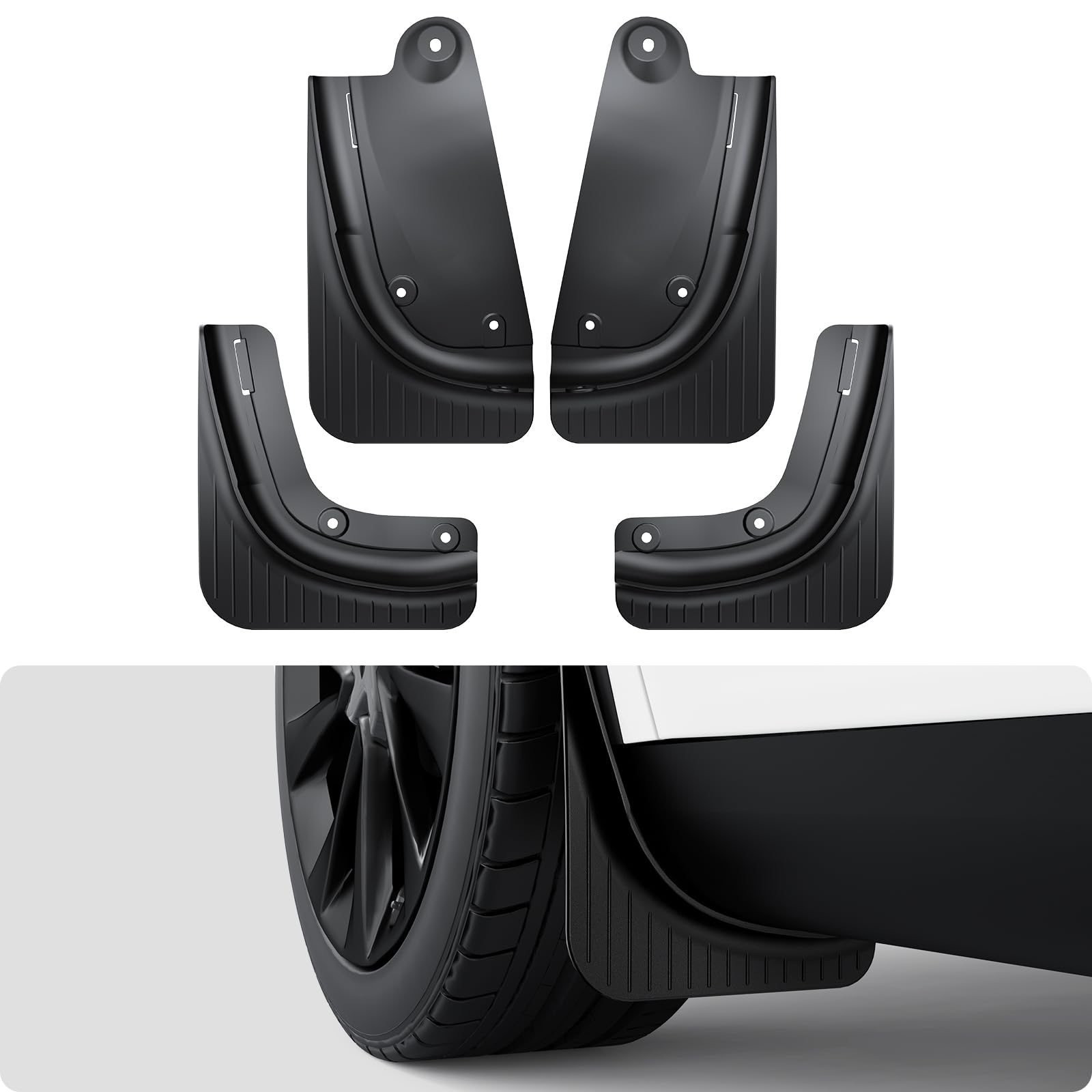
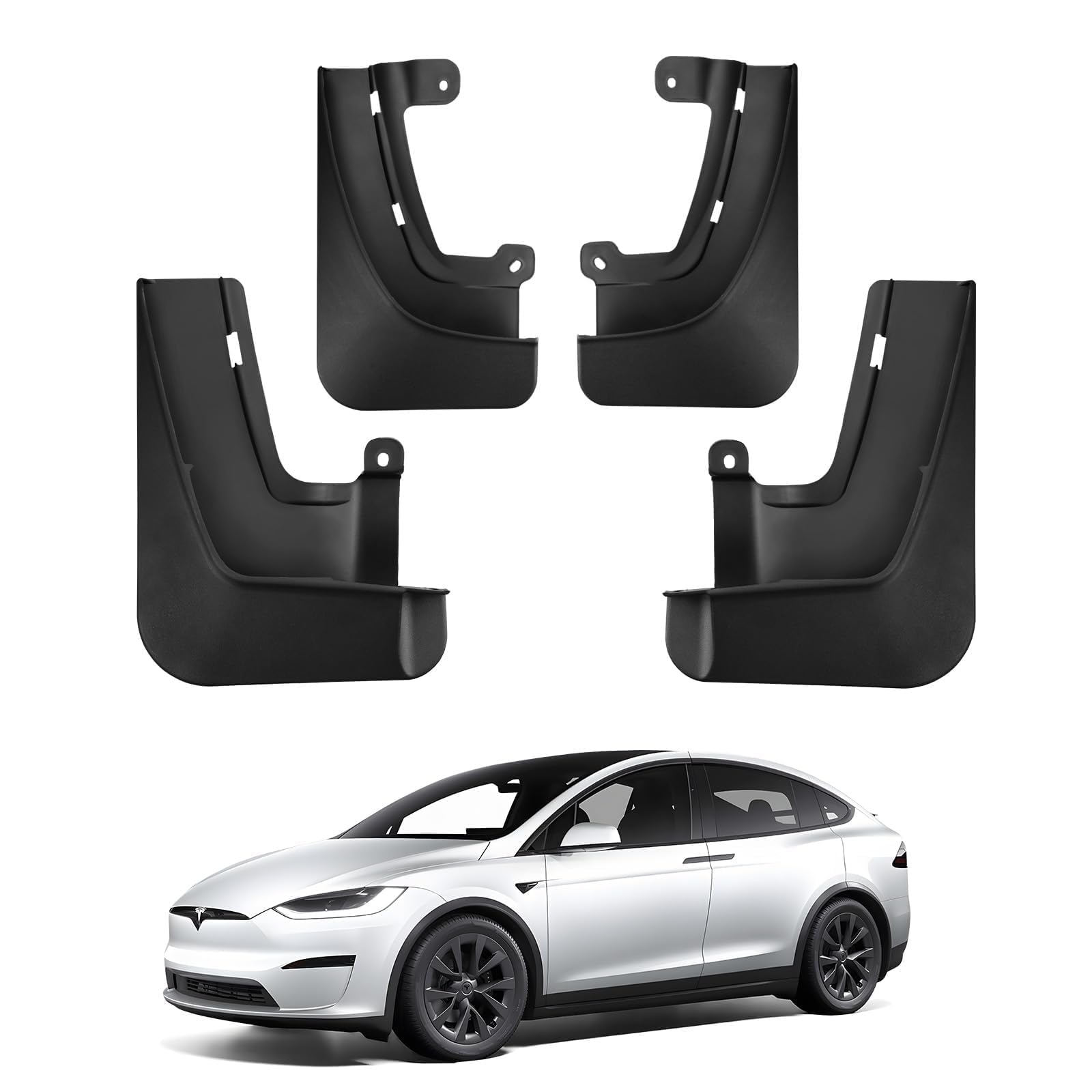
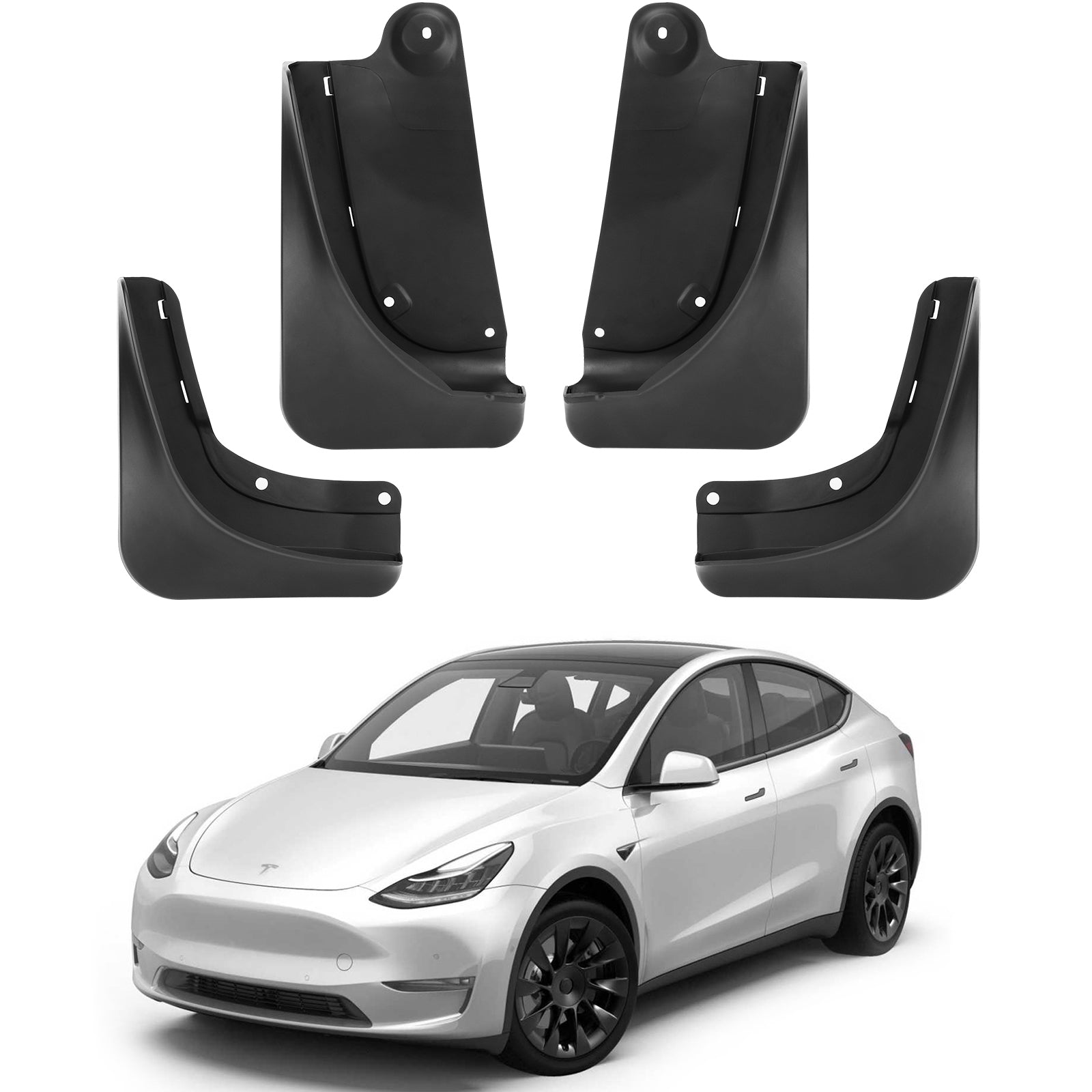
A Tesla mud flap looks like a 5-dollar rubber rectangle until the first gravel road shows you the rear quarter panel of a brand-new Highland after 3,000 miles of road salt and tire spray. The repaint quote that followed — we've actually paid one — is what made BASENOR build a flap program with its own gravel-spray test bench, generation-specific cutting files, and a no-drill mounting standard that won't void the New Vehicle Limited Warranty. This collection is the curated short list across all five current Tesla generations: Highland Model 3 (2024-2026), Juniper Model Y (2025-2026), pre-Juniper Model Y (2020-2024), legacy Model 3 (2017-2023), and Model S / Model X. Cybertruck flaps are in active development; we'd rather ship none than ship one that doesn't pass our gravel cycle.
Why Tesla mud flaps actually matter
Every Tesla rolls out of the factory with painted rocker panels and an exposed rear-quarter aero skirt, and most of the trim aft of the rear wheel is body-color paint — not the textured plastic you'd see on a Subaru or a truck. That means tire spray hits paint, not plastic. Three failure modes follow:
- Stone chip clusters behind the rear wheel arch (typical: a 4-6 inch zone, ~15 cm aft of the tire centerline). On Highland white pearl multi-coat, every chip is a $40-90 touch-up cell on the detailer's invoice.
- Rocker panel sandblasting. Salt + sand from winter brining doesn't chip — it abrades, leaving a matte band the width of a hand, visible only when you wash the car and water beads stop forming.
- Charge-port-side lower bumper splatter. Owners notice it most because they walk around to the passenger rear every time they Supercharge.
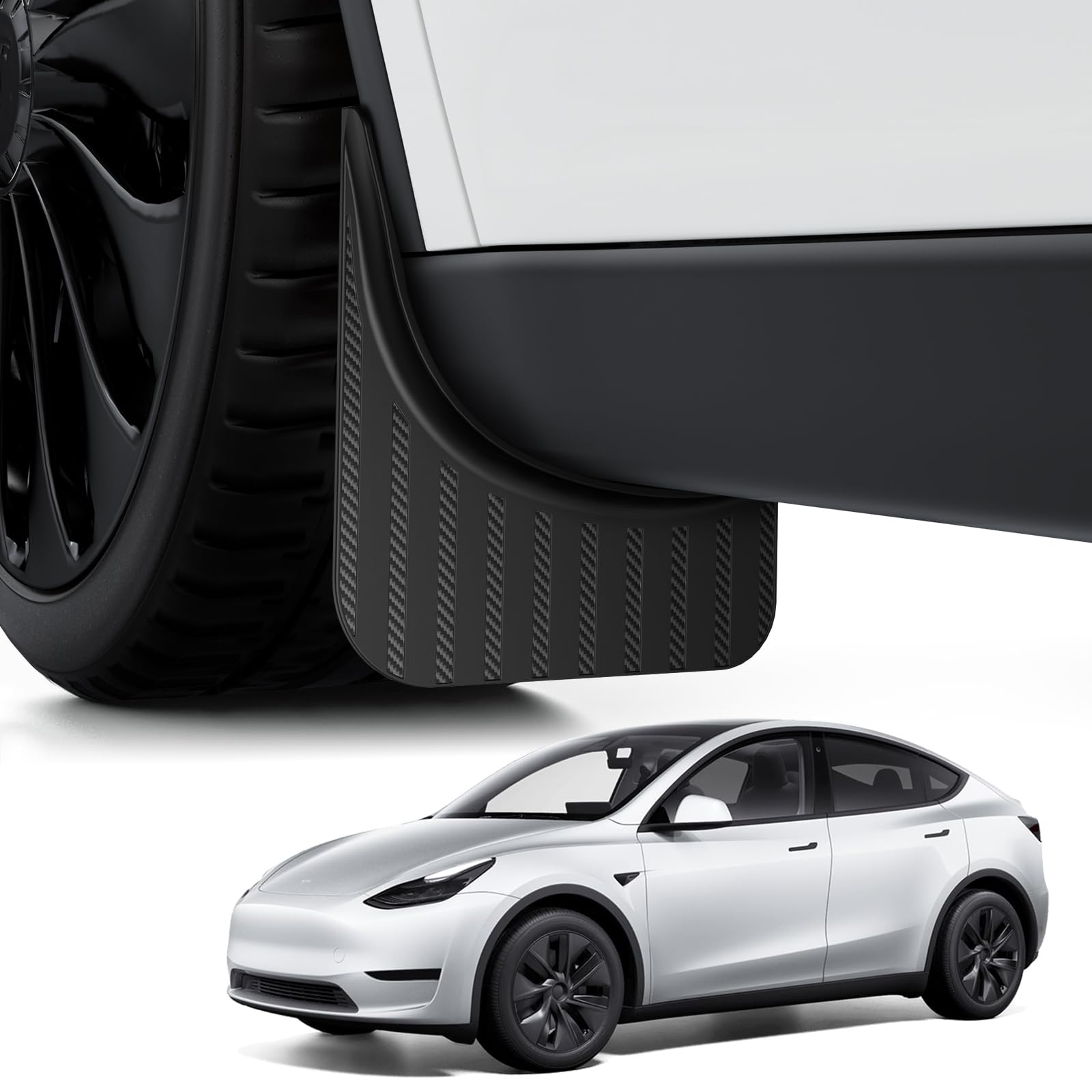
A correctly-fit flap moves the spray pattern aft of the painted surface — not by absorbing it (rubber doesn't absorb), but by redirecting the ejecta angle from roughly 60° off vertical down to under 30°, where it lands on the road instead of the car. We measure that angle on our test rig before a SKU ships.
Generation-by-generation fitment
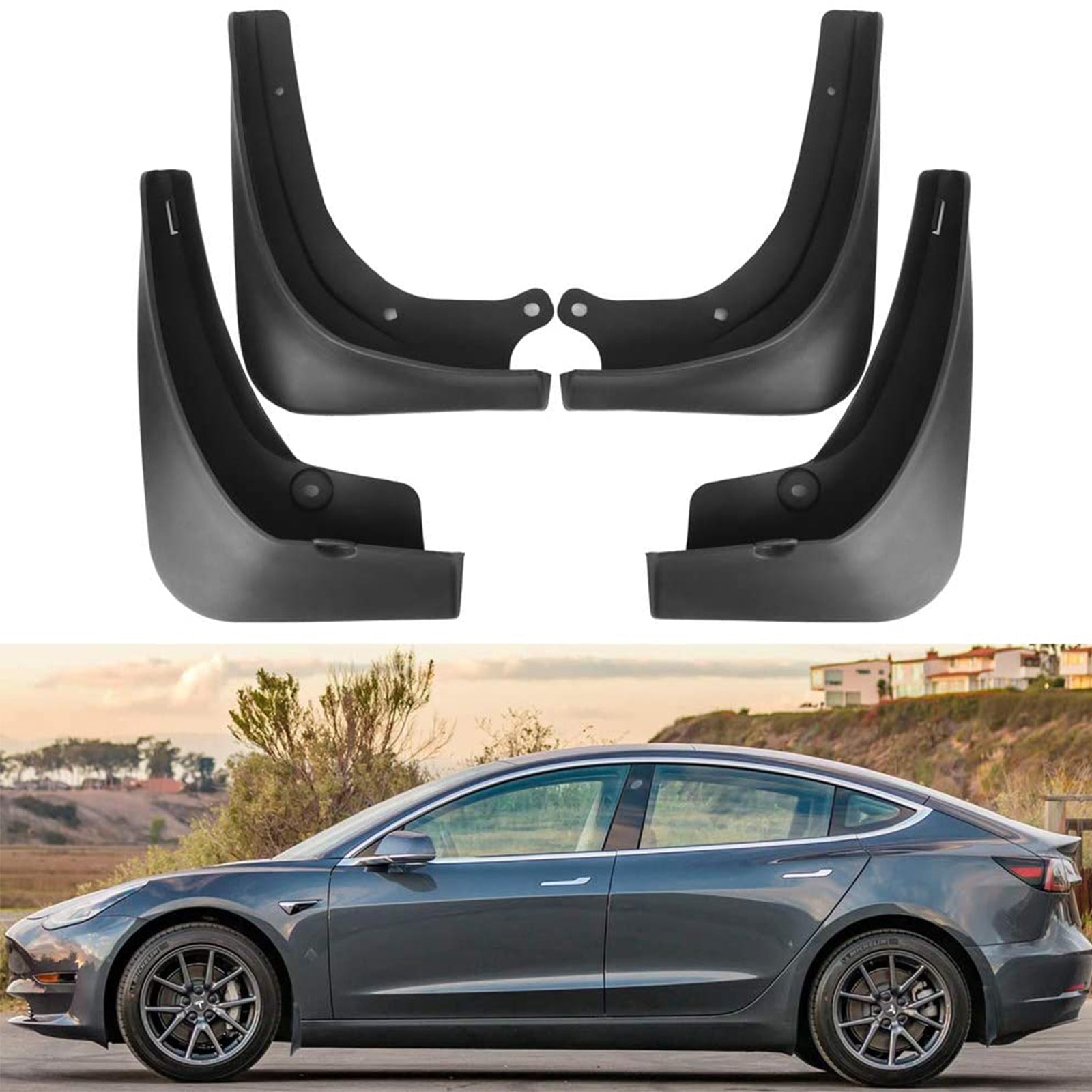
Tesla quietly redesigns the rear aero skirt on every generation refresh. A 2023 legacy Model 3 flap will not fit a 2024 Highland: the OEM mounting boss spacing changed from 142 mm to 168 mm, and the skirt-to-tire clearance dropped 11 mm. Forcing the wrong year flap onto the wrong skirt is the single biggest cause of warranty-flag damage we see in returns.
-
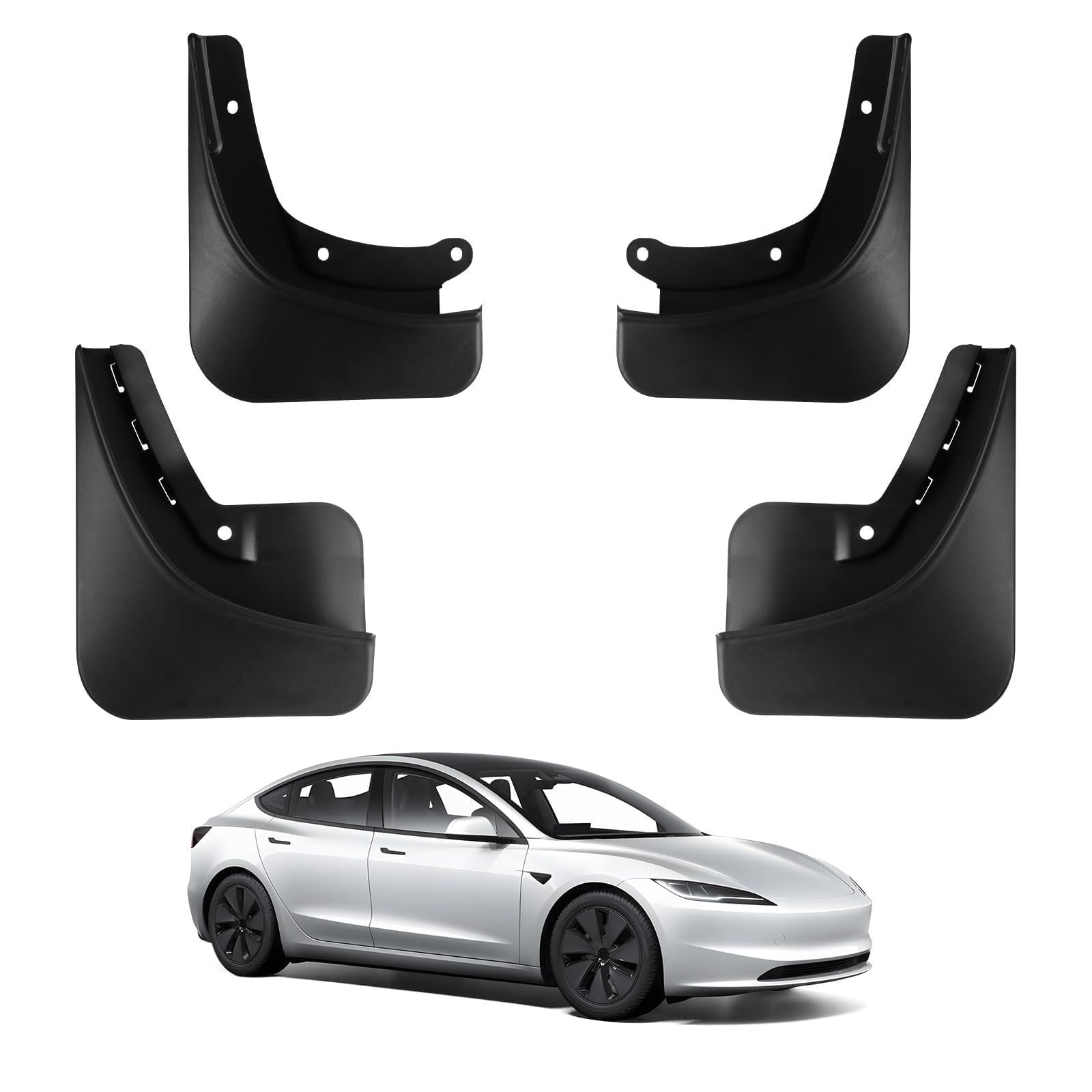
Model 3 Highland (2024-2026) — the
basenor-highland-mud-flaps-*SKU pattern. Different aero skirt cutout from legacy M3. - Model 3 Legacy (2017-2023) — covers VINs from the Fremont/Shanghai pre-Highland era. Includes the "Project Highland" refresh delineation in the title.
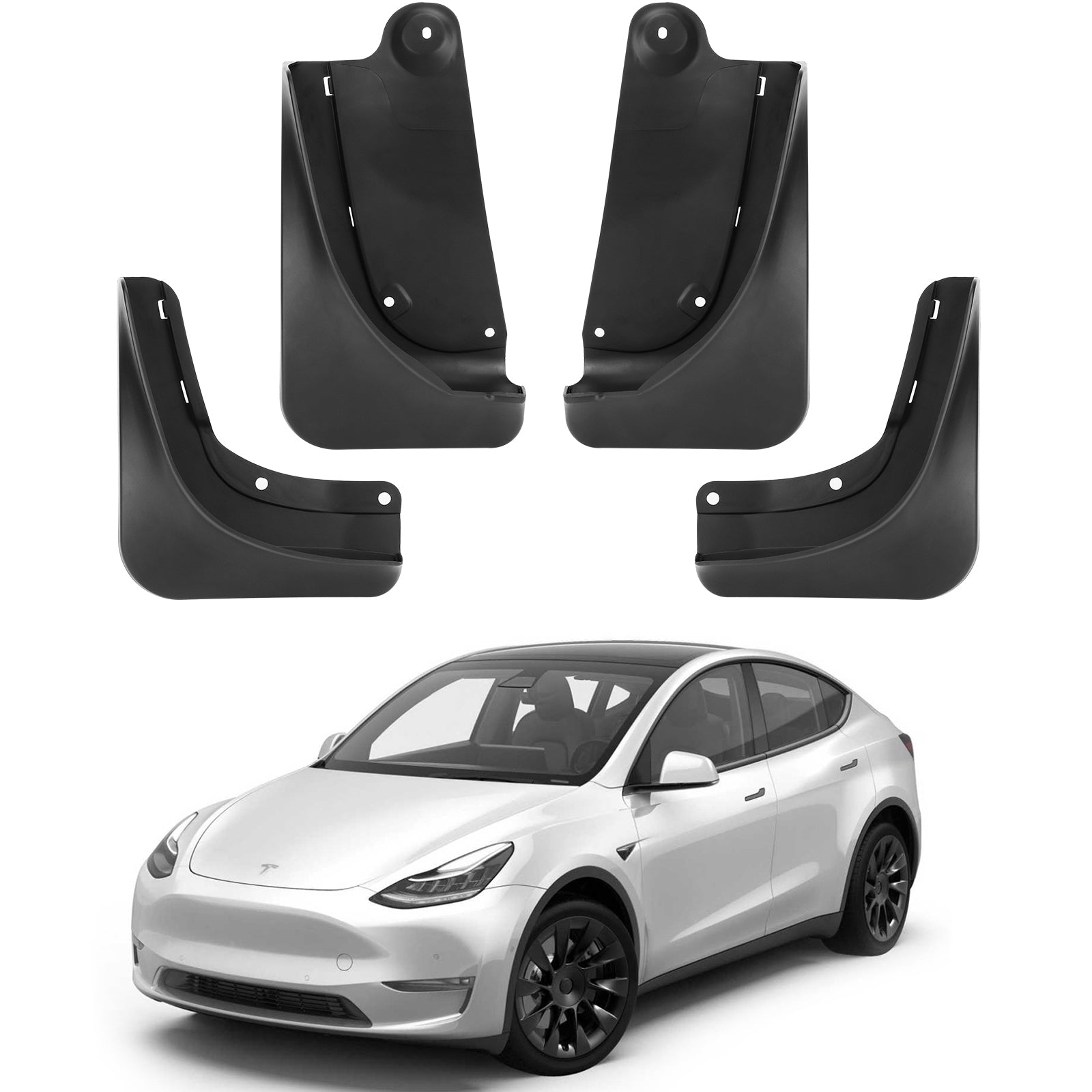
- Model Y Juniper (2025-2026) — new rear bumper geometry, redesigned aero skirt; legacy Y flaps will not seat flush.
- Model Y Pre-Juniper (2020-2024) — the original bumper that shipped with the Fremont, Berlin, and Shanghai Y until the January 2025 refresh.
- Model S (2021-2026 refresh) — Plaid and Long Range share the same rear aero skirt; same flap fits both.
- Model X (2022-2026 Plaid refresh) — falcon wing geometry doesn't affect rear flap fit, but the lower aero diffuser changed at the 2022 refresh.
Each product page lists the exact VIN-decoder year band it was tested against. If your VIN's build month is within 60 days of a refresh boundary — email support@basenor.com with the last 8 of your VIN before ordering. Daniel reviews every borderline fitment ticket personally.
How we test before we ship
BASENOR runs three gates on every flap SKU before it gets a SKU number:
- Gravel-spray test bench. A 1.5 m wheel spinner with a controlled gravel feed (3-5 mm crushed limestone, 30 g per minute) at a scaled-equivalent 65 mph. We measure ejecta dispersion against a paint-witness panel mounted at the rear quarter location. A flap passes only if witness-panel chip count drops by >90% versus the baseline (no-flap) condition.
- 50-cycle install/uninstall. Every clip and OEM fastener path gets 50 mount/unmount cycles to confirm the OEM threads don't strip and the flap geometry doesn't deform. This catches the cheap-injection-mold failure mode where the mounting boss cracks at cycle 10.
- Thermal cycle. Each TPE/PVC formula goes through a -20°F to 200°F oven cycle (replicates Minneapolis January and Phoenix August dashboards) for 48 hours. A flap that warps after one thermal cycle does not ship.
We document the rig, the equipment list, and a worked case study at /pages/test-method. The behind-the-scenes "why we built it this way" decisions live at /pages/design-stories.
What we won't sell
The two things you'll not find in this collection, on purpose:
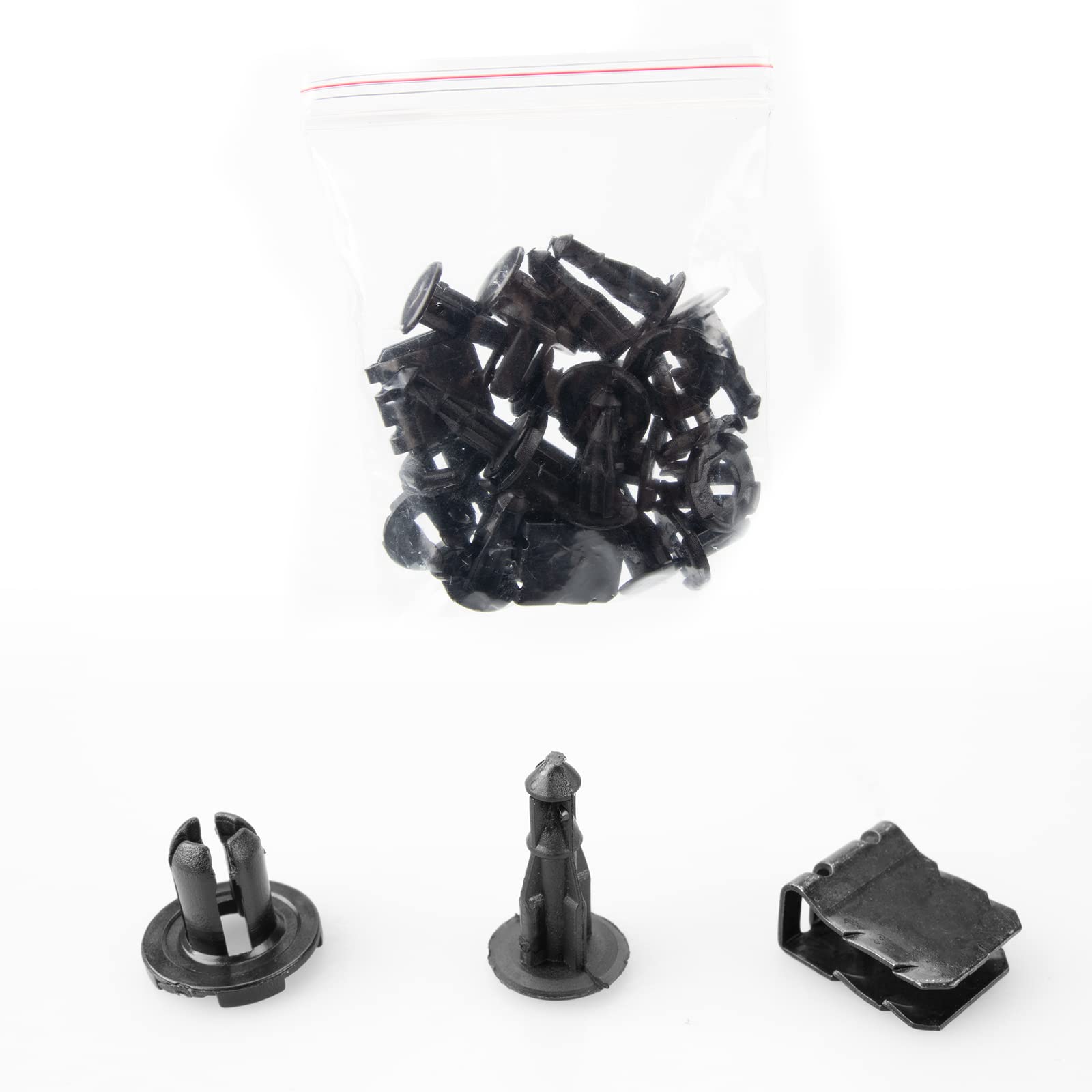
- Universal-fit flaps that drill into the fender liner. Drilling a Tesla aero skirt creates a documented warranty denial path (corrosion claims at the drill site). Every BASENOR flap mounts via the factory aero-skirt fasteners or the OEM mounting boss — no exceptions, no "recommended drill template" workarounds.
- Flaps that block sensors. Highland and Juniper put parking sensors in the rear bumper at sub-300 mm height. We dimension every flap to keep the sensor cone clear; a flap that triggers a phantom reverse alert doesn't ship, full stop.
Frequently asked
Will mud flaps void my Tesla warranty?
No. The Magnuson-Moss Warranty Act explicitly prevents Tesla from voiding the New Vehicle Limited Warranty just because you installed an aftermarket part. What can create a denial is damage caused by the part — for example, drilled holes in the fender liner that lead to corrosion. Every BASENOR flap is a no-drill, OEM-mount-point design specifically to keep that denial path closed.
Do I need flaps if my Tesla never sees gravel?
Tire spray is mostly road grit and salt brine, not gravel. Anyone who drives on a U.S. interstate in January gets the abrasion damage even on a city-only commute. The exception: a garage-kept car driven only on dry, swept urban streets — in that case, the cosmetic ROI is lower and you can skip flaps.
How long does the install take?
Highland, Juniper, and Model S flaps install in 8-12 minutes per axle (so 16-24 minutes total) with a T20 Torx driver. Legacy M3 and Pre-Juniper Y are slightly longer (12-15 minutes per axle) because the OEM aero-skirt clip access is tighter. No floor jack or wheel removal is required on any of the five generations.
Are the flaps removable for car washes / detailing?
Yes. Every SKU here unmounts in under 5 minutes per side using the same T20 Torx. The OEM fastener threads are designed for 50+ install cycles — we tested for that explicitly. If you're shipping the car cross-country on an open trailer and want to remove flaps to avoid road-debris dings, that's a 20-minute job total.
What if my VIN is right on the boundary between two generations?
Email support@basenor.com with the last 8 of your VIN. Daniel will look up the exact build month against the refresh cutover date and tell you which flap SKU to order. Common boundary cases: Highland refresh (late 2023 to early 2024 Fremont builds) and Juniper refresh (late 2024 to early 2025 Y builds).
Continue your research
If you want the longer-form decision context before you buy, the generation-specific guides go deeper than the product pages can:
- Tesla Model 3 Mud Flaps — the long-form M3 hero piece, Highland and legacy together.
- Tesla Model 3 Mods — flaps in the context of the full M3 mod stack.
- Tesla Model Y Mods — Juniper and 2020-2024 legacy, fitment notes and load tests.
- Model 3 Highland Hub
- Model Y Juniper Hub
- Cybertruck Hub
- Model S Hub
- Model X Hub
- How BASENOR Tests — the rig, the equipment, and a worked example.
- Design Stories — why we built the flap program this way.
About the author. Daniel Zhang leads engineering and fitment validation at BASENOR. He maintains the in-house reference fleet (2024 Model 3 Highland, 2025 Model Y Juniper, 2024 Cybertruck) and runs the gravel-spray test bench documented at /pages/test-method. Questions on a specific SKU's fitment? Email support@basenor.com — he reads every fitment ticket.