📌 UPDATE — July 7, 2026
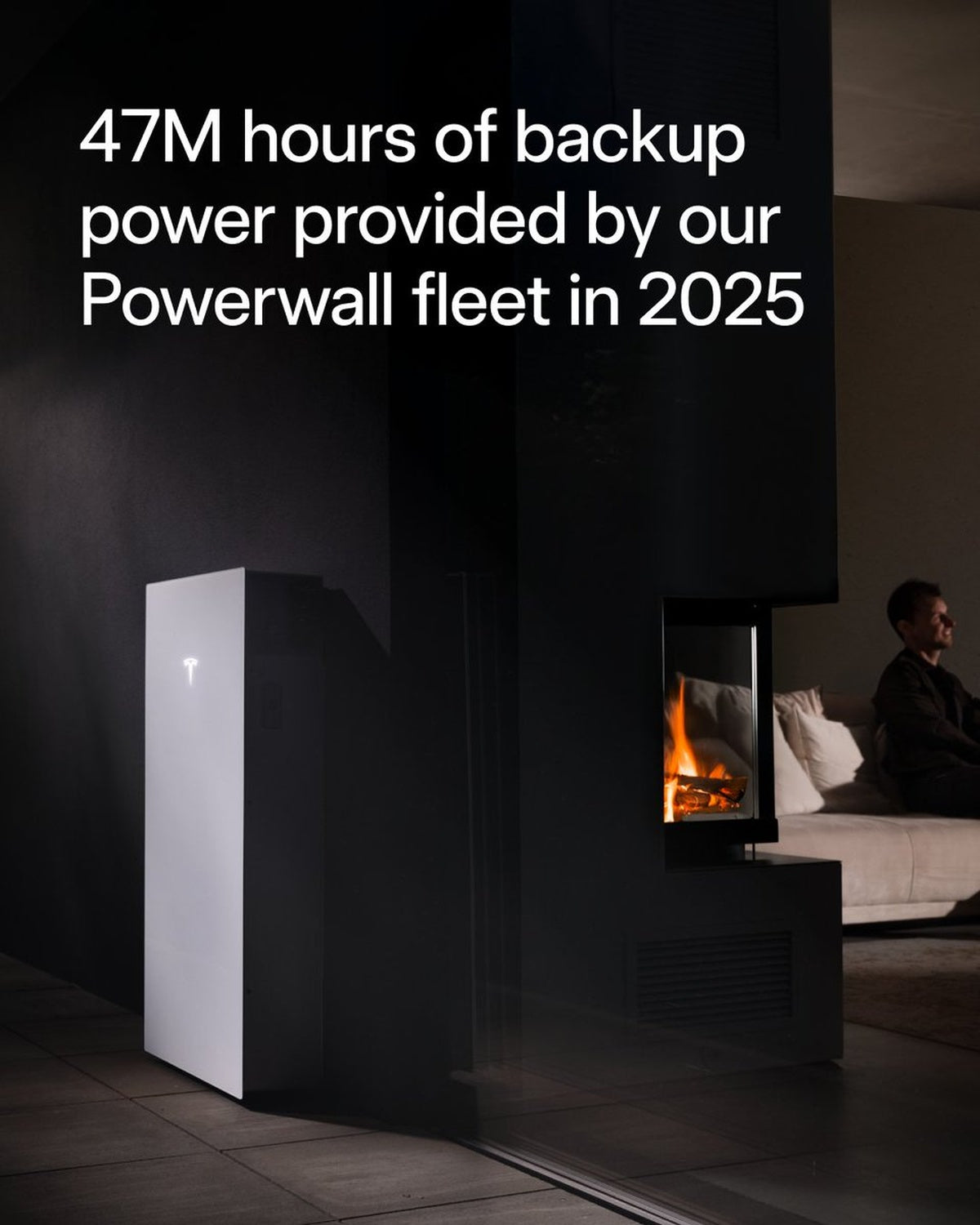
Tesla Powerwall has now crossed a major milestone: 21.5 million power outages prevented across 1 million deployed units over the fleet's lifetime. That cumulative total is a different measure from the 6.5 million outages prevented in 2025 alone cited when this article was first published — the two figures aren't directly comparable. Additionally, 20% of all Powerwalls are now actively enrolled in a Virtual Power Plant, signaling rapid VPP adoption as grid stress events become more frequent. These numbers suggest the fleet's real-world impact is scaling faster than earlier projections indicated.


Tesla just dropped its 2025 energy impact figures, and the numbers are worth paying attention to. From Powerwall virtual power plants blocking millions of outages to Megapack deployments reshaping how utilities think about peaker plants, here's a breakdown of the five stats that define where Tesla Energy actually stands — and what they mean for owners and the grid alike.

1. 6.5 Million Outages Prevented by Virtual Power Plants
This is the headline stat. Powerwall units networked together into a virtual power plant (VPP) collectively prevented 6.5 million outages globally in 2025. The concept is straightforward but powerful: instead of each Powerwall acting as a standalone home battery, they coordinate as a distributed grid resource — absorbing excess energy when supply is high and pushing it back when the grid is stressed. At scale, that coordination is doing work that traditional grid infrastructure simply can't match for speed or flexibility.
2. 20+ GWh of Energy Delivered Through VPPs
Those 6.5 million outage preventions didn't happen through luck — they came from Powerwall networks actually dispatching stored energy back into the grid. Tesla reports that virtual power plants delivered more than 20 GWh of energy in 2025. To put that in perspective, 20 GWh is enough to power roughly 700,000 average U.S. homes for a day. That's a meaningful contribution from what is, at its core, a network of home batteries that owners installed primarily for their own backup and savings purposes.
3. Over $1 Billion Saved by Powerwall Owners
In 2025 alone, Powerwall owners collectively saved more than a billion dollars on energy — through a combination of solar self-consumption, stored energy use during peak pricing periods, and grid export payments. That figure spans the full ecosystem: owners who generate solar during the day, store the excess, and either use it at night or sell it back when rates are highest. For individual owners, the savings vary significantly by market and utility rate structure, but the aggregate number signals that the economics of home energy storage have matured well beyond the early-adopter phase.

4. Megapack Deploys Faster and Cheaper Than Gas Peakers
On the utility side, Tesla's pitch for Megapack is increasingly about time and cost, not just clean energy credentials. According to Tesla, a Megapack-plus-solar installation can be deployed in a fraction of the time it takes to build a gas peaker plant — and at a competitive cost. Gas peaker plants, which exist solely to handle demand spikes, typically take years to permit, build, and commission. Battery storage projects can go from contract to operational in months. For grid planners dealing with accelerating demand growth, that speed advantage is becoming a serious procurement argument.
5. 46.7 GWh Deployed in 2025 — Up 49% Year-Over-Year
Zooming out to the full Tesla Energy picture: according to Tesla's financial reporting, total energy storage deployments reached 46.7 GWh in 2025, a 49% increase over 2024. The energy generation and storage segment generated approximately $12.8 billion in revenue for the year, up 26.6% year-over-year. Megapack drove the bulk of that deployment growth, with utility and commercial customers accelerating orders as battery economics improved. The Q1 2026 figure of 8.8 GWh — a 38% sequential decline from Q4 2025's 14.2 GWh — suggests some lumpiness in the pipeline, but the annual trajectory through 2025 was unambiguously upward.
Taken together, these numbers tell a consistent story: Tesla Energy has moved from a promising side business into a segment with real grid-level influence. The Powerwall VPP data in particular reframes what home energy storage means — not just a backup device for individual owners, but a coordinated grid asset that is measurably reducing outages at scale. Whether that translates into continued deployment growth through 2026 will depend heavily on utility partnerships and regulatory frameworks, but the 2025 baseline is a strong foundation to build from.
Related Gear
Gear up your Tesla with tested, custom-fit BASENOR accessories — shop Tesla accessories →
Sources & reporting notes
The links below identify the material source records used for this report.
- @Tesla on X (2026-07-07T17:11:14.000Z) — Direct source
- @Tesla on X (2026-07-07T17:11:13.000Z) — Direct source
- @wholemars on X (2026-07-07T18:02:19.000Z) — Direct source
- @wholemars on X (2026-07-07T18:01:41.000Z) — Direct source
Source links are preserved as published or accessed. See our editorial standards and corrections policy.
The BASENOR Editorial Desk covers Tesla, SpaceX, and related technology, curating reporting from primary sources — official accounts, regulatory filings, and software release data. Every article passes source-record and fact-checking review before publication. About the newsroom.
This report was curated by the BASENOR Editorial Desk from the sources listed above. Read our editorial standards or email editorial@basenor.com to report an error.