📌 UPDATE — July 10, 2026
What started as an Arctic milestone has gone global. Elon Musk confirmed on X that Starlink can now deliver reliable 10 Gbps symmetric upload and download speeds anywhere in the world — no longer limited to Utqiagvik or high-latitude test zones. The announcement signals that the capability has scaled beyond a regional proof-of-concept into a worldwide rollout. No additional hardware requirements or pricing details were disclosed alongside the announcement.

Source: @elonmusk on X · 698K views · July 10, 2026
Starlink just posted a milestone that would have seemed impossible for a remote Arctic community a few years ago: peak symmetric speeds of up to 10 Gbps in Utqiagvik, Alaska — a city 320 miles above the Arctic Circle with no road access to the rest of the country. Through bonded gateways, that ceiling doubles to 20 Gbps. Here's what's actually happening and why it matters beyond the headline number.

1. Utqiagvik Is One of the Hardest Places on Earth to Connect
Utqiagvik sits 320 miles north of the Arctic Circle on Alaska's North Slope. There are no roads connecting it to the broader U.S. highway network. Historically, communities this remote depended on expensive, low-bandwidth satellite links or microwave relays that struggled in Arctic weather. Delivering 10 Gbps symmetric to a location like this isn't just a speed record — it's a demonstration that Starlink's architecture can serve the genuinely unreachable, not just the underserved.
2. Bonded Gateways Are the Engine Behind the Numbers
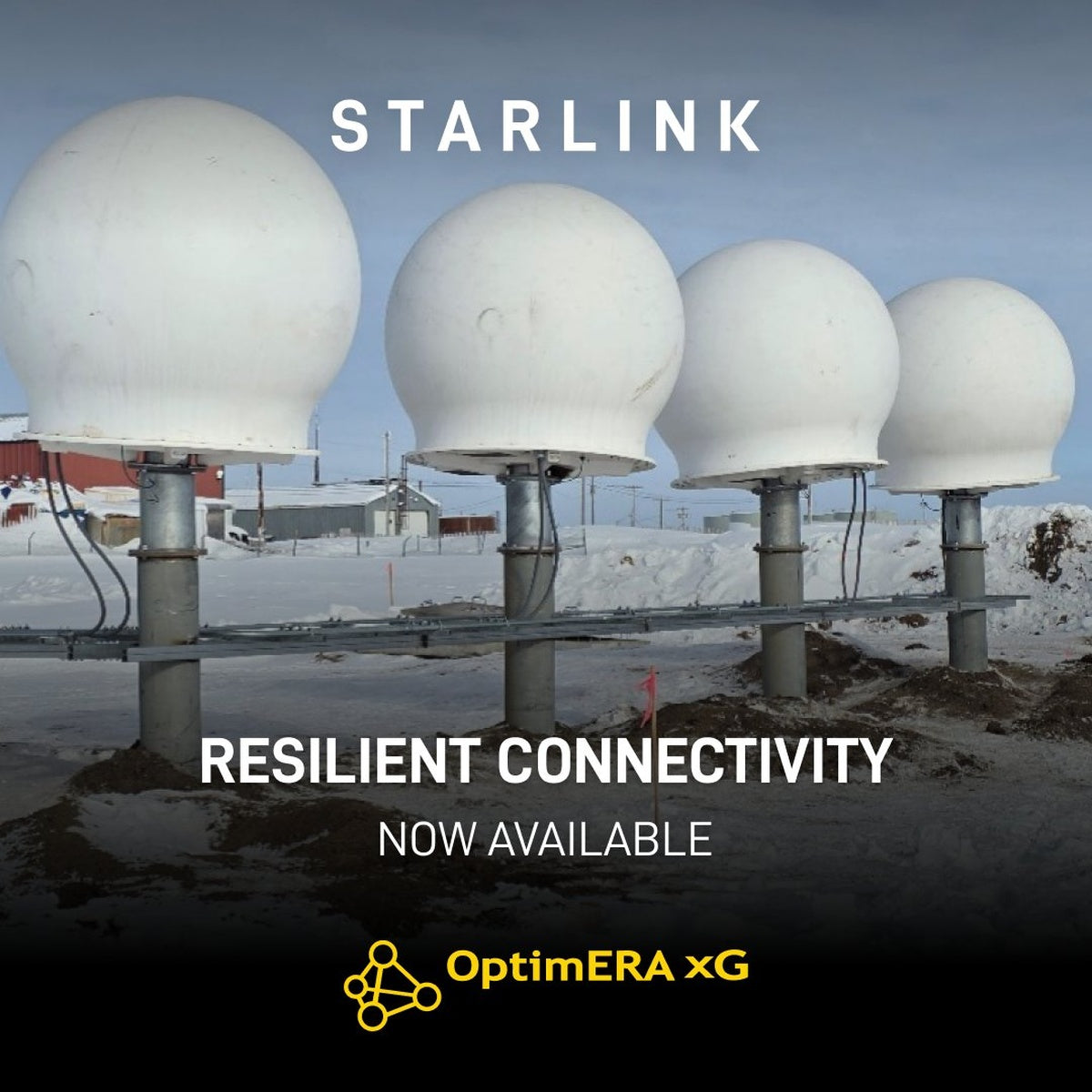
The 10 Gbps figure comes from Starlink's dedicated gateway infrastructure. The 20 Gbps symmetric ceiling is achieved through bonded gateways — a configuration that combines four or more parabolic gateway antennas into a single aggregated connection. This is an enterprise-grade, unlimited-data service designed for community hubs, ISPs, and critical infrastructure operators rather than individual households. Think of it as Starlink's fiber-replacement play for places where fiber will never arrive.
3. GCI Is Already Deploying This Across Alaska
This isn't a one-location proof of concept. According to GCI — Alaska's largest telecommunications company — bonded Starlink gateways are being rolled out as a middle-mile solution across multiple Alaskan communities including Bethel, Sitka, Kotzebue, and Dillingham. The partnership, announced in June 2026, positions Starlink as a backbone layer that complements existing fiber, microwave, and legacy satellite infrastructure. It also functions as a failover: if primary links go down, Starlink maintains service continuity.
4. Arctic Conditions Are Not a Problem for the Hardware
One of the persistent questions about satellite internet in polar regions has been hardware reliability. Starlink's dish hardware is engineered to handle sub-zero temperatures, heavy snowfall accumulation, and sustained polar winds — conditions that routinely disable conventional equipment. According to available operational data, similar community gateway deployments in Alaska (including Unalaska) have demonstrated over 99% uptime. For communities where connectivity is a lifeline — for emergency services, telemedicine, and education — that reliability figure matters as much as the raw speed.
5. Next-Generation Satellites Will Push Capacity Far Higher
The 10–20 Gbps numbers being demonstrated today are impressive, but they represent the current generation of the network. SpaceX is targeting the launch of third-generation Starlink satellites, with each satellite designed to deliver over 1 terabit per second (1,000 Gbps) of downlink capacity and more than 200 Gbps of uplink capacity. When those satellites begin populating the constellation, the throughput available to bonded gateway deployments in places like Utqiagvik will scale accordingly — making today's milestone a floor, not a ceiling.
For remote Arctic communities, the combination of proven hardware reliability, scalable bonded gateway architecture, and a next-generation satellite roadmap means Starlink isn't just filling a gap — it's building the kind of infrastructure that could fundamentally change what's possible in the world's most isolated places. The question now is how quickly that deployment footprint expands across the remaining communities that still lack any high-capacity connection at all.
Sources & reporting notes
The links below identify the material source records used for this report.
- @Starlink on X (2026-07-09T20:31:16.000Z) — Direct source
- @elonmusk on X (2026-07-10T02:11:59.000Z) — Direct source
Source links are preserved as published or accessed. See our editorial standards and corrections policy.
The BASENOR Editorial Desk covers Tesla, SpaceX, and related technology, curating reporting from primary sources — official accounts, regulatory filings, and software release data. Every article passes source-record and fact-checking review before publication. About the newsroom.
This report was curated by the BASENOR Editorial Desk from the sources listed above. Read our editorial standards or email editorial@basenor.com to report an error.