📌 UPDATE — July 8, 2026
New analysis from Tesla watcher @JoeTegtmeyer highlights a deeper environmental benefit of the Cybercab's Reaction Injection Molded (RIM) exterior panels: the process achieves 100% elimination of Volatile Organic Compounds (VOCs) — a pollutant that is an unavoidable byproduct of traditional automotive painting. Unlike conventional manufacturing where spraying paint inherently releases VOCs into the atmosphere, RIM panels are molded with color integrated into the material itself, bypassing the paint shop entirely. This makes the VOC elimination not just an incremental improvement but a structural one — the emission source is removed, not mitigated. The detail underscores how Cybercab's manufacturing architecture represents a fundamentally different approach to clean production rather than simply optimizing existing processes.

📌 UPDATE — July 7, 2026
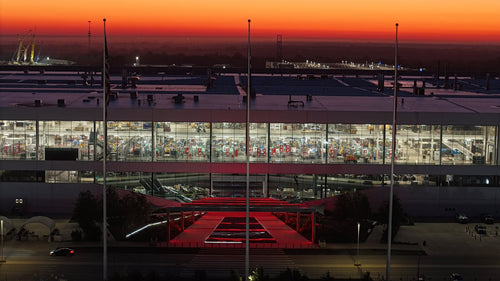
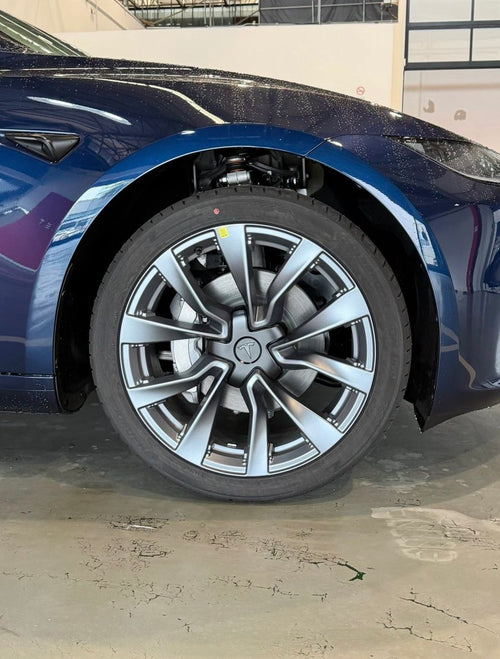
Tesla has officially detailed the reaction injection molding (RIM) process engineered specifically for Cybercab production, confirming it slashes manufacturing cycle times for painted parts from hours down to just minutes — by injecting paint directly during the molding process itself. This goes further than previously reported, giving a concrete mechanism behind the VOC-elimination and efficiency gains covered in this article. Tesla also released a new photo of the Cybercab manufacturing process in action, offering a rare look inside the production line.
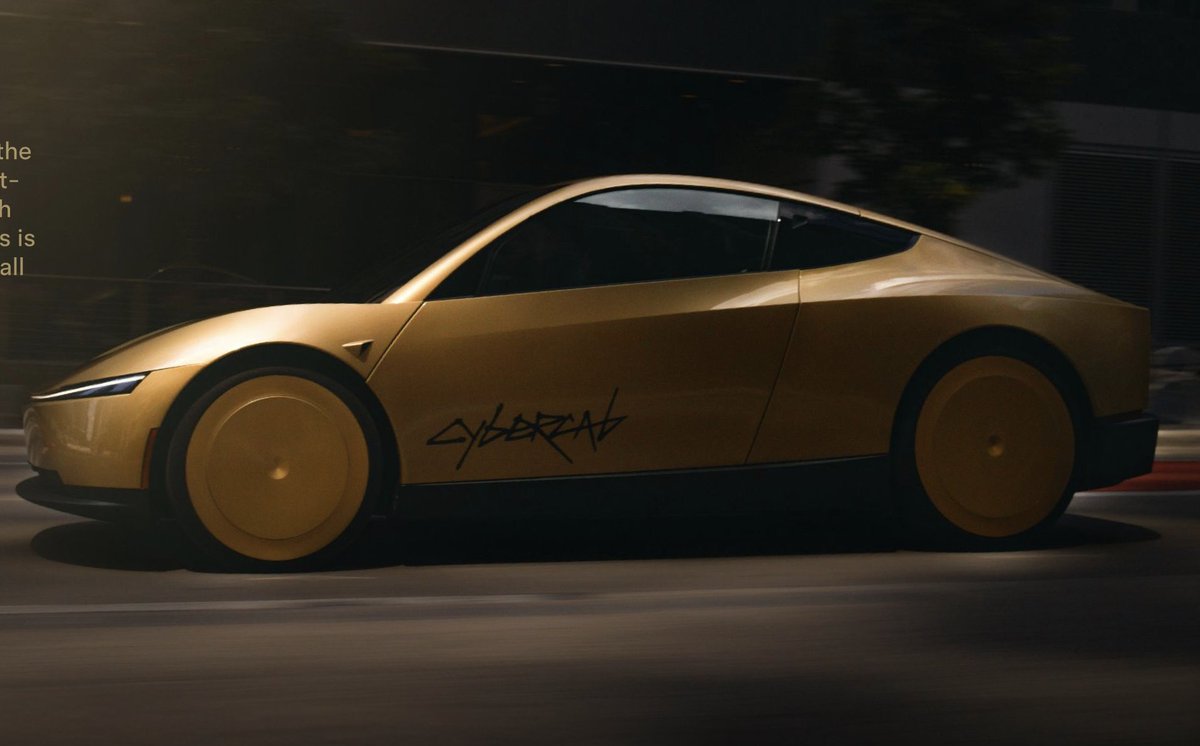

Tesla just pulled back the curtain on the environmental engineering behind Cybercab — and the numbers are striking. From a factory process that ditches the paint shop entirely to a per-mile emissions figure that undercuts its own Model 3 and Model Y, the Cybercab isn't just a new vehicle. It's a rethink of how cars get made and how much damage they do getting there.

1. Paint cycles shrink from hours to minutes
Traditional automotive paint shops are among the most time-consuming and energy-intensive parts of any factory. Tesla's new Reaction Injection Molding (RIM) process flips that entirely for Cybercab. Polyurethane body panels are molded with color already embedded — meaning there's no separate paint application step. What used to take hours now takes minutes. According to Tesla, this process is already running at Giga Texas, where mass production began in April 2026.
2. 100% of paint VOCs are eliminated
Volatile organic compounds — the toxic emissions released during conventional spray painting — are completely gone from the Cybercab manufacturing process. Traditional paint booths emit VOCs that contribute to smog and require expensive filtration systems to manage. By embedding pigment directly into the molded panels, Tesla removes the source of those emissions rather than trying to capture them. That's not a reduction. It's an elimination.
3. Manufacturing and supply chain emissions drop 35%
The RIM process doesn't just clean up the factory floor — it cuts emissions across the broader supply chain for those parts by 35%, according to Tesla. That figure covers both the manufacturing stage and the upstream footprint of producing the materials involved. Combined with the Unboxed Process — which builds major vehicle modules in parallel rather than sequentially — the Cybercab factory is reported to require 40% less floor space than a conventional assembly line, according to previous reporting.

4. Per-mile emissions are projected to nearly halve versus Model 3 and Model Y
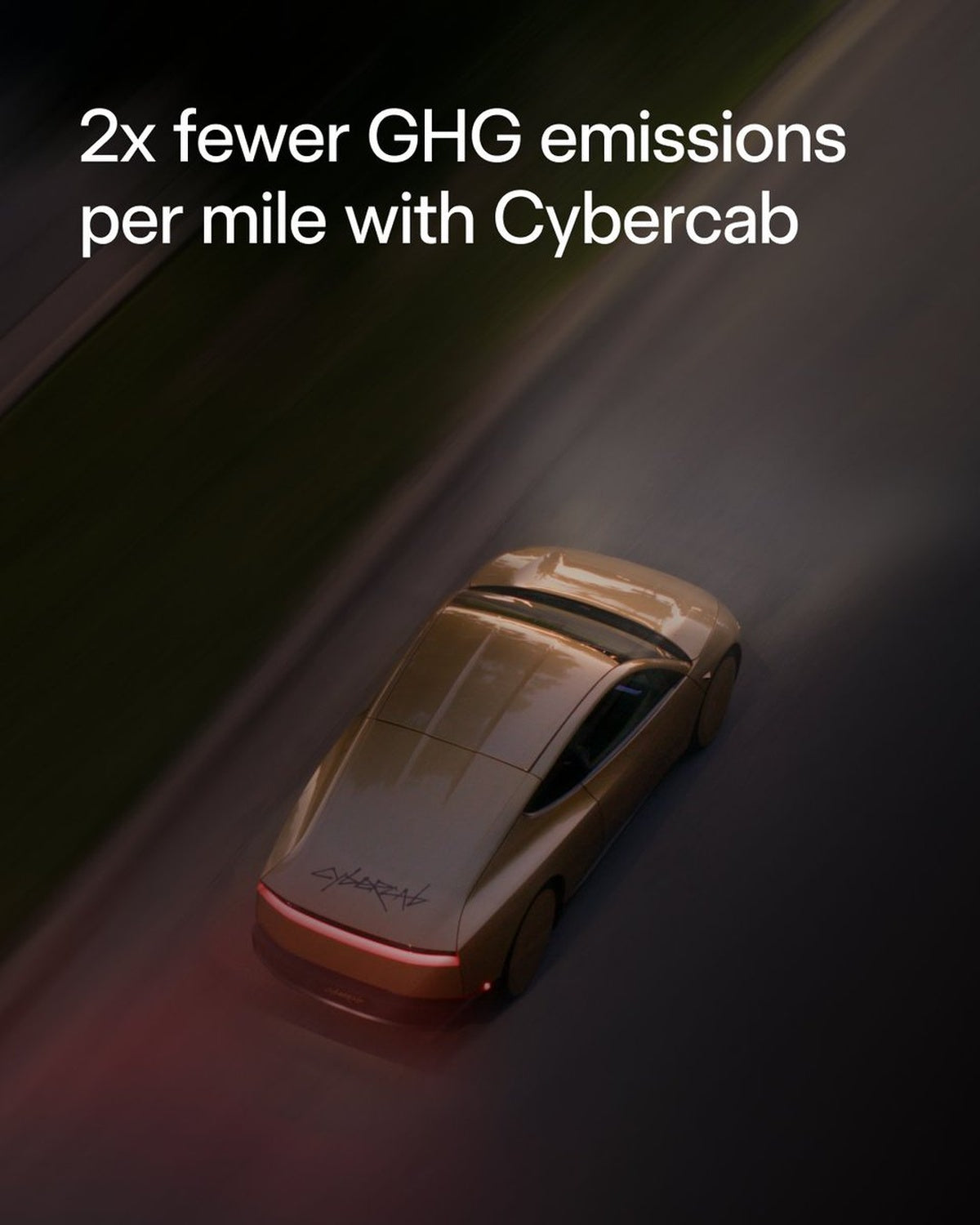
This is where the autonomy angle becomes an environmental argument. Tesla projects that Cybercab, operating with full autonomy and maximized ride-hailing utilization, will produce nearly half the emissions per mile compared to a Model 3 or Model Y. The EPA has certified the Cybercab as the most efficient production electric vehicle ever made, at 165 Wh/mile — compared to 240 Wh/mile for both Model 3 RWD and Model Y RWD. That's a 31% efficiency gain on hardware alone, before factoring in utilization rates.
5. One Cybercab does the work of several privately owned cars
A privately owned car sits parked roughly 95% of the time. Tesla's argument is that a fully autonomous, continuously operating Cybercab effectively replaces multiple personal vehicles — which means fewer cars need to be manufactured in the first place. Fewer cars manufactured means fewer raw materials extracted, fewer factories running, and fewer end-of-life vehicles to dispose of. The environmental benefit compounds well beyond the tailpipe. Tesla's internal production target of one Cybercab every 10 seconds at full scale, with an annual capacity of 2 million units, is designed to support exactly this kind of fleet-level displacement.
Taken together, these aren't incremental improvements — they represent a ground-up reconsideration of what a sustainable vehicle program looks like. The harder question is whether the autonomous utilization projections hold in practice. Per-mile emissions figures that depend on near-constant operation are only as good as the ride-hailing demand that fills those miles. That's the variable Tesla still has to prove out at scale.
Related Gear
Gear up your Tesla with tested, custom-fit BASENOR accessories — shop Tesla accessories →
🚕 Following the Robotaxi rollout? See every operating city, launch date and announced market in our Tesla Robotaxi Tracker.
Sources & reporting notes
The links below identify the material source records used for this report.
- @Tesla on X (2026-07-07T17:11:12.000Z) — Direct source
- @Tesla on X (2026-07-07T17:11:12.000Z) — Direct source
- @SawyerMerritt on X (2026-07-07T17:43:21.000Z) — Direct source
- @SawyerMerritt on X (2026-07-07T17:24:48.000Z) — Direct source
- @JoeTegtmeyer on X (2026-07-08T01:50:19.000Z) — Direct source
- @JoeTegtmeyer on X (2026-07-08T01:50:21.000Z) — Direct source
- @JoeTegtmeyer on X (2026-07-08T01:50:22.000Z) — Direct source
Source links are preserved as published or accessed. See our editorial standards and corrections policy.
The BASENOR Editorial Desk covers Tesla, SpaceX, and related technology, curating reporting from primary sources — official accounts, regulatory filings, and software release data. Every article passes source-record and fact-checking review before publication. About the newsroom.
This report was curated by the BASENOR Editorial Desk from the sources listed above. Read our editorial standards or email editorial@basenor.com to report an error.