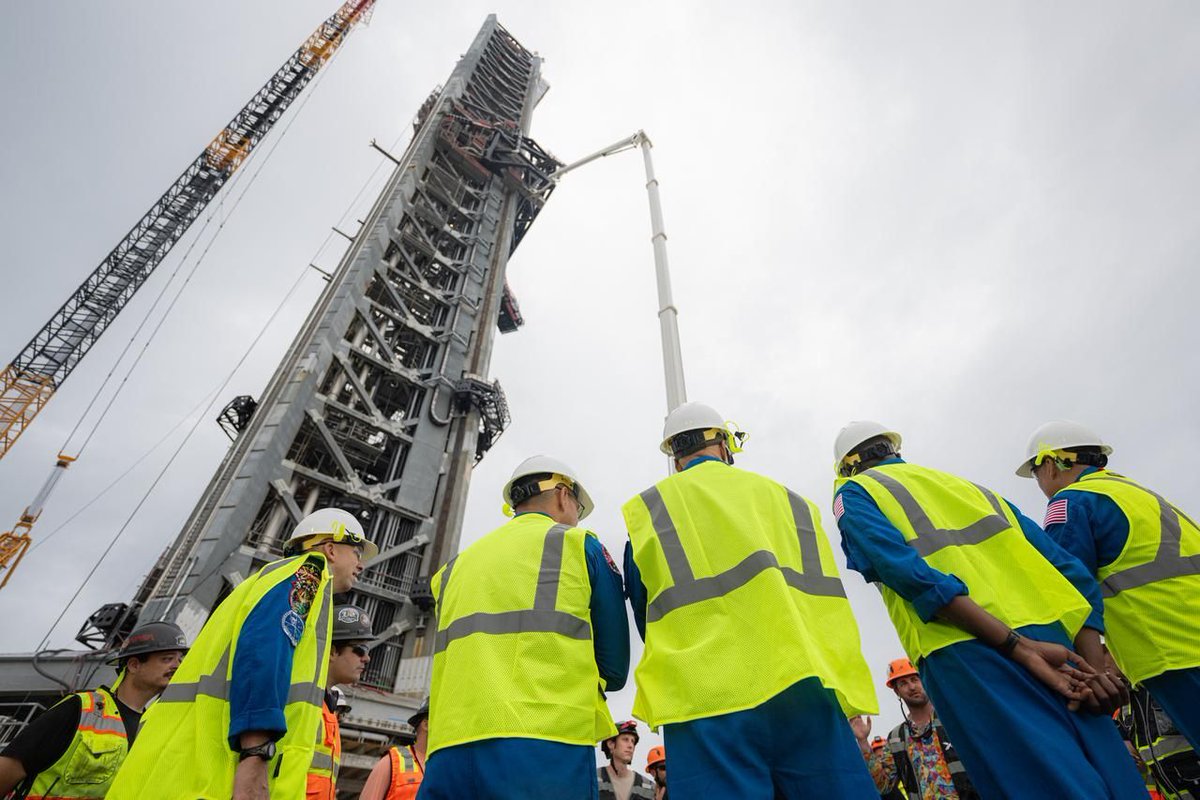
The astronauts who will fly NASA's Artemis III mission made a significant stop on Thursday, September 3, 2026 — walking the grounds of Launch Complex 39A at Kennedy Space Center to get a firsthand look at the SpaceX Starship infrastructure they'll be depending on. The visit brings the human face of the program into direct contact with the hardware, and it comes at a pivotal moment in the Artemis timeline.

Who Was There
According to @LabPadre (Avid Space), the visiting crew included NASA astronauts Randy Bresnik (Commander), Frank Rubio, and Andre Douglas, alongside ESA astronaut Luca Parmitano — who serves as Pilot — and NASA astronaut Bob Hines, the designated backup crew member. NASA officially announced this crew on June 9, 2026, making this one of the first times the full roster has been photographed together at the Starship site.

What Artemis III Actually Is Now
It's worth being precise about the mission's current scope, because it has changed. According to NASA, Artemis III has been redefined from its original lunar landing profile into a crewed demonstration flight in low Earth orbit. The primary objective is now to test rendezvous and docking operations between the Orion spacecraft and test versions of commercial Human Landing System vehicles — including SpaceX's Starship HLS and Blue Origin's Blue Moon lander. The first crewed lunar surface landing has been pushed to Artemis IV, currently targeted for 2028.
That context makes this tower visit more than ceremonial. The Artemis III crew will train on Orion systems while actively assisting in the development and operational readiness of both commercial landers. Getting eyes on the Starship infrastructure at LC-39A is part of that preparation process.

A Pattern of Crew Engagement at KSC
This isn't the first time Artemis III astronauts have been spotted at Kennedy Space Center facilities. Back on July 10, 2026, Bresnik and Douglas visited the Multi-Payload Processing Facility at KSC — a different site, but part of the same pattern of crew familiarization with the hardware and infrastructure surrounding their mission. Thursday's visit to the Starship tower is a meaningful escalation of that engagement, bringing the entire prime crew plus backup together at the vehicle that will serve as the Human Landing System test article.

Why This Moment Matters
Crew visits to launch infrastructure are a standard part of mission preparation, but they also function as visible checkpoints in a program's maturity. The fact that all five Artemis III crew members — prime and backup — were present at LC-39A together signals that training and integration activities are moving forward on schedule. For SpaceX, having NASA's astronauts physically walking the Starship tower reinforces the operational relationship between the two organizations as they work toward the HLS demonstration flight.
The Artemis program has faced repeated schedule revisions, and the shift of the lunar landing to Artemis IV means the stakes for Artemis III's LEO demonstration are higher than ever — it needs to validate the rendezvous and docking procedures that the 2028 landing will depend on. These crew visits are part of building that confidence, one site tour at a time. For our full SpaceX coverage, follow that tag as Starship HLS milestones continue to develop.
🚀 Following the Starship program? See every test flight, official outcome and the next launch window in our SpaceX Starship Tracker.
Sources & reporting notes
The links below identify the material source records used for this report.
- @LabPadre on X (2026-09-04T16:48:36.000Z) — Direct source
Source links are preserved as published or accessed. See our editorial standards and corrections policy.
The BASENOR Editorial Desk covers Tesla, SpaceX, and related technology, curating reporting from primary sources — official accounts, regulatory filings, and software release data. Every article passes source-record and fact-checking review before publication. About the newsroom.
This report was curated by the BASENOR Editorial Desk from the sources listed above. Read our editorial standards or email editorial@basenor.com to report an error.