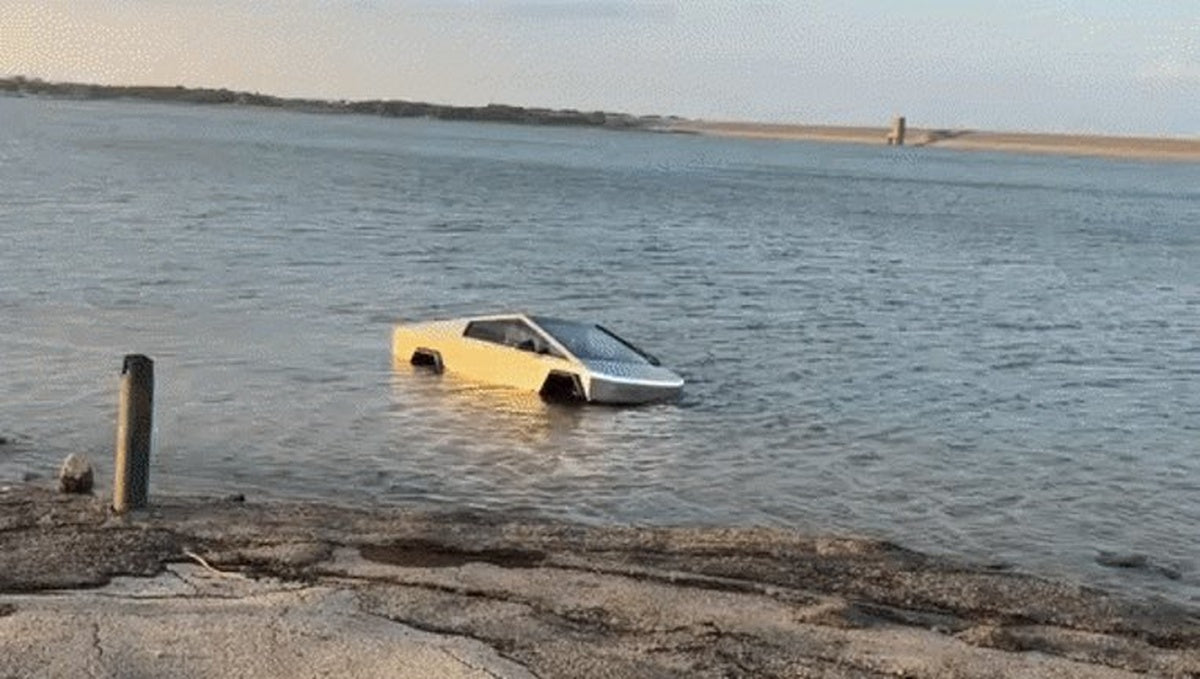
A Tesla Cybertruck ended up fully submerged in Grapevine Lake, Texas, on the evening of May 18, 2026, after its driver intentionally drove it into the water to test the vehicle's built-in Wade Mode feature. The truck quickly became disabled and began taking on water, forcing the occupants to abandon it before the Grapevine Fire Department's Water Rescue Team could pull it out.

According to authorities, the driver — identified as Jimmy Jack McDaniel — told police he deliberately entered the lake at the Katie's Woods Park Boat Ramp to use Wade Mode. He was subsequently arrested and charged with operating a vehicle in a closed section of the park, failing to possess a valid boat registration, and multiple water safety equipment violations. As of Tuesday afternoon, he remained in custody.
The incident highlights a critical gap between what Wade Mode is designed to do and what some owners may assume it can handle. Per Tesla's own specifications, Wade Mode raises the Cybertruck to its maximum ride height and protects the vehicle against water ingress up to approximately 32 inches (815 mm) — measured from the bottom of the tire — at speeds of just 1 to 3 mph, for a maximum of 30 minutes. It is intended for shallow river and creek crossings, not open-water driving. Tesla's owner's manual explicitly states that water damage resulting from driving in water is not covered under warranty, and that drivers are personally responsible for assessing depth and underwater conditions before entry.
Driving a Cybertruck into a lake is not a Wade Mode use case — it's a recovery scenario. The feature's engineering assumptions (slow speed, known depth, firm bottom) break down entirely in open water, and no amount of battery pressurization changes the laws of buoyancy. Cybertruck owners curious about the feature's real-world limits should treat the 32-inch depth ceiling and 1–3 mph speed requirement as hard constraints, not suggestions.
Related Gear
Gear up your Cybertruck with tested, custom-fit BASENOR accessories — shop Cybertruck accessories →
Sources & reporting notes
The links below identify the material source records used for this report.
- @TeslaNewswire on X (2026-05-19T21:42:46.000Z) — Direct source
Source links are preserved as published or accessed. See our editorial standards and corrections policy.
The BASENOR Editorial Desk covers Tesla, SpaceX, and related technology, curating reporting from primary sources — official accounts, regulatory filings, and software release data. Every article passes source-record and fact-checking review before publication. About the newsroom.
This report was curated by the BASENOR Editorial Desk from the sources listed above. Read our editorial standards or email editorial@basenor.com to report an error.