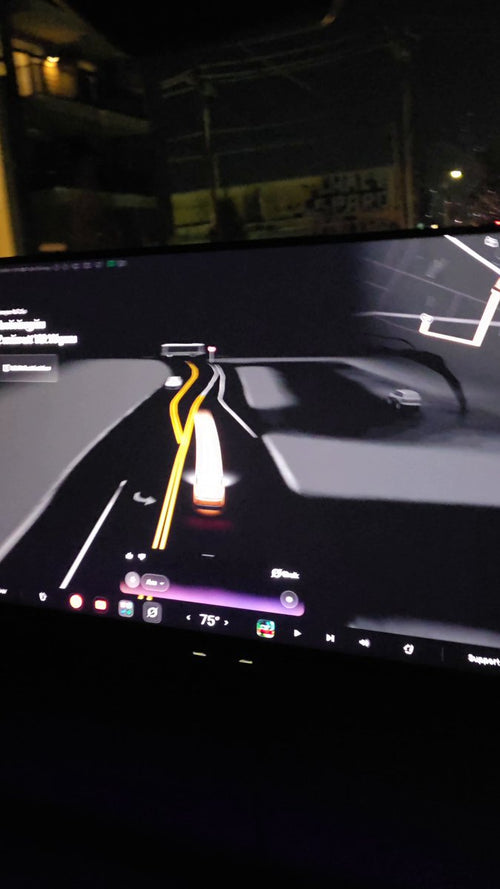
Tesla is pushing a data-backed claim that FSD Supervised doesn't just make roads safer — it also makes your Tesla more efficient. Drawing on 65 million miles of real-world driving data from 2025, the company says smoother acceleration, braking, and routing add up to a measurable reduction in energy use and emissions compared to manual driving. Here's what owners actually need to know.

How does FSD Supervised use less energy than manual driving?
The efficiency gain comes down to driving style. FSD Supervised applies smoother acceleration and more gradual braking than the average human driver, and it selects routes with energy efficiency in mind. Aggressive throttle inputs and hard braking are among the biggest contributors to unnecessary energy consumption in EVs — FSD largely eliminates both. The result, according to Tesla, is that the system consistently uses less battery per mile than a person driving the same route manually.
What does the 5% figure actually mean?
Tesla sampled real-world data from 65 million miles driven with FSD Supervised active during 2025 and found the system produced 5% fewer emissions per mile compared to manual driving. In practical terms for a Tesla owner, that translates to slightly more range per charge when FSD is engaged versus driving yourself — a benefit that compounds over thousands of miles. The 5% figure is a fleet-wide average, so individual results will vary based on road type, traffic conditions, and driving environment.

Is the safety data just as strong?
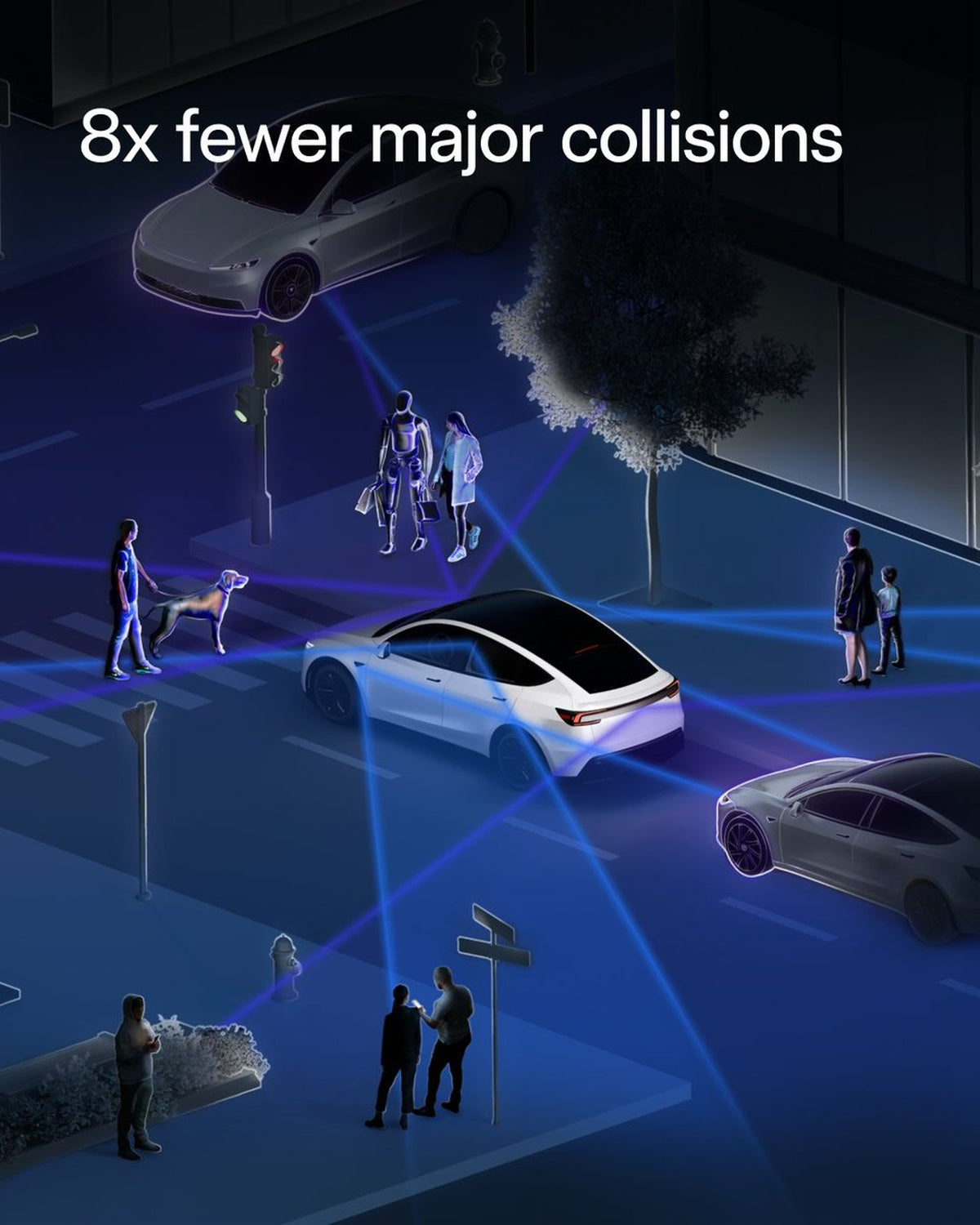
According to Tesla's official safety page, vehicles with FSD Supervised engaged experience 7x fewer major and minor collisions compared to manually driven Teslas. The collision rate with FSD active stands at one major incident every 5,300,676 miles, versus one every 2,175,763 miles for manually driven Teslas with Active Safety features — and one every 660,164 miles for the U.S. average overall. European data adds further weight: a Netherlands study covering April to June 2026 found FSD-equipped Teslas recorded 3.5 times fewer collisions than manually driven cars on the same roads, with zero reported collisions across 16.6 million kilometers of highway driving.
How much total data is behind these claims?
The efficiency finding is drawn from 65 million miles in 2025 alone. The broader safety dataset is substantially larger — according to Tesla, FSD Supervised has now surpassed 8.4 billion cumulative miles as of February 2026, with 4.25 billion of those miles accumulated during 2025. The fleet was logging roughly 1 billion additional miles every 50 days in early 2026, putting the system on track for approximately 10 billion total miles by year-end. That scale of real-world data is what gives Tesla's statistical claims more weight than controlled-environment testing.
Does this mean FSD Supervised is better for the environment?
That's Tesla's direct argument. By combining lower per-mile energy consumption with a larger number of miles being driven autonomously, the company is positioning FSD as an environmental benefit — not just a convenience feature. The logic holds in principle: a 5% efficiency improvement across billions of annual miles represents a non-trivial reduction in grid energy demand and associated emissions, even accounting for the electricity source mix. Whether regulators or environmental bodies adopt Tesla's framing remains to be seen, but the underlying data point — smoother driving uses less energy — is well-established physics.
Should owners actively use FSD Supervised to get these benefits?
If you already have access to FSD Supervised, the data suggests there's a tangible efficiency upside to engaging it on familiar routes, particularly highways where the system is most consistent. You won't see a dramatic range increase on any single trip, but over time the smoother driving profile should reflect in your average Wh/mi figures. The safety data adds another reason to keep the system active rather than treating it as an occasional novelty. As Tesla's cumulative mileage continues to climb, the statistical confidence behind both the safety and efficiency claims will only strengthen.
Related Gear
Gear up your Tesla with tested, custom-fit BASENOR accessories — shop Tesla accessories →
Sources & reporting notes
The links below identify the material source records used for this report.
- @Tesla on X (2026-07-07T17:11:11.000Z) — Direct source
- @SawyerMerritt on X (2026-07-07T17:44:01.000Z) — Direct source
Source links are preserved as published or accessed. See our editorial standards and corrections policy.
The BASENOR Editorial Desk covers Tesla, SpaceX, and related technology, curating reporting from primary sources — official accounts, regulatory filings, and software release data. Every article passes source-record and fact-checking review before publication. About the newsroom.
This report was curated by the BASENOR Editorial Desk from the sources listed above. Read our editorial standards or email editorial@basenor.com to report an error.