⚡ 30-Second Brief
The News: Elon Musk shared new video footage of Starship on February 15, 2026, showcasing the world's most powerful rocket as development accelerates toward lunar missions.
Why It Matters: SpaceX's Starship is the backbone of humanity's return to the Moon and eventual Mars colonization — and the same rocket technology could revolutionize point-to-point Earth travel, including potential Tesla integration for future mobility ecosystems.
Source: @elonmusk on X
🚀 The Visual Update
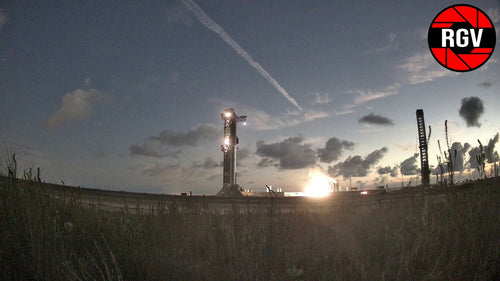
Early Saturday morning UTC, Elon Musk posted a single-word tweet — "Starship" — accompanied by dramatic video footage of the massive launch vehicle. The brevity is classic Musk: let the hardware speak for itself.

The post has already garnered over 1.7 million views, 22,000+ likes, and 2,200+ retweets within hours — demonstrating the intense public interest in SpaceX's flagship program. While Musk didn't provide technical specifics in this particular post, the timing aligns with a critical phase in Starship development.
📊 Key Figures
| Metric | Value | Context |
|---|---|---|
| Tweet Engagement | 1.7M+ views | Posted Feb 15, 2026 at 06:08 UTC |
| Planned Starbase Launches | 25 annually | Per approved Texas site expansion |
| Launch Complex Expansion | +105% | From 20 acres to ~41 acres at Starbase |
| Target Lunar Landing | March 2027 | According to Musk's Feb 9 announcement |
| Raptor V3 Test Time | 40,000+ seconds | Engine for Starship V3 architecture |
🔭 The BASENOR Take
Timeline Assessment
Near-Term (2026): Starship V3 orbital propellant transfer tests, continued Super Heavy booster validation
Mid-Term (2027): First lunar landing attempt by March, establishment of Moon infrastructure
Long-Term (2030s): "Self-growing city" on the Moon as staging ground for Mars missions
Impact Level
For SpaceX: 🔴 CRITICAL — Starship is the company's entire future
For Tesla Owners: 🟡 MODERATE — Long-term vision includes Earth point-to-point travel using rocket technology; potential integration with Tesla's mobility ecosystem
For Space Industry: 🔴 TRANSFORMATIVE — First fully reusable super-heavy-lift vehicle
Confidence Rating: 85%
What We Know: SpaceX just completed V3 booster cryoproof testing (Feb 11), Starbase expansion approved, lunar focus officially announced (Feb 9)
What We're Watching: Specific details on the video content, next orbital test flight date, propellant transfer demonstration timeline
Risk Factors: Regulatory approval timelines, technical challenges with orbital refueling, competition from Blue Origin's lunar lander program
🌙 The Strategic Pivot to Luna
Context matters here. Just six days before this video drop, Musk announced a fundamental strategic shift: SpaceX will now prioritize establishing a Moon city before Mars colonization. This isn't a rejection of the Mars vision — it's a recognition that the Moon offers a more practical proving ground.
According to Musk's February 9 announcement, the math is compelling: the Moon is only a two-day journey away with launch windows available every 10 days, compared to Mars' six-month journey with windows opening only every 26 months. This accessibility enables rapid iteration — the same philosophy that's made Tesla's over-the-air updates so powerful.
The Starship footage shared today isn't just eye candy. It represents the vehicle that will make this lunar strategy possible. Each test, each booster validation, each propellant transfer demonstration moves SpaceX closer to routine operations beyond low Earth orbit.
🔧 Where Development Stands Now
The timeline is aggressive but grounded in recent milestones:
- February 11, 2026: Starship V3 Super Heavy booster completed multi-day cryogenic proof testing at Starbase, validating redesigned propellant systems
- Ongoing: Starbase expansion to double facility size, enabling up to 25 launches and landings annually
- 2026 Target: Orbital propellant transfer tests using Starship V3 architecture
- March 2027 Goal: First lunar landing attempt
The Raptor V3 engines powering this architecture have logged over 40,000 seconds of test time — a critical reliability milestone. For reference, a single Starship flight to orbit requires roughly 6-8 minutes (360-480 seconds) of engine burn time, meaning these engines have accumulated test experience equivalent to 80+ theoretical missions.
🔗 The xAI Integration Factor
There's another layer most coverage misses: SpaceX's February 2, 2026 acquisition of xAI. This vertical integration — combining AI, rockets, Starlink satellite internet, and direct-to-mobile communications — positions SpaceX to potentially manufacture and launch satellites from the lunar surface itself.
For Tesla owners, this matters because it demonstrates Musk's ecosystem thinking. Just as Tesla, Solar, and Powerwall create an integrated energy solution, SpaceX + xAI + Starlink could create a fully integrated space infrastructure. And yes, Musk has previously discussed using Starship for point-to-point Earth travel — imagine a Tesla ride to a spaceport, a 30-minute Starship flight from LA to Tokyo, and another Tesla waiting on the other side.
Ambitious? Absolutely. But then again, so was building a successful American EV company from scratch.
📰 Deep Dive
What makes this video post significant isn't the footage itself — SpaceX regularly shares test imagery. It's the timing. Coming just days after the strategic lunar pivot announcement and immediately following successful V3 booster testing, this appears to be Musk signaling confidence in the hardware's readiness for the accelerated timeline ahead.
The public engagement numbers (1.7M+ views in hours) also reveal something important: space development has moved from niche interest to mainstream cultural conversation. That's partly because people increasingly see Starship not as a distant science fiction concept, but as infrastructure that will be operational within their lifetime — perhaps even within the next presidential term.
For Tesla owners specifically, the connection might seem abstract now. But consider: Tesla exists because Musk wanted to accelerate sustainable energy to help preserve Earth as a habitable planet. SpaceX exists as the backup plan — ensuring humanity has options if Earth faces existential threats. The two companies share philosophical DNA, even if their immediate products differ radically.
The expanded Starbase facility — growing from 20 to 41 acres — signals SpaceX's expectation of routine, high-cadence operations. That's the same operational philosophy that Tesla applied to automotive manufacturing: make it repeatable, make it scalable, make it economically sustainable. When Starship reaches that operational cadence, the cost-per-kilogram to orbit could drop by orders of magnitude, fundamentally changing what's possible in space.
Watch what happens next. If SpaceX follows its typical pattern, this video tease will be followed within weeks by a major test milestone — possibly the next orbital flight, possibly the first propellant transfer demonstration. Musk doesn't post without purpose, and the V3 architecture is clearly ready to show what it can do.
🚀 Following the Starship program? See every test flight, official outcome and the next launch window in our SpaceX Starship Tracker.
Related Gear
Gear up your Tesla with tested, custom-fit BASENOR accessories — shop Tesla accessories →
Sources & reporting notes
The links below identify the material source records used for this report.
- @elonmusk on X (2026-02-15T06:08:16.000Z) — Direct source
Source links are preserved as published or accessed. See our editorial standards and corrections policy.
The BASENOR Editorial Desk covers Tesla, SpaceX, and related technology, curating reporting from primary sources — official accounts, regulatory filings, and software release data. Every article passes source-record and fact-checking review before publication. About the newsroom.
This report was curated by the BASENOR Editorial Desk from the sources listed above. Read our editorial standards or email editorial@basenor.com to report an error.