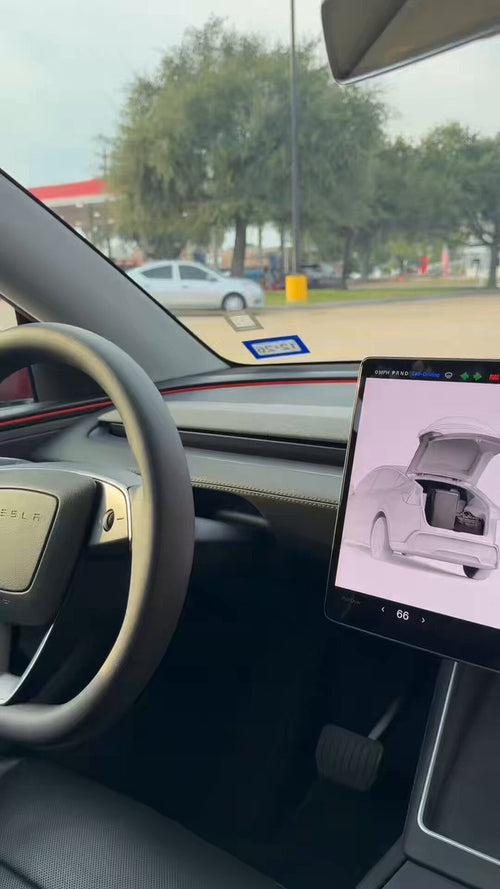
Tesla's FSD (Supervised) system is quietly building a track record that no press release could manufacture: real people, in real situations, trusting it enough to let it drive. Two recent firsthand accounts shared by journalist Sawyer Merritt paint a picture of a technology that has crossed a meaningful threshold for everyday usability — particularly among older drivers who have the most to gain from it.

The first account involves a couple living in a retirement community who completed a multi-state drive — New Hampshire to Connecticut — in a Model Y using FSD (Supervised) without a single intervention. That's not a short hop; it's a sustained highway and surface-road journey that would have tested the system across merges, toll plazas, and varying traffic conditions. The second account is arguably more striking: an 89-year-old woman who now relies on FSD for the majority of her daily driving.
These aren't edge-case enthusiasts pushing the system to its limits. They're exactly the kind of mainstream, cautious users who would disengage FSD at the first sign of hesitation. The fact that they aren't disengaging — and are actively choosing to use it — is a more honest signal of reliability than any controlled demo. It also points to a user segment Tesla hasn't always marketed to directly: older drivers for whom reduced reaction time, fatigue, or mobility limitations make autonomous assistance genuinely life-changing rather than merely convenient.
The timing aligns with meaningful software progress. FSD (Supervised) v14.3.3 began rolling out in North America in early June as part of software version 2026.14.6.7, bringing a rewritten AI compiler, an improved neural network vision encoder, and a reported 20% faster reaction time. Multiple owners on v14.x have also completed coast-to-coast U.S. drives without a single disengagement, according to community reports. The anecdotal evidence Merritt collected fits a pattern: the system is becoming reliable enough that intervention-free long trips are no longer exceptional — they're becoming expected.
The broader implication for the FSD rollout is about trust accumulation. Every intervention-free mile driven by a skeptical or cautious user is a data point Tesla's training pipeline can learn from, and a story that spreads through word of mouth in ways that advertising cannot replicate. An 89-year-old recommending FSD to her peers at a retirement community is a more powerful distribution channel than any influencer campaign. For our FSD coverage, this is the kind of ground-level adoption signal worth watching closely.
📋 Tracking Tesla software? See every firmware, FSD and app version in one place in our Tesla Software Update Tracker.
Related Gear
Gear up your Model Y with tested, custom-fit BASENOR accessories — shop Model Y accessories →
Sources & reporting notes
The links below identify the material source records used for this report.
- @SawyerMerritt on X (2026-06-07T23:56:37.000Z) — Direct source
Source links are preserved as published or accessed. See our editorial standards and corrections policy.
The BASENOR Editorial Desk covers Tesla, SpaceX, and related technology, curating reporting from primary sources — official accounts, regulatory filings, and software release data. Every article passes source-record and fact-checking review before publication. About the newsroom.
This report was curated by the BASENOR Editorial Desk from the sources listed above. Read our editorial standards or email editorial@basenor.com to report an error.