Starlink has confirmed that its high-speed internet service now covers all of Earth's oceans and waterways — a milestone that puts reliable broadband connectivity within reach of any vessel, anywhere on the water. The announcement, posted directly by the official Starlink account, marks the completion of a maritime expansion that began with a limited launch back in July 2022.

From Coastal Pilot to Full Ocean Coverage
Starlink's maritime journey has moved fast. The service launched commercially in July 2022, initially targeting large commercial vessels with hardware priced at $10,000 for two high-performance terminals. Global maritime coverage was achieved by Q1 2023, and the service has been progressively refined since — with hardware costs dropping significantly and plan structures becoming more accessible to smaller operators and recreational boaters alike.
By early 2026, industry estimates place Starlink's deployment on approximately 150,000 maritime vessels worldwide. That figure spans everything from commercial cargo ships and superyachts to fishing trawlers and offshore research platforms. The scale reflects how quickly satellite-based maritime connectivity has shifted from a luxury to an operational expectation.
What the Service Actually Delivers
Performance figures for Starlink Maritime are well-documented. Average download speeds sit between 170–300 Mbps, with peak speeds exceeding 400 Mbps. Latency typically runs 20–45 ms — competitive with many fixed broadband connections on land, and a dramatic improvement over legacy VSAT systems that dominated maritime comms for decades.
SpaceX has indicated that gigabit-class speeds are targeted for 2026 through network enhancements, with existing antenna hardware expected to remain compatible — meaning vessels already equipped won't need a hardware swap to benefit from the upgrade.
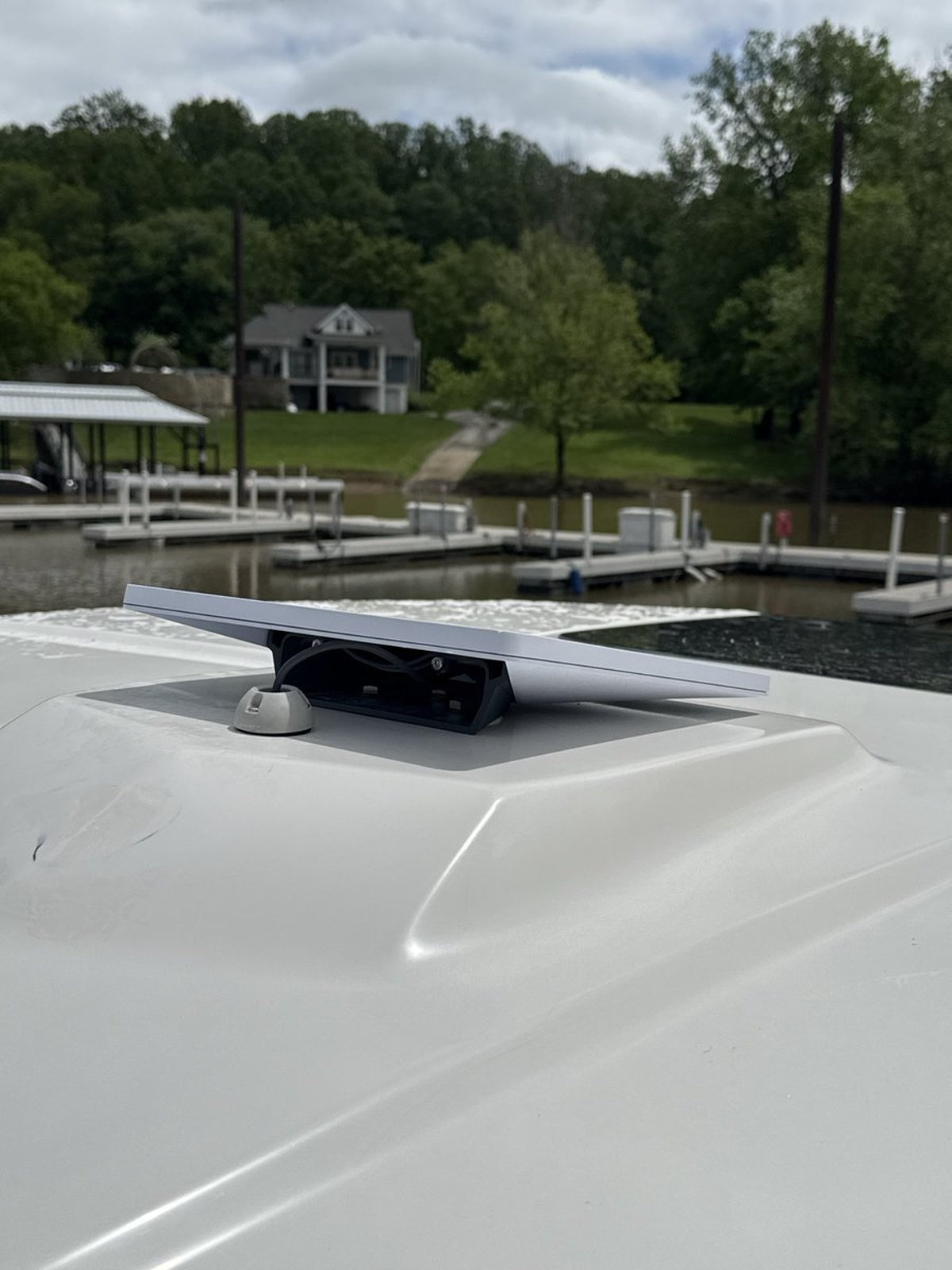
The recommended hardware for ocean use is the Flat High Performance dish, rated IP68/IP69K for waterproofing and designed for a 10-year lifespan in corrosive saltwater environments. Current hardware pricing sits at approximately $2,000–$2,500, a significant reduction from the original $10,000 entry point.
Plan Pricing: Two Tiers for Different Use Cases
Starlink currently offers two distinct plan structures for maritime users, depending on whether they need true open-ocean coverage or primarily operate in coastal and inland waters.
Global Priority Plans — designed for ocean-going vessels that need guaranteed performance anywhere on the water:
| Data Tier | Monthly Price |
|---|---|
| 50 GB | $250 |
| 500 GB | $650 |
| 1 TB | $1,150 |
| 2 TB | $2,150 |
A terminal access charge of approximately $150/month applies to most Global Priority tiers. After exhausting priority data, speeds reduce to 1 Mbps down / 0.5 Mbps up, with overage available at $2/GB.
Roam Plans — better suited to coastal cruisers and inland waterway users, with an optional Ocean Mode add-on for international waters:
| Plan | Monthly Price (US) | Ocean Mode |
|---|---|---|
| Roam 100 GB | $55 | — |
| Roam 300 GB | $80 | Not included |
| Roam Unlimited | $175 | Included |
The Roam 300 GB plan is a newer addition as of May 2026, though it does not include Ocean Mode — meaning it's best suited to operators who stay within coastal or inland coverage zones. US prices on Roam plans increased slightly in May 2026, with the Unlimited tier moving from $165 to $175/month.
Why This Matters Beyond the Headline
Full ocean coverage from a single provider is a genuinely significant infrastructure milestone. Legacy maritime satellite services — VSAT systems from providers like Inmarsat and Iridium — have historically been expensive, slow, and latency-heavy. A fishing vessel or research ship in the middle of the Pacific previously had to choose between paying premium rates for mediocre performance or going dark entirely.
Starlink's combination of low-earth orbit satellites, competitive pricing, and consumer-grade hardware has fundamentally changed that calculus. With 150,000 vessels already connected and gigabit speeds on the horizon, the maritime internet market looks structurally different than it did even three years ago. The question now is whether the pricing tiers — particularly the $250–$2,150/month Global Priority range — will continue to compress as competition and satellite density increase.
Sources & reporting notes
The links below identify the material source records used for this report.
- @Starlink on X (2026-06-07T22:10:36.000Z) — Direct source
Source links are preserved as published or accessed. See our editorial standards and corrections policy.
The BASENOR Editorial Desk covers Tesla, SpaceX, and related technology, curating reporting from primary sources — official accounts, regulatory filings, and software release data. Every article passes source-record and fact-checking review before publication. About the newsroom.
This report was curated by the BASENOR Editorial Desk from the sources listed above. Read our editorial standards or email editorial@basenor.com to report an error.