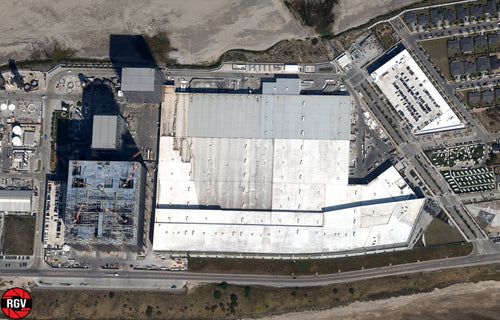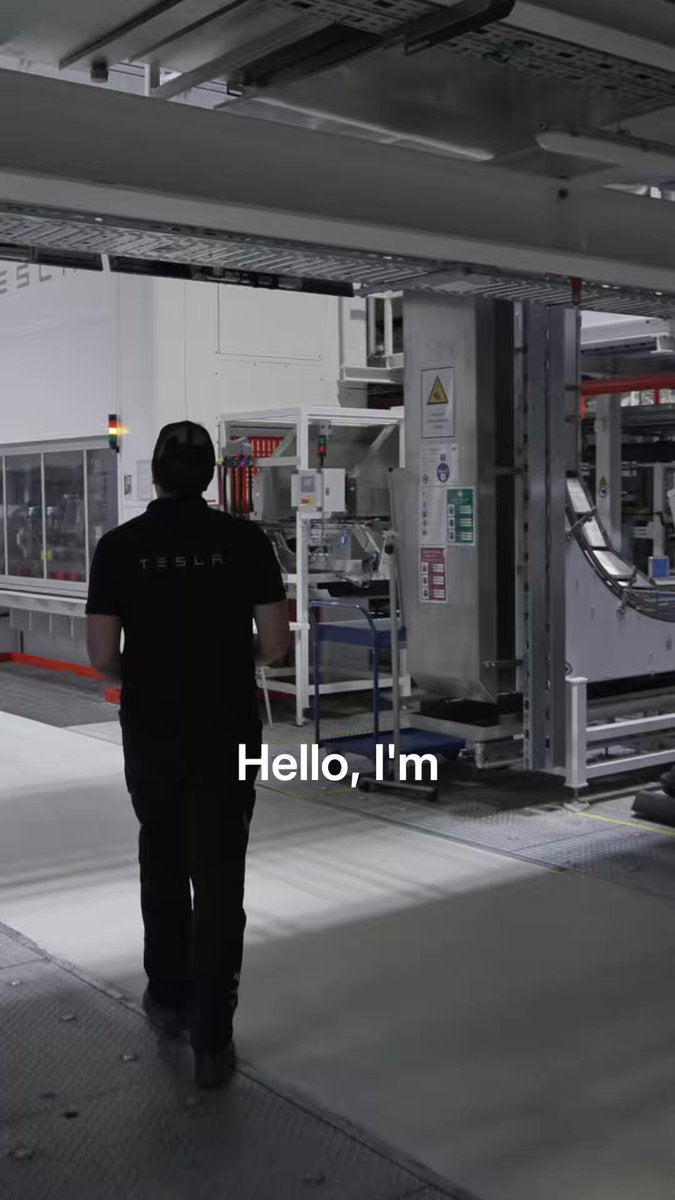
Tesla has released a new video spotlighting the 4680 battery cell can stamping team at Gigafactory Berlin — a rare, unfiltered look at one of the most consequential manufacturing operations in the company's European footprint. The timing is deliberate: Giga Berlin only began producing 4680 cells on May 12, 2026, and Tesla is now scaling aggressively toward a capacity target that has more than doubled in less than a year.

From 8 GWh to 18 GWh: What the Expansion Actually Means
When Giga Berlin's 4680 line first entered production this spring, the stated annual capacity target was 8 GWh. That figure has since been revised upward to 18 GWh — a more-than-doubling that required an additional $250 million investment on top of the roughly $1.2 billion already committed to the facility's battery infrastructure, bringing the cumulative total to approximately $1.45 billion, according to previous reporting.
To put 18 GWh in practical terms: assuming a standard 75 kWh pack, that output is sufficient to supply batteries for approximately 240,000 Model Y vehicles per year. Beyond raw volume, locally produced cells insulate more than 200,000 long-range vehicles annually from the shipping fees and import tariffs that come with sourcing cells from outside the EU — a structural cost advantage that compounds over time.
The Process Behind the Can
Can stamping is one of the earlier and more mechanically demanding steps in cylindrical cell manufacturing — the steel or aluminum can forms the outer casing that contains the electrode assembly and electrolyte. Getting that geometry precise at scale, with consistent wall thickness and no micro-defects, is a prerequisite for everything downstream: winding, filling, sealing, and formation cycling.
What makes Giga Berlin's line technically notable is what happens after the can is formed. The facility uses Tesla's Dry Battery Electrode (DBE) process for both the anode and cathode — a method that eliminates the solvent-heavy wet coating step used in conventional cell manufacturing. According to previous reports, DBE reduces energy consumption in the electrode coating process by up to 85% and significantly shrinks the factory footprint required for that stage. As of January 2026, Tesla confirmed it was running dry process on both electrodes at Berlin, not just one.
Hiring, Timeline, and the Road to Full Scale
Tesla has posted more than 1,500 new roles tied to the expanded battery operation at Giga Berlin. Full-scale production at the expanded facility is targeted for the first half of 2027 — meaning the operation is currently in a ramp phase, not yet at nameplate capacity.
On the product side, Model Y vehicles built at Giga Berlin with locally produced 4680 cells are expected to reach customers by late Q3 2026. That window is essentially now, which adds context to why Tesla is releasing manufacturing content at this moment: it's not just a factory showcase, it's a market signal.
Tesla also launched the JUNI x Tesla Battery Cell Giga Challenge in July, an open competition inviting startups, universities, and robotics firms to propose scalable solutions for 4680 manufacturing bottlenecks. Applications closed July 24, with the program commencing in August — suggesting Tesla is actively seeking outside innovation to accelerate the ramp rather than treating the line as a closed system.
Why This Matters Beyond the Factory Floor
The 4680 cell has been in development since 2020, and its path to high-volume production has been slower than Tesla's original projections. Giga Berlin's ramp represents the most significant 4680 capacity addition outside of Texas, and the DBE process running here — if it holds up at scale — could become the template for future cell facilities globally. The video release, modest as it appears, is Tesla showing its work at a moment when the Berlin line needs to prove it can deliver on the revised capacity numbers before the end of 2026.
Related Gear
Gear up your Model Y with tested, custom-fit BASENOR accessories — shop Model Y accessories →
Sources & reporting notes
The links below identify the material source records used for this report.
- @SawyerMerritt on X (2026-08-31T14:59:18.000Z) — Direct source
Source links are preserved as published or accessed. See our editorial standards and corrections policy.
The BASENOR Editorial Desk covers Tesla, SpaceX, and related technology, curating reporting from primary sources — official accounts, regulatory filings, and software release data. Every article passes source-record and fact-checking review before publication. About the newsroom.
This report was curated by the BASENOR Editorial Desk from the sources listed above. Read our editorial standards or email editorial@basenor.com to report an error.