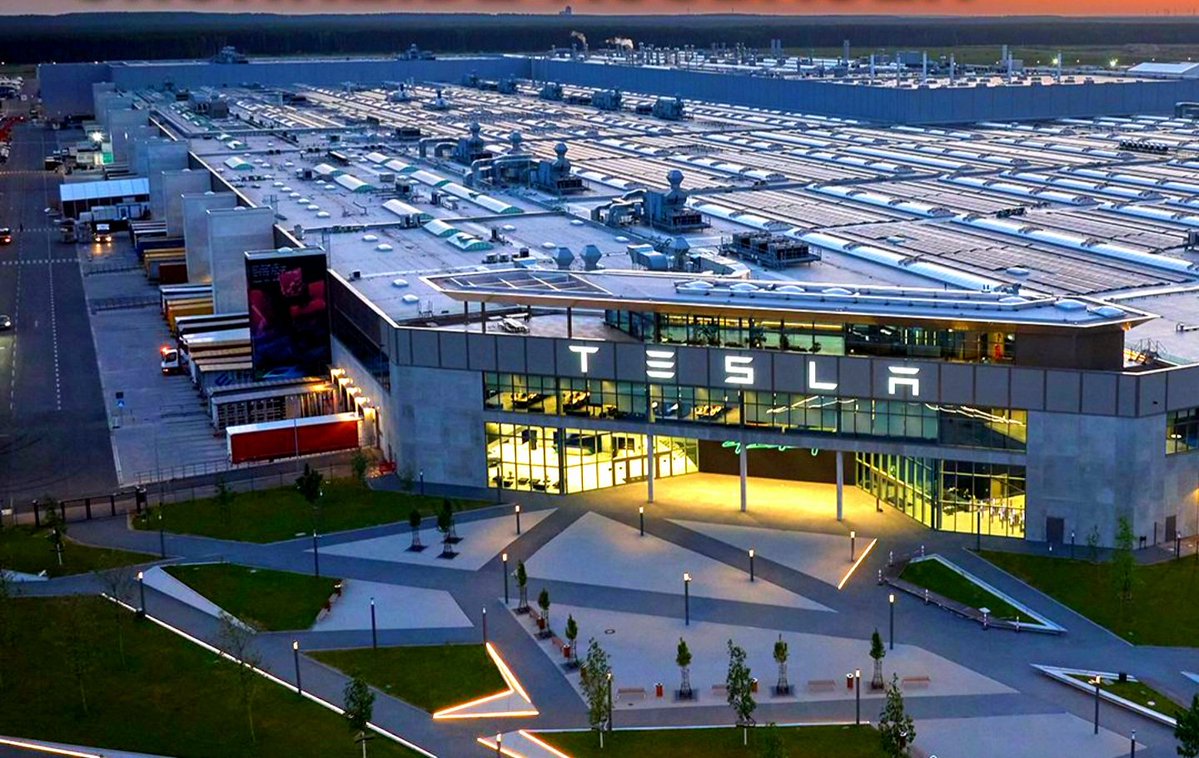
Tesla's Gigafactory Berlin is about to get a whole lot bigger. According to a report from @Gf4Tesla, a new facility spanning approximately 536,000 square meters is planned directly adjacent to the existing plant — more than twice its current footprint. The permitting process is already underway, with construction targeted to begin in 2027. Here's what that actually means in concrete terms.

1. The New Facility Is More Than Twice the Size of the Existing Factory
The planned expansion covers approximately 536,000 square meters — a figure that dwarfs the current Giga Berlin footprint. To put it in perspective, that's roughly the size of 75 football pitches. The new structure is described as being built directly north of the existing facility, effectively creating a second, larger factory on the same campus. This isn't an incremental addition; it's a fundamental reshaping of what Giga Berlin is.
2. Production Is Already Ramping Before Ground Is Broken
The physical expansion hasn't started yet, but production targets aren't waiting. According to reports, Giga Berlin is targeting 7,500 Model Y vehicles per week starting in mid-October 2026 — up from approximately 6,200 units per week in July 2026. That ongoing ramp is happening within the existing facility, which makes the case that the new structure is needed to sustain long-term growth, not just paper over near-term gaps.
3. Battery Cell Manufacturing Gets a $250 Million Boost
Alongside the physical expansion, Tesla has committed an additional $250 million to scale up 4680 battery cell production at the Berlin site, according to verified reporting. That brings the annual capacity target from 8 GWh to 18 GWh — more than double. Total investment in battery cell manufacturing at Giga Berlin now exceeds €1 billion (approximately $1.2 billion). On-site cell production is targeted to begin in Germany by 2027, aligning with the construction timeline for the new facility.
4. Around 3,500 New Jobs Are Expected
The expansion carries significant employment implications for the Brandenburg region. Approximately 3,500 new positions are expected to be created, broken down as roughly 1,000 vehicle assembly roles, over 1,500 battery-related positions, and the conversion of around 500 temporary workers to permanent status. For a factory that faced considerable local opposition during its initial permitting and construction phase, this scale of job creation adds a meaningful economic argument to the expansion case.
5. The Permitting Process Is Underway — But 2027 Is the Realistic Start Date
Construction is scheduled to begin in 2027, which means the permitting phase is the critical near-term milestone to watch. Giga Berlin's original build was a case study in regulatory complexity — the factory navigated lengthy environmental reviews and legal challenges before opening in 2022. Whether the expansion moves through the process more smoothly this time remains an open question. The 2027 construction start is the target, not a guarantee, and the permitting outcome will determine whether that timeline holds.
Taken together, these five data points sketch a Giga Berlin that looks very different by the end of the decade: a dual-campus operation producing well over 7,500 vehicles per week, manufacturing its own battery cells at scale, and employing tens of thousands of workers. The permitting clock is now the variable that matters most — watch for regulatory updates out of Brandenburg as the clearest signal of whether 2027 stays on track.
Related Gear
Gear up your Model Y with tested, custom-fit BASENOR accessories — shop Model Y accessories →
Sources & reporting notes
The links below identify the material source records used for this report.
- @Gf4Tesla on X (2026-10-14T17:04:35.000Z) — Direct source
Source links are preserved as published or accessed. See our editorial standards and corrections policy.
The BASENOR Editorial Desk covers Tesla, SpaceX, and related technology, curating reporting from primary sources — official accounts, regulatory filings, and software release data. Every article passes source-record and fact-checking review before publication. About the newsroom.
This report was curated by the BASENOR Editorial Desk from the sources listed above. Read our editorial standards or email editorial@basenor.com to report an error.