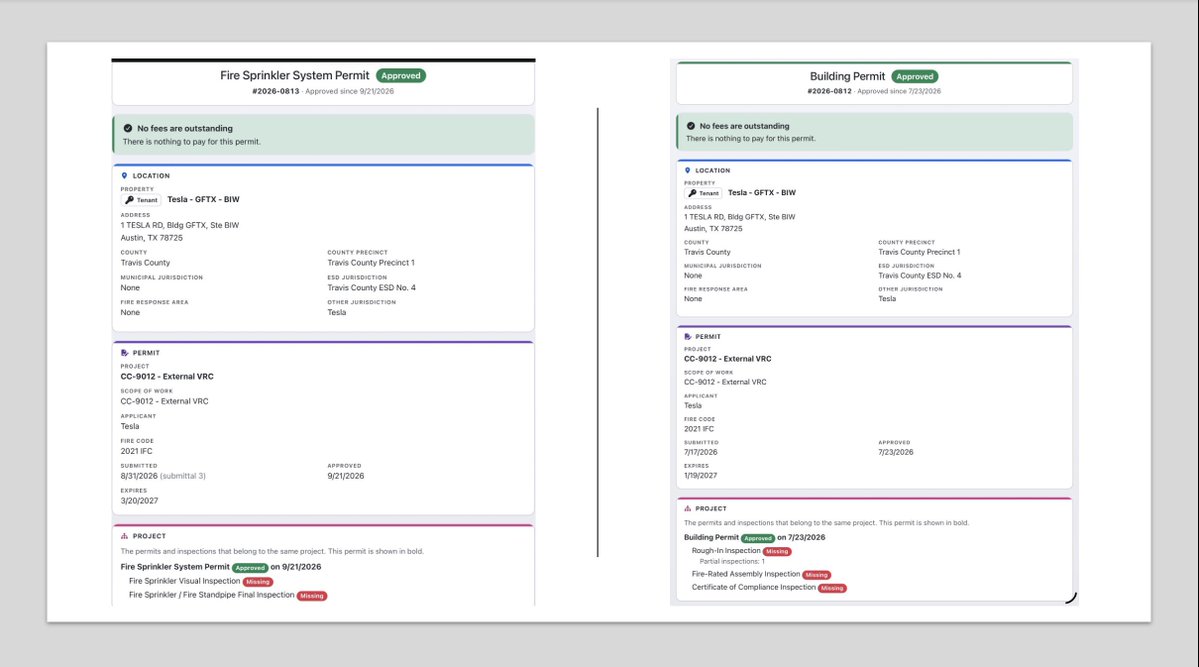
Giga Texas is getting a meaningful infrastructure upgrade. Aerial observer Joe Tegtmeyer spotted a new External Vertical Reciprocating Conveyor — a VRC — going up on the east side of the factory's Body-in-White section, a change he describes as a significant efficiency boost for both Model Y and Cybercab production. The installation is ongoing as of September 24, 2026.

What a VRC Actually Does on a Factory Floor
A Vertical Reciprocating Conveyor is an industrial lift system — essentially a heavy-duty freight elevator designed to move parts, sub-assemblies, or completed components between floor levels without the throughput limitations of a standard elevator or the space demands of a ramp. In a Body-in-White context, that typically means moving stamped metal panels, structural sub-frames, or partially assembled body shells between production levels quickly and continuously.
The key word Tegtmeyer uses is external. An external VRC is mounted on the outside of the building structure rather than integrated into the interior floor plan. That distinction matters: it allows Tesla to add vertical material flow capacity without carving up existing production floor space inside the BIW section — a meaningful advantage when you're simultaneously trying to scale two vehicle lines in the same facility.
Why This Matters for Cybercab Right Now
The timing is not incidental. Cybercab mass production at Giga Texas officially began in April 2026, and paid public robotaxi rides launched in Austin in September 2026. According to background research, the current installed annual capacity for Cybercab at Giga Texas sits above 125,000 units — but Tesla's stated long-term target is 2 million units annually. The gap between those two numbers is enormous, and closing it requires continuous factory-level investment, not just software tuning.
The Cybercab is built using Tesla's Unboxed manufacturing process, which is designed to reduce factory footprint by roughly 40% and cut labor costs by approximately 30% compared to conventional assembly. An external VRC feeding the BIW section fits that philosophy: maximize throughput within the existing structural envelope rather than building out more floor space.
As of September 22, the Cybercab fleet operating in Texas totaled 67 units — a number that will need to scale dramatically if the robotaxi service is to expand beyond its current limited footprint. Infrastructure upgrades like this one are part of how that scaling happens invisibly, before the delivery numbers show up in a quarterly report.
The Model Y Connection
Model Y production at Giga Texas continues in parallel with Cybercab ramp-up, and the BIW section serves both lines. Any efficiency gain in how body components move through that section benefits both vehicles. There are also reports of significant Model YL (long-wheelbase, 6-seat) inventory building at Giga Texas, consistent with localization of that variant's production ahead of broader U.S. availability — another reason to squeeze more throughput out of the existing BIW infrastructure.
Giga Texas has been in a near-constant state of internal reconfiguration since Cybercab production began. This VRC installation is the latest visible signal that Tesla is treating the Austin factory as a long-term, high-volume production hub — not just a Model Y plant that happened to add a new vehicle line. The question now is how quickly the capacity additions translate into delivery numbers that reflect the ambition behind them.
🚕 Following the Robotaxi rollout? See every operating city, launch date and announced market in our Tesla Robotaxi Tracker.
Related Gear
Gear up your Model Y with tested, custom-fit BASENOR accessories — shop Model Y accessories →
Sources & reporting notes
The links below identify the material source records used for this report.
- @JoeTegtmeyer on X (2026-09-24T16:09:00.000Z) — Direct source
Source links are preserved as published or accessed. See our editorial standards and corrections policy.
The BASENOR Editorial Desk covers Tesla, SpaceX, and related technology, curating reporting from primary sources — official accounts, regulatory filings, and software release data. Every article passes source-record and fact-checking review before publication. About the newsroom.
This report was curated by the BASENOR Editorial Desk from the sources listed above. Read our editorial standards or email editorial@basenor.com to report an error.