xAI's Grok Speech-to-Text model is now accessible through OpenRouter, opening up Grok's transcription capabilities to a much wider developer audience without requiring a direct xAI API account. Here's what the release actually means in practice.

1. The Model: Grok STT 1.0, Released July 23
The version now live on OpenRouter is Grok STT 1.0, which went up on the platform on July 23, 2026 — one day before xAI's public announcement. It's accessible via the standard REST /v1/stt endpoint, meaning any workflow already built around OpenRouter's routing layer can plug Grok STT in without significant re-architecture.
2. Three Capabilities Worth Noting
Grok STT 1.0 isn't a bare-bones transcription model. According to OpenRouter's listing, it ships with word-level timestamps, optional speaker diarization (identifying who said what), and multichannel audio support. That combination makes it viable for meeting transcription, podcast processing, and multi-speaker interview workflows — not just simple dictation.
3. Pricing: $0.10/hr for Batch, With a Meaningful Caveat
The listed price on OpenRouter is $0.10 per hour for REST batch transcription — identical to xAI's own direct API rate. Real-time streaming via xAI's API runs $0.20/hr, though OpenRouter's current listing covers the batch endpoint. The more interesting detail: OpenRouter's prompt caching can make effective pricing 60–80% cheaper than the provider list price, according to OpenRouter's own documentation. For high-volume use cases, that gap adds up quickly.
4. OpenAI-Compatible API — Drop-In for Most SDKs
OpenRouter's API is OpenAI-compatible, which is the practical unlock here. Developers already using OpenAI's Whisper or similar models can switch to Grok STT 1.0 by changing a single base URL — no SDK rewrites required. That low-friction migration path is likely why OpenRouter is a meaningful distribution channel for xAI, not just a convenience.
5. Single Provider, Direct Forwarding
OpenRouter currently lists Grok STT 1.0 as hosted by a single provider, with requests forwarded directly rather than load-balanced across multiple backends. That's worth knowing for latency-sensitive applications — there's no redundancy layer at this stage. As adoption grows, that routing setup could change, but for now it's a straightforward pass-through.
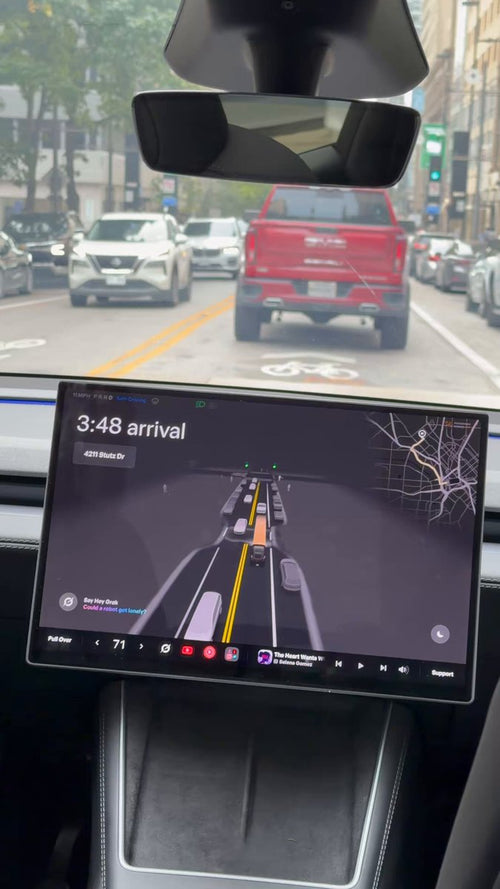
For Tesla owners specifically, Grok's expanding API footprint matters because xAI's models underpin the in-car Grok assistant — broader developer access and third-party distribution typically accelerates the feedback loop that improves model quality over time. Whether Grok STT eventually makes its way into voice-to-text features inside the vehicle remains to be seen, but the infrastructure is clearly being built out.
Sources & reporting notes
The links below identify the material source records used for this report.
- @SpaceXAI on X (2026-07-24T20:17:35.000Z) — Direct source
Source links are preserved as published or accessed. See our editorial standards and corrections policy.
The BASENOR Editorial Desk covers Tesla, SpaceX, and related technology, curating reporting from primary sources — official accounts, regulatory filings, and software release data. Every article passes source-record and fact-checking review before publication. About the newsroom.
This report was curated by the BASENOR Editorial Desk from the sources listed above. Read our editorial standards or email editorial@basenor.com to report an error.