A fatal Tesla crash in Katy, Texas that drew widespread media coverage — and immediate speculation about Autopilot and Full Self-Driving — has been clarified by Tesla's own vehicle data: the driver manually overrode the system by flooring the accelerator. The incident, which occurred on the evening of June 20, 2026, killed 76-year-old Martha Avila after a Tesla Model 3 struck her home. It is a tragedy — but the data tells a very different story than the headlines suggested.

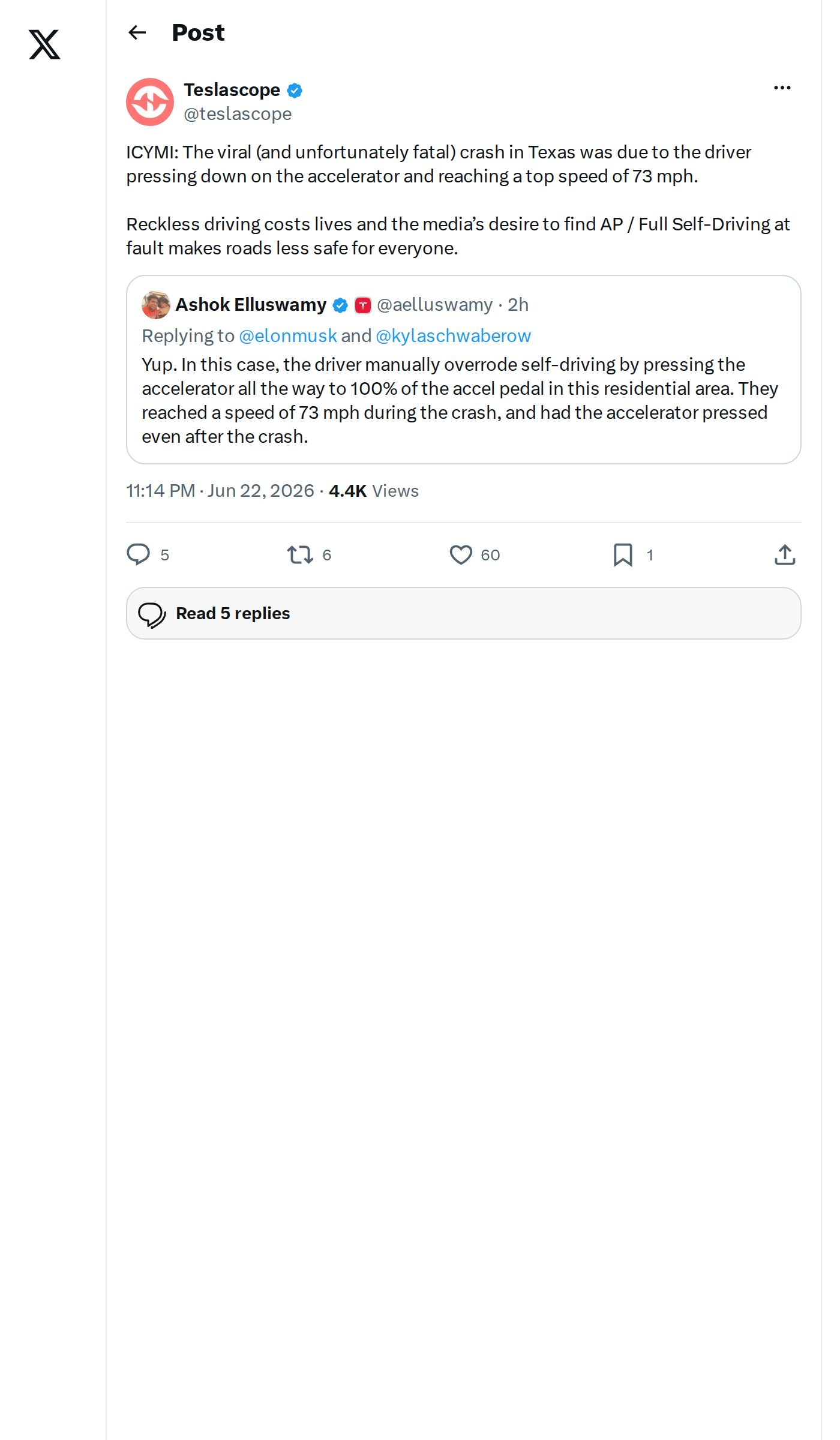
According to Tesla's Head of AI, Ashok Elluswamy, the company's data shows the driver — identified as Michael Butler, 44 — "manually overrode self-driving by pressing the accelerator all the way to 100%." The vehicle reached a top speed of 73 mph, and the accelerator pedal remained fully depressed even after the crash. Butler told Harris County deputies that an automated driving assistance system was active at the time, but Tesla's telemetry directly contradicts any claim that the system was responsible for the outcome. Butler showed no signs of intoxication and was cooperative with investigators. As of June 21, no charges had been filed.
The National Highway Traffic Safety Administration has opened a Special Crash Investigation into the incident, and the Harris County Sheriff's Office is conducting a parallel inquiry. Both investigations are ongoing. That NHTSA is involved is standard procedure for crashes involving vehicles equipped with driver assistance systems — it does not imply the technology failed.
What makes this case worth paying attention to beyond the tragedy itself is the media pattern it reflects. When a Tesla is involved in a serious crash, Autopilot and FSD become the immediate narrative — often before any data is reviewed. That framing has real consequences: it shapes public perception of driver assistance technology in ways that can discourage adoption of systems that, when used correctly, have a strong safety record. As @teslascope noted, the media's reflexive search for an autonomous driving angle "makes roads less safe for everyone." Misattributing crashes to automation creates fear of the wrong thing, while the actual cause — reckless or inattentive driving — goes underexamined.
The investigation remains open, and NHTSA's full findings are still pending. But the core fact is already established by the vehicle's own data: a driver pressed the accelerator to the floor and held it there. That is not a technology failure.
Related Gear
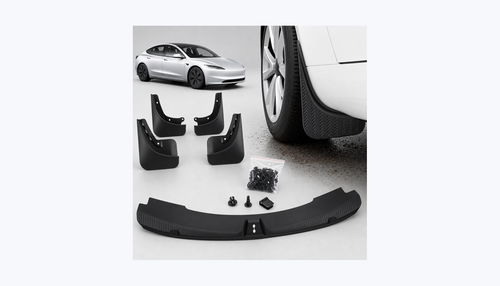
Gear up your Model 3 with tested, custom-fit BASENOR accessories — shop Model 3 accessories →
Sources & reporting notes
The links below identify the material source records used for this report.
- @teslascope on X (2026-06-22T23:14:43.000Z) — Direct source
Source links are preserved as published or accessed. See our editorial standards and corrections policy.
The BASENOR Editorial Desk covers Tesla, SpaceX, and related technology, curating reporting from primary sources — official accounts, regulatory filings, and software release data. Every article passes source-record and fact-checking review before publication. About the newsroom.
This report was curated by the BASENOR Editorial Desk from the sources listed above. Read our editorial standards or email editorial@basenor.com to report an error.