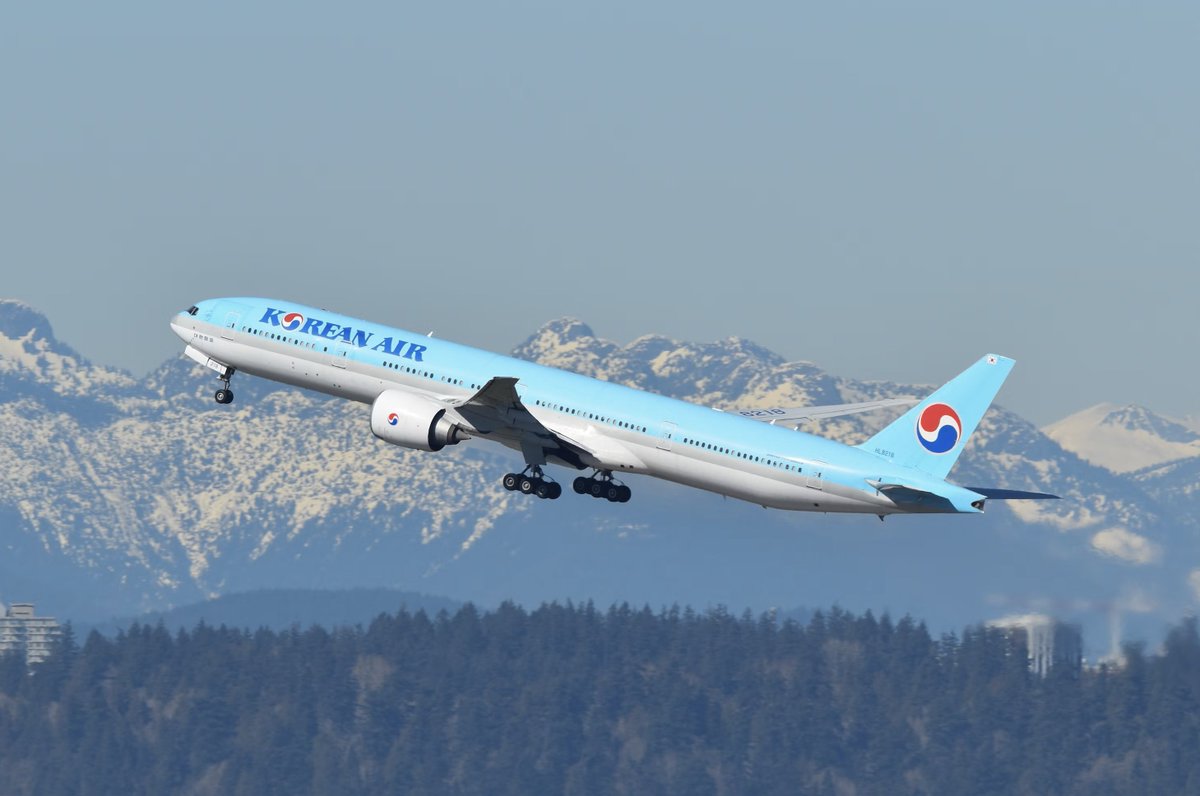
Korean Air is set to become the first South Korean airline to offer Starlink-powered in-flight Wi-Fi, with a launch targeting as early as September 1, 2026. The move replaces a paid legacy system with free, high-speed satellite internet — and the ripple effects extend well beyond one carrier. Here are six details worth knowing.

1. The Launch Date Is Imminent — and Specific
Korean Air is targeting September 1, 2026 as its go-live date, pending final inspection results, according to Korean media reports. That makes this a matter of days away, not months. The airline has been conducting final system checks, and the rollout is set to begin in the second half of 2026 with full fleet coverage planned by the end of 2027. If the September 1 date holds, Korean Air will have moved from announcement to live service remarkably fast.
2. It's Free — Replacing a Service That Cost Up to $20.95
Korean Air's previous in-flight Wi-Fi was a paid service, with long-haul packages running up to $20.95 per flight. Starlink replaces that entirely, at no charge to passengers regardless of cabin class. That's a meaningful shift in how the airline positions connectivity — from an optional paid add-on to a standard part of the travel experience. A Korean Air representative confirmed the free-access policy, saying connectivity is now considered "an essential part of the travel experience."
3. The Speed Jump Is Substantial — Up to 500 Mbps Per Aircraft
Starlink's low-Earth orbit constellation — over 8,000 satellites flying roughly 550 kilometers above the ground — enables data speeds of up to 500 Mbps per aircraft. According to verified reporting, that is up to 20 times faster than the conventional geostationary satellite systems currently used in aviation. The practical difference: passengers will be able to stream Netflix or YouTube, join video calls, and play online games without the lag and throttling that have made in-flight Wi-Fi largely unusable for anything demanding.
4. Gate-to-Gate Connectivity on Long-Haul Widebodies
The initial rollout covers Boeing 777-300ER and Airbus A350-900 aircraft — Korean Air's primary long-haul workhorses. Importantly, the service is gate-to-gate, meaning connectivity begins during departure preparations and continues through arrival. There's no window of disconnection during climb or descent, which has historically been a frustration with older aviation Wi-Fi systems. For business travelers on transpacific routes, that continuity matters.
5. Korean Air Is the First, But Not the Last in the Group
Korean Air's parent conglomerate, Hanjin Group, operates several airlines — and Starlink is scheduled to roll out across all of them. Asiana Airlines, Jin Air, Air Busan, and Air Seoul are all slated to receive Starlink connectivity, with rollout timelines varying by carrier. SpaceX VP of Starlink Business Operations Chad Gibbs confirmed the scope of the deal, noting the partnership covers "Korean Air and Hanjin Group airlines and their guests" fleetwide. This is a group-level infrastructure commitment, not a single-airline pilot program.
6. Starlink's Aviation Footprint Keeps Expanding
Korean Air joins a growing list of carriers that have adopted or announced Starlink for in-flight connectivity, a segment where legacy geostationary systems have long underdelivered. The LEO advantage — lower latency, higher throughput, and a rapidly expanding satellite count — is proving difficult for traditional providers to match on a cost-per-performance basis. For passengers, the practical takeaway is that the gap between ground-level internet and in-flight internet is closing faster than most expected just two years ago. For more on Starlink's commercial expansion, see our SpaceX coverage.
With final inspections underway and a hard target date on the calendar, Korean Air's Starlink launch is one of the more concrete near-term milestones in aviation connectivity. Whether the September 1 date survives those final checks will be the first real test — but the infrastructure commitment across the entire Hanjin Group suggests this is a long-term strategic shift, not a trial run.
Sources & reporting notes
The links below identify the material source records used for this report.
- @SawyerMerritt on X (2026-08-27T14:33:50.000Z) — Direct source
Source links are preserved as published or accessed. See our editorial standards and corrections policy.
The BASENOR Editorial Desk covers Tesla, SpaceX, and related technology, curating reporting from primary sources — official accounts, regulatory filings, and software release data. Every article passes source-record and fact-checking review before publication. About the newsroom.
This report was curated by the BASENOR Editorial Desk from the sources listed above. Read our editorial standards or email editorial@basenor.com to report an error.