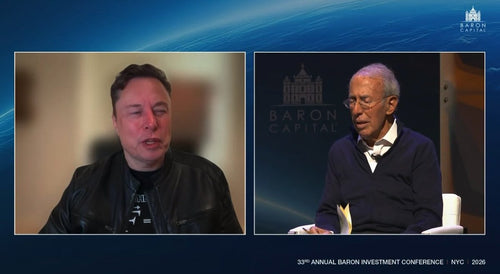

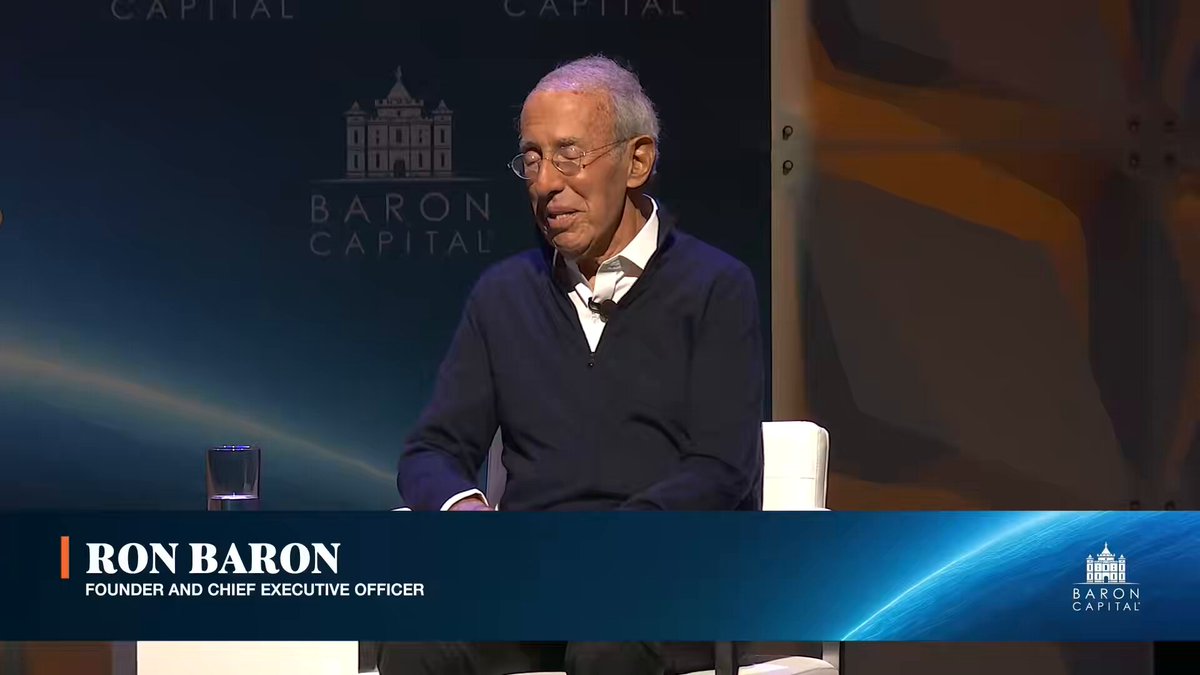
Elon Musk rarely points followers toward third-party summaries of his own words — so when he called a breakdown of his Ron Baron interview 'good,' it was worth a closer look. The fireside chat took place at the 33rd Annual Baron Investment Conference on November 6, held at the Metropolitan Opera House in New York City, and it covered territory that matters directly to Tesla and SpaceX investors alike: revenue trajectories, new infrastructure bets, and a Starship mission just days away.

What is the Baron Investment Conference and why did Musk appear?
Ron Baron is the founder of Baron Capital, a long-term growth investment firm that has held a significant position in Tesla for years. The annual Baron Investment Conference brings together portfolio company executives and institutional investors. Musk joined virtually for a fireside chat — a format that typically yields more candid commentary than a scripted earnings call. The 33rd edition was held at Lincoln Center's Metropolitan Opera House in New York City, with Musk's session slotted for 1:10 PM ET on November 6, 2026.
What valuation did Ron Baron put on SpaceX?
Baron projected SpaceX could be worth between $20 trillion and $50 trillion within ten years, up from an estimated current value of approximately $2 trillion as of mid-October 2026. He also stated that Musk himself believes that projected range is 'way low.' Starlink alone, according to Baron, could account for roughly $14 to $15 trillion of that figure. Baron further suggested that SpaceX's emerging data-centers-in-space business could ultimately dwarf even Starlink in scale.
What did Musk say about data centers in space?
This was one of the more technically specific disclosures from the conversation. Musk confirmed that initial tests for orbital data centers are returning positive results. He cited a satellite carrying an NVIDIA GPU and another carrying a Google TPU, both operating effectively in orbit. One key advantage he highlighted: solar power in space delivers roughly a 30% efficiency gain compared to ground-based installations, because there is no atmospheric attenuation — which also reduces battery storage requirements. Space-based AI centers are currently scheduled to begin launching in 2027.
What is the Terafab megafactory?
Baron highlighted a project Musk is building in Texas: a chip megafactory called Terafab. According to the conference discussion, the facility carries a price tag of approximately $16.8 billion and is described as a roughly 100 million square foot project. The scale puts it among the largest manufacturing facilities ever planned in the United States. Its output would feed AI compute demand across Musk's ventures.
What revenue numbers came up for SpaceX?
According to the discussion, SpaceX revenue is currently tracking toward an annualized run rate above $100 billion by December 2026. Musk's own estimate for SpaceX revenue by December 2027 is over $500 billion — though this figure was explicitly framed as an estimate, not a guarantee. That kind of growth trajectory, if realized, would represent one of the fastest revenue ramps in corporate history.
What did the interview say about Starship?
SpaceX is targeting November 13 for the Starship 15 mission. The goal for this flight is the first simultaneous catch of both the Super Heavy booster and Ship 42 using the launch tower's mechanical arms — what SpaceX calls 'Mechazilla.' If successful, it would mark the first time all major components of an orbital rocket return intact in a single mission, a milestone with significant implications for launch cost economics.
What does this mean for Tesla specifically?
One concrete Tesla data point surfaced during the conference: production at Gigafactory Texas is expected to shift around mid-2027, with Cybertruck output reduced to make room for ramping Cybercab production. That timeline aligns with previous signals that Cybercab volume manufacturing is a 2027 priority. For Tesla owners and investors, the broader takeaway from the Musk-Baron conversation is that Musk is publicly comfortable with very large long-term numbers — and that the infrastructure bets underpinning those numbers (Terafab, orbital data centers, Starship reusability) are already in motion, not theoretical.
🚀 Following the Starship program? See every test flight, official outcome and the next launch window in our SpaceX Starship Tracker.
Related Gear
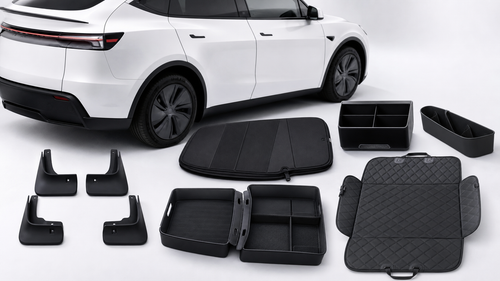
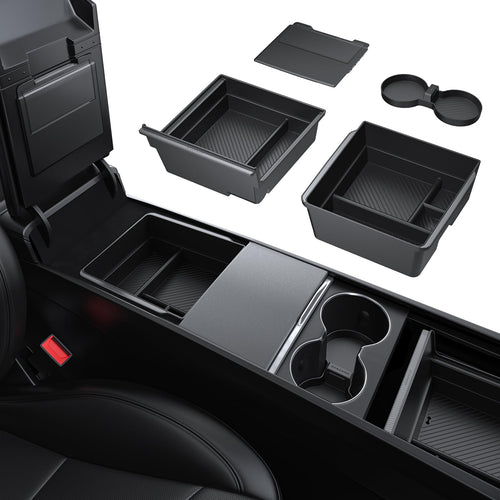
Gear up your Tesla with tested, custom-fit BASENOR accessories — shop Tesla accessories →
Sources & reporting notes
The links below identify the material source records used for this report.
- @elonmusk on X (2026-11-06T23:39:12.000Z) — Direct source
Source links are preserved as published or accessed. See our editorial standards and corrections policy.
The BASENOR Editorial Desk covers Tesla, SpaceX, and related technology, curating reporting from primary sources — official accounts, regulatory filings, and software release data. Every article passes source-record and fact-checking review before publication. About the newsroom.
This report was curated by the BASENOR Editorial Desk from the sources listed above. Read our editorial standards or email editorial@basenor.com to report an error.