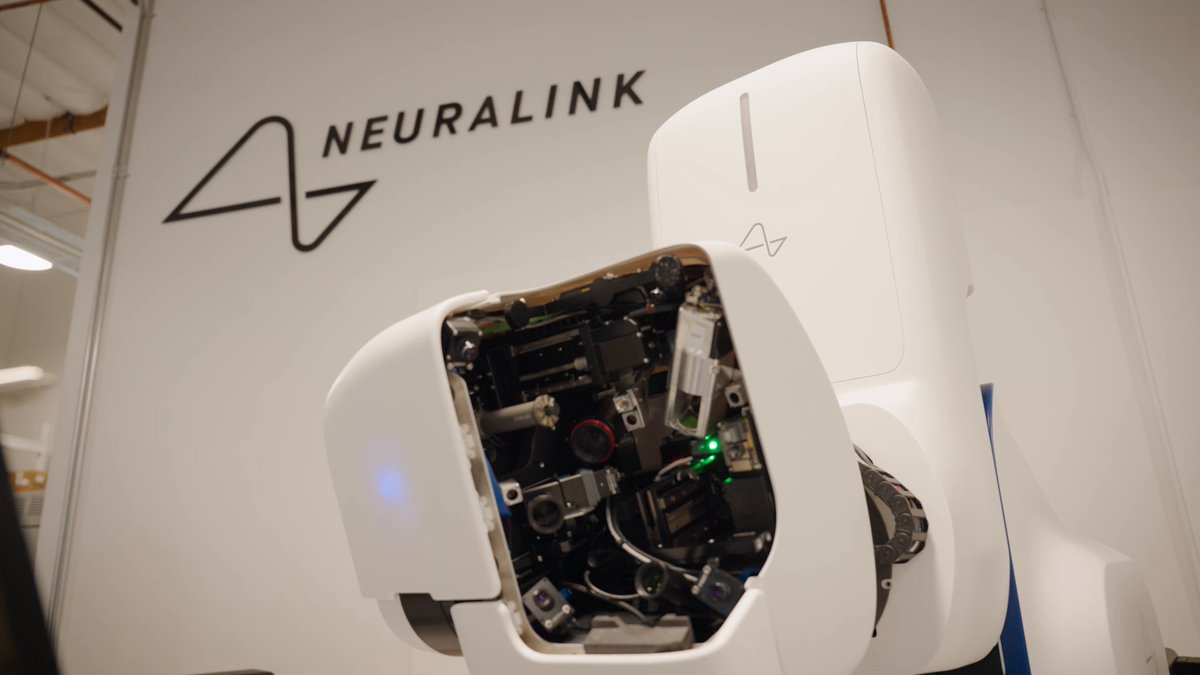
Neuralink has offered a closer look at the surgical robot sitting at the heart of its brain-computer interface procedure — and the engineering behind it is striking. The system is built to insert hundreds of ultra-fine, flexible threads carrying thousands of electrodes, placing them within microns of targeted neurons while simultaneously avoiding blood vessels and compensating for the brain's natural movement in real time.

The precision required here is difficult to overstate. Human neurons are roughly 10–20 microns in diameter, meaning the robot is threading electrodes into territory measured in millionths of a meter — all while the brain itself is subtly pulsing with each heartbeat. Avoiding vasculature isn't just a technical nicety; nicking even a small blood vessel during implantation could cause bleeding that compromises both the patient and the electrode placement. The robot's ability to adapt to real-time brain motion addresses exactly that risk.
This kind of robotic precision is what separates a viable clinical BCI from a research curiosity. Neuralink has been implanting its N1 chip in human patients since early 2024, and the surgical robot has been central to each procedure. Highlighting the robot's capabilities now suggests the company is building public and regulatory confidence as it looks to expand the number of patients in its PRIME study. For anyone watching the broader arc of human-machine interfaces, the surgical tooling is just as consequential as the chip itself.
Sources & reporting notes
The links below identify the material source records used for this report.
- @neuralink on X (2026-05-01T20:28:02.000Z) — Direct source
Source links are preserved as published or accessed. See our editorial standards and corrections policy.
The BASENOR Editorial Desk covers Tesla, SpaceX, and related technology, curating reporting from primary sources — official accounts, regulatory filings, and software release data. Every article passes source-record and fact-checking review before publication. About the newsroom.
This report was curated by the BASENOR Editorial Desk from the sources listed above. Read our editorial standards or email editorial@basenor.com to report an error.