The federal government's top auto safety regulator just opened the door to one of the biggest regulatory shifts in the history of American motoring. On July 9, 2026, National Highway Traffic Safety Administration Administrator Jonathan Morrison said the agency would 'absolutely' consider ending the requirement that driverless vehicles include steering wheels and manual controls — a rule that has effectively forced companies like Tesla, Waymo, and Zoox to design around a driver's seat that no human is ever meant to occupy.
'If you're developing a vehicle that is designed never to be driven by a human operator, it doesn't make any sense to require manual controls,' Morrison told CNBC in the interview flagged by @SawyerMerritt.

Why This Matters for Tesla
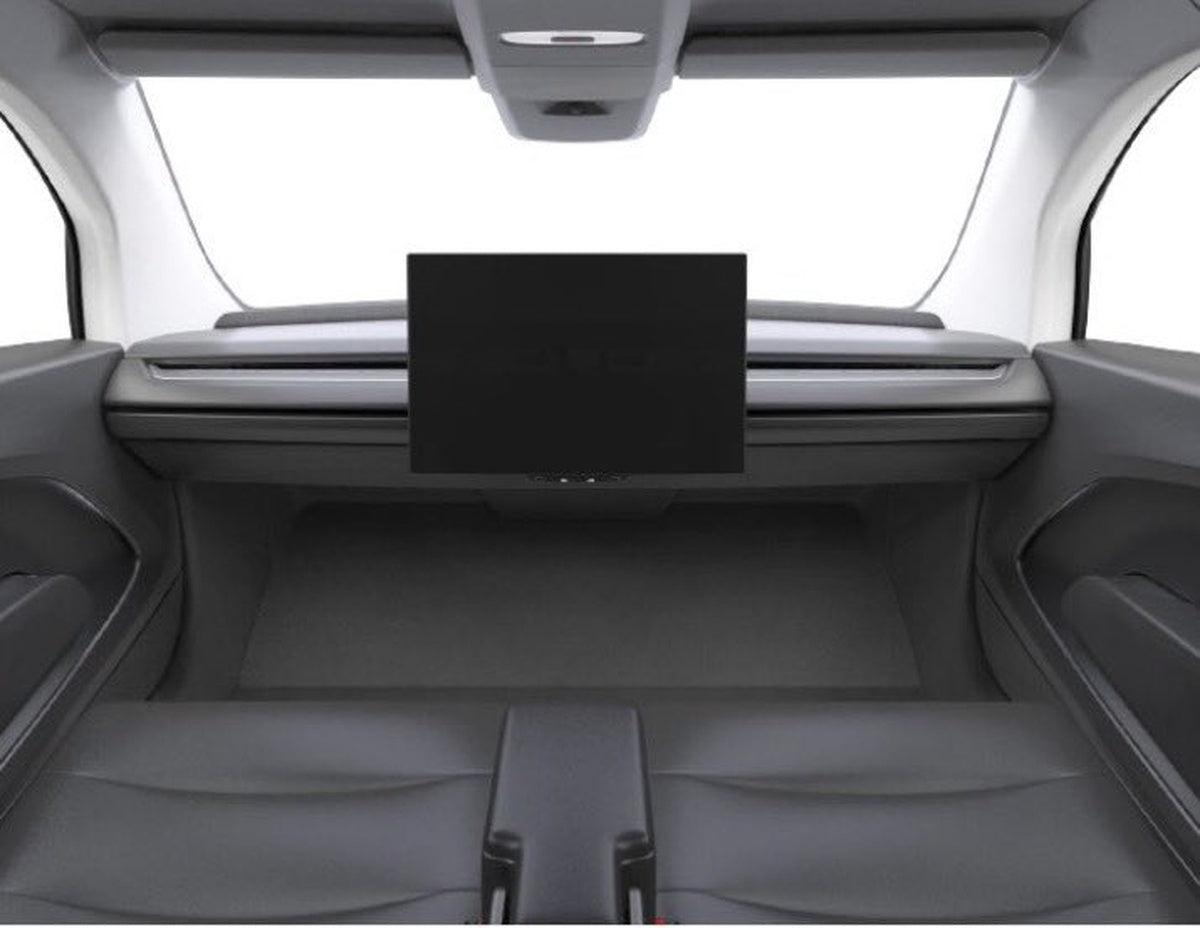
Tesla's Cybercab — the two-seat, purpose-built robotaxi first revealed in October 2024 — has no steering wheel and no pedals. Under current Federal Motor Vehicle Safety Standards (FMVSS), that design has been in a regulatory gray zone. Tesla, Zoox, and other developers have had to either petition NHTSA for exemptions on a per-vehicle basis (capped at 2,500 units per manufacturer per year under existing law) or wait for the agency to formally rewrite the standards.
Morrison's statement is the clearest signal yet that a broader rewrite is on the table. He didn't commit to a timeline or a proposed rule, but 'absolutely' is not language regulators use casually — especially on record with a national business network.
How We Got Here
This isn't happening in a vacuum. NHTSA has been quietly dismantling the assumption that every vehicle needs human controls for more than a year:
- March 2026: NHTSA proposed amending FMVSS No. 102 to exempt fully autonomous vehicles without steering wheels or pedals from the transmission shift position display requirement, according to filings summarized by Crowell & Moring.
- June 2026: The agency proposed updating federal safety standards — an NPRM amending FMVSS No. 135 — to remove the requirement for manual brake pedals in vehicles built exclusively for autonomous operation. The rule is not yet final, with the public comment period open through July 27.
- July 9, 2026 (today): Morrison publicly floats ending the steering wheel requirement itself.
Morrison was confirmed as NHTSA Administrator by the Senate on September 18, 2025, and has moved faster on autonomous vehicle rulemaking than any of his recent predecessors. The pattern is consistent: NHTSA is systematically stripping out the human-operator assumptions embedded in vehicle safety rules written decades before Level 4 autonomy existed.
Key Regulatory Milestones
| Date | Action | Impact |
|---|---|---|
| Sep 18, 2025 | Morrison confirmed as NHTSA Administrator | New leadership signals AV-friendly posture |
| Mar 2026 | Proposed FMVSS 102 amendment | Exempts driverless AVs from shift display rule |
| Jun 2026 | Brake pedal requirement — removal proposed (NPRM) | Would clear path for pedal-free designs |
| Jul 9, 2026 | Steering wheel requirement 'on the table' | Final structural rule blocking Cybercab-style designs |
The Safety Counterweight
The same week Morrison signaled flexibility on manual controls, NHTSA issued a pointed letter to autonomous vehicle developers about a very different problem. On July 8, 2026, the agency wrote to AV companies urging them to address a 'clear pattern' of driverless vehicles interfering with law enforcement and other first responders at emergency scenes. NHTSA has documented multiple incidents where autonomous vehicles entered active emergency scenes, blocked first responders, or failed to recognize hazards.
The agency said it would schedule meetings with developers by the end of July 2026 to seek solutions. In other words: NHTSA is willing to loosen rules on physical design, but it is simultaneously tightening scrutiny on real-world behavior. That's a significant framing — the regulator is trading hardware requirements for behavioral accountability.
What It Means for Tesla Owners
Nothing changes today for the Model 3, Model Y, Model S, Model X, or Cybertruck you already own. Those vehicles were designed and certified with steering wheels because they are meant to be driven by humans, and FSD (Supervised) still requires driver attention. This rulemaking, if it advances, affects purpose-built driverless vehicles — meaning the Cybercab and the broader Robotaxi fleet Tesla plans to deploy.
The practical consequence is that Tesla's regulatory path to mass-producing Cybercab gets shorter. Instead of relying on the 2,500-unit annual exemption cap — a hard ceiling that would make a genuine ride-hailing fleet impossible to scale — Tesla could eventually certify Cybercab under a modernized FMVSS framework designed for the vehicle it actually is. That's the difference between a limited pilot and a nationwide deployment.
What to Watch Next
- A Notice of Proposed Rulemaking (NPRM) from NHTSA specifically addressing steering wheel and manual control requirements. Morrison's comment is a signal, not a rule — the formal process starts with an NPRM and a public comment period.
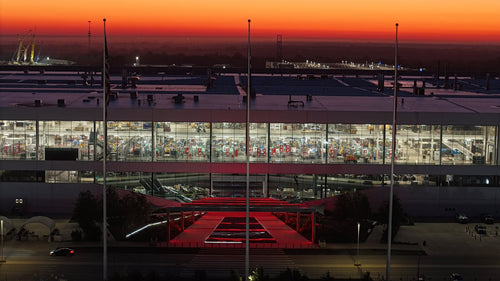
- Cybercab production timeline updates from Tesla. The company has targeted 2026 for initial production at Giga Texas. Any acceleration would likely be paired with regulatory clarity.
- NHTSA's late-July meetings with AV developers on first responder incidents. How the agency balances loosening design rules against tightening behavioral standards will shape the compliance burden for every AV operator.
- State-level responses. California, Texas, and Arizona already have their own AV frameworks. Federal preemption on vehicle design doesn't automatically translate to state-level operational approval.
Morrison's 'absolutely' is the loudest signal yet that federal vehicle standards are being rewritten around the reality that some cars simply don't need drivers. Whether that translates into a final rule in months, years, or a full presidential term is the open question — but the direction of travel is no longer ambiguous.
Related Gear
Gear up your Tesla with tested, custom-fit BASENOR accessories — shop Tesla accessories →
🚕 Following the Robotaxi rollout? See every operating city, launch date and announced market in our Tesla Robotaxi Tracker.
Sources & reporting notes
The links below identify the material source records used for this report.
- @SawyerMerritt on X (2026-07-09T15:51:17.000Z) — Direct source
- @SawyerMerritt on X (2026-07-09T15:51:18.000Z) — Direct source
Source links are preserved as published or accessed. See our editorial standards and corrections policy.
The BASENOR Editorial Desk covers Tesla, SpaceX, and related technology, curating reporting from primary sources — official accounts, regulatory filings, and software release data. Every article passes source-record and fact-checking review before publication. About the newsroom.
This report was curated by the BASENOR Editorial Desk from the sources listed above. Read our editorial standards or email editorial@basenor.com to report an error.