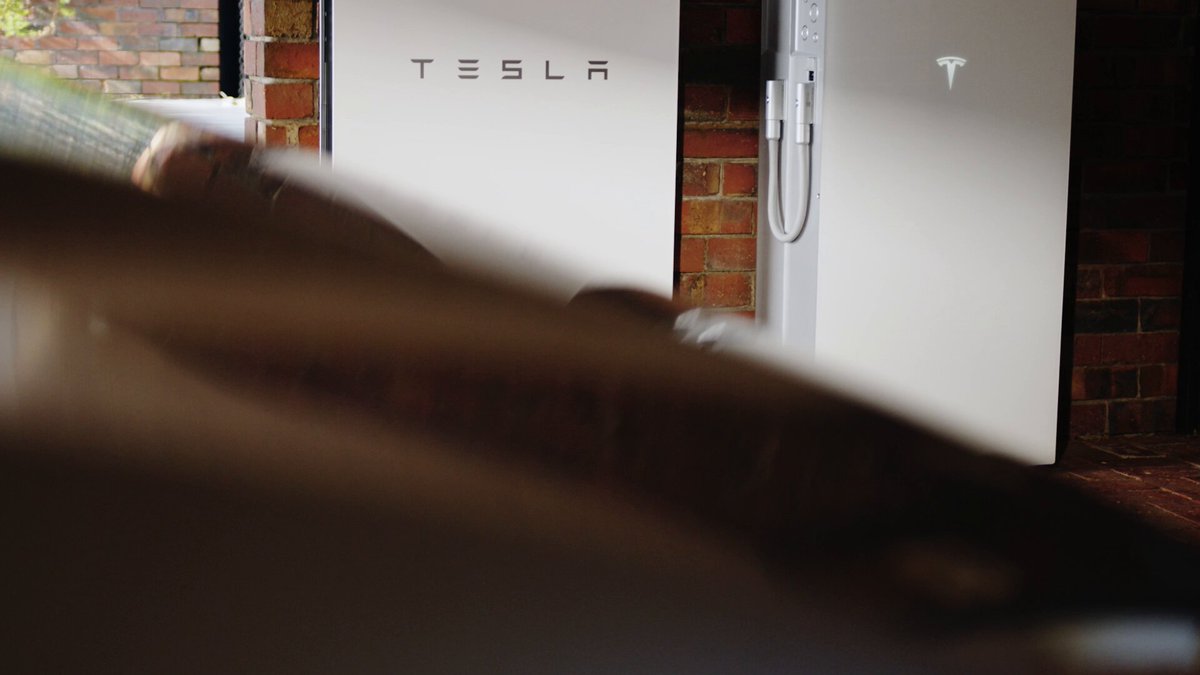
Tesla Australia & New Zealand has officially announced the availability of Powerwall 3, and the headline feature isn't just the boosted power output — it's the confirmation that the new unit will play nicely with the Powerwall 2 systems already installed on tens of thousands of Australian homes. For owners who bought in during the last home-battery boom, that reversal of Tesla's earlier stance on compatibility is arguably bigger news than the hardware itself.

What's Actually New
Powerwall 3 has been shipping in the United States since 2024 and rolled into Australia and New Zealand in August 2024, according to pv-magazine and Australian installer reporting. What Tesla is highlighting now is the combination of two things maturing at once: the local supply chain for the third-generation unit, and the software-enabled backward compatibility that arrived via firmware update in late July 2026.
The core hardware story remains what it was at launch. Powerwall 3 delivers a continuous 11.04 kW of AC output in the Australian configuration (11.5 kW in other markets) — more than double the 5 kW that Powerwall 2 owners have lived with for years. Usable storage stays at 13.5 kWh per unit, but the built-in solar inverter now accepts up to 20 kW of DC solar input across three 6.6 kW MPPTs on the Australian model, according to Clean Energy Reviews. In practical terms, that means a single Powerwall 3 can front-end a large rooftop array without a separate string inverter.
The Compatibility Reversal Matters Most
For years, Tesla's official position was that Powerwall 2 and Powerwall 3 could not operate together in the same system. Owners who wanted more storage had to either add another Powerwall 2 (if they could still find one) or start over. That changed on July 28, 2026, when Tesla confirmed that software version 26.26 and later enables Powerwall 2, Powerwall 3, and Powerwall 3 Expansion units to run as a single system, per reporting from Electrek and ess-news.
The supported ceiling is significant: up to four Powerwall 2 units, one Powerwall 3, and up to three Powerwall 3 Expansion units can coexist, for a combined storage pool of roughly 108 kWh. There is one caveat worth flagging — on three-phase grid connections where a Powerwall 3 is added to an existing Powerwall 2 system, the Powerwall 3's output is limited to 5 kW to match. Single-phase installations don't face the same throttle.
Key Figures
| Spec | Powerwall 2 | Powerwall 3 |
|---|---|---|
| Continuous AC output | 5 kW | 11.04 kW (AU) |
| Usable capacity | 13.5 kWh | 13.5 kWh |
| Integrated solar inverter | No | Yes — up to 20 kW DC |
| Max stack (same generation) | 10 units | 4 units (54 kWh) |
| Mixed-generation stack | Up to ~108 kWh (4× PW2 + 1× PW3 + 3× PW3 Expansion) | |
Australian installed pricing for a single Powerwall 3 currently sits in the AUD $13,500–$18,000 range including the required Backup Gateway, according to multiple Australian installer quotes compiled by Solar4Life and Elite Power Group. That is broadly in line with what Powerwall 2 cost in the back half of its production run, which is a meaningful signal: buyers get roughly 2.2× the continuous power and an integrated inverter without a step-change in sticker price.
How We Got Here
Tesla first showed Powerwall 3 in 2023 and began US volume deliveries in 2024. Australia and New Zealand followed in the second half of that year, and Germany received the three-phase Powerwall 3P variant in April 2026 — a unit that pushes up to 15.4 kW continuous with 21 kW peak, per ess-news. The July 2026 software update stitched all of that hardware together for the first time.
The backward-compatibility reversal is best understood in the context of the residential battery market. Powerwall 2 installations in Australia number in the six figures, and telling those owners their next expansion had to be a full rip-and-replace was a competitive liability against LG, Sungrow, and BYD systems that offered modular growth paths. The 26.26 firmware fixes that gap without any hardware retrofit on the older units.
What Owners Should Watch Next
Three things are worth tracking over the next two quarters. First, whether Tesla extends the mixed-stack ceiling beyond 108 kWh — larger homes and small commercial users would benefit. Second, whether the three-phase 5 kW throttle on mixed Powerwall 2/3 systems gets loosened, either through firmware or a hardware bridge module. Third, whether the Powerwall 3P variant that launched in Germany makes its way to Australia and New Zealand, where three-phase grid connections are common in newer builds.
For existing Powerwall 2 owners, the practical takeaway is straightforward: expansion is now an option, not a rebuild. Check that your system is running firmware 26.26 or later in the Tesla app, then talk to a certified installer about sizing. For anyone starting from scratch, Powerwall 3's integrated inverter has quietly become the deciding factor in most Australian solar-plus-storage quotes we've seen — dropping a separate string inverter from the bill of materials tends to close the price gap with cheaper competitors on its own.
Related Gear
Gear up your Tesla with tested, custom-fit BASENOR accessories — shop Tesla accessories →
Sources & reporting notes
The links below identify the material source records used for this report.
- @TeslaAUNZ on X (2026-08-06T04:26:41.000Z) — Direct source
Source links are preserved as published or accessed. See our editorial standards and corrections policy.
The BASENOR Editorial Desk covers Tesla, SpaceX, and related technology, curating reporting from primary sources — official accounts, regulatory filings, and software release data. Every article passes source-record and fact-checking review before publication. About the newsroom.
This report was curated by the BASENOR Editorial Desk from the sources listed above. Read our editorial standards or email editorial@basenor.com to report an error.