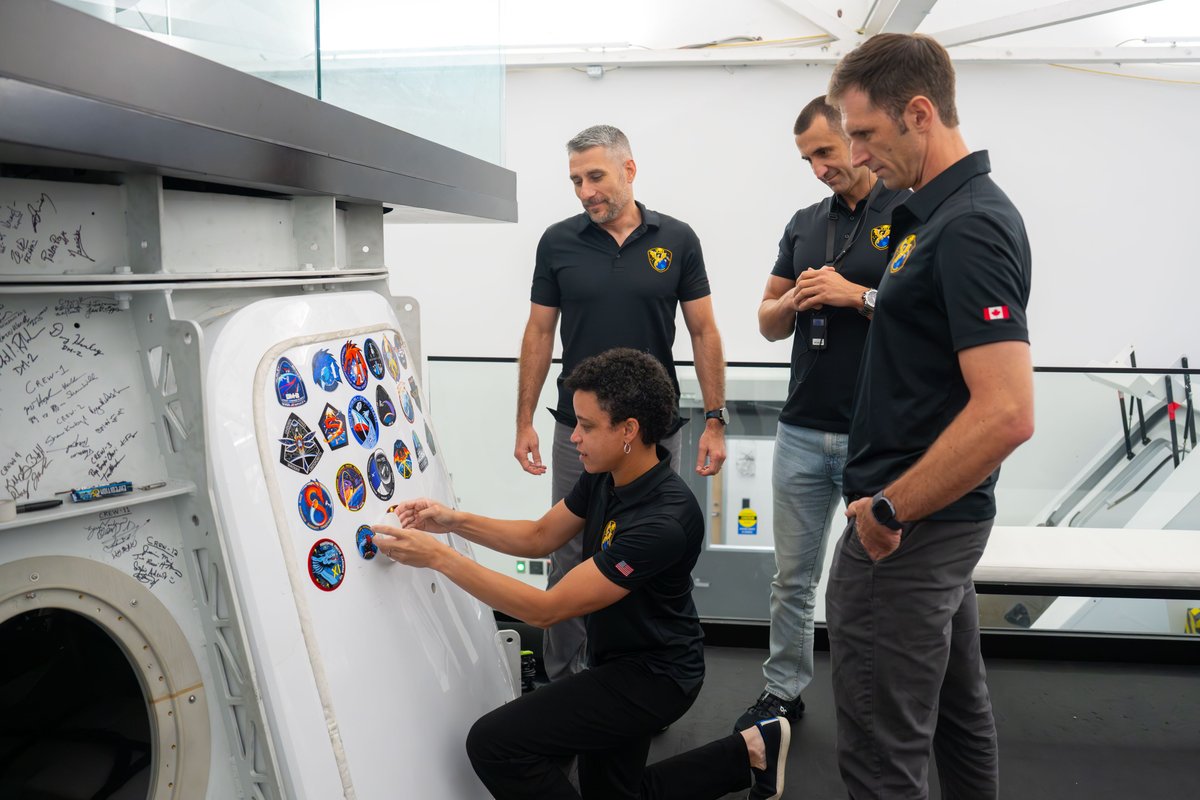
SpaceX confirmed this week that the Crew-13 mission has wrapped up training in California and is now targeting a September launch to the International Space Station aboard a Falcon 9 rocket and Crew Dragon spacecraft. According to NASA and SpaceX, the current target date is September 12, 2026, at 6:30 PM ET — making this one of the more detail-rich crew rotation milestones in the Commercial Crew Program's history.

The Mission at a Glance
Crew-13 is the thirteenth operational flight under NASA's Commercial Crew Program and the twenty-first crewed orbital flight of a Crew Dragon spacecraft. The vehicle flying the mission is Crew Dragon Grace, making its second trip to the station. It will lift off from Space Launch Complex 40 (SLC-40) at Cape Canaveral Space Force Station in Florida on a Falcon 9 Block 5 rocket.
The crew is scheduled for a 180-day stay aboard the ISS, supporting Expedition 75/76 with scientific research, technology demonstrations, and station operations. Docking is planned at the Harmony forward port.

The Crew
| Astronaut | Agency | Role | Flight |
|---|---|---|---|
| Jessica Watkins | NASA | Commander | 2nd spaceflight |
| Luke Delaney | NASA | Pilot | 1st spaceflight |
| Joshua Kutryk | Canadian Space Agency | Mission Specialist | 1st spaceflight |
| Sergey Teteryatnikov | Roscosmos | Mission Specialist | 1st spaceflight |
Several firsts are embedded in this crew roster. Commander Jessica Watkins becomes the first NASA astronaut to fly twice on a Crew Dragon. Joshua Kutryk, flying for the Canadian Space Agency, will be the first Canadian to fly as part of the Commercial Crew Program. Three of the four crew members are flying to orbit for the first time.

Cybertrucks on the Launch Pad
One detail that stands out beyond the crew roster: for the first time, Tesla Cybertrucks will serve as the emergency crew escape vehicles on the launch pad, replacing the Mine-Resistant Ambush Protected (MRAP) vehicles that have been the standard for years. According to reports, this is part of SpaceX's shift toward a private rescue capability at SLC-40. It is an unusual intersection of two Elon Musk ventures — and a visible signal of how SpaceX is modernizing ground operations at Cape Canaveral.
With training complete and the September 12 window now on the books, the next major milestone will be the rollout of the Falcon 9 to the pad. For those following the Commercial Crew Program, Crew-13 carries more historic weight than a typical rotation flight — and the Cybertruck detail alone will make the launch pad imagery worth watching. Follow our SpaceX coverage for updates as the launch date approaches.
Sources & reporting notes
The links below identify the material source records used for this report.
- @SpaceX on X (2026-08-04T18:55:01.000Z) — Direct source
Source links are preserved as published or accessed. See our editorial standards and corrections policy.
The BASENOR Editorial Desk covers Tesla, SpaceX, and related technology, curating reporting from primary sources — official accounts, regulatory filings, and software release data. Every article passes source-record and fact-checking review before publication. About the newsroom.
This report was curated by the BASENOR Editorial Desk from the sources listed above. Read our editorial standards or email editorial@basenor.com to report an error.