📌 UPDATE — August 22, 2026
The California half of today's double launch is now complete. SpaceX's Falcon 9 booster B1100-9 lifted off from SLC-4E at Vandenberg at 7:27 AM UTC, carrying 27 Starlink satellites for the Group 15-20 mission. NASASpaceflight noted foggy conditions at the pad, though the launch proceeded without issue. This marks the ninth flight for booster B1100-9, continuing SpaceX's rapid Starlink constellation expansion.
LAUNCH! SpaceX Falcon 9 B1100-9 launches Starlink Group 15-20 from, checks fog, SLC-4E, Vandenberg.
View on X →📌 UPDATE — August 16, 2026
Both launches have now been confirmed successful. The Canaveral Falcon 9 lifted off at 01:12 UTC carrying eight Globalstar-2R communication satellites, followed by the Vandenberg Falcon 9 at 01:50 UTC deploying USSF-366 — a classified U.S. Space Force payload described only as "an unknown number of comms sats." The roughly 38-minute gap between launches marks a tight double-header for SpaceX's Florida and California pads. Spaceflight historian Jonathan McDowell (@planet4589) logged both launches alongside a third unrelated mission — a Chinese CZ-12 rocket from Hainan at 04:10 UTC carrying Xingwang Digui Group 24 satellites.
📌 UPDATE — August 16, 2026
Both launches have now successfully lifted off. SpaceX confirmed the Globalstar 2-R Mission 1 and USSF-366 payloads are on their way to orbit, completing the double Falcon 9 launch day. NASASpaceflight reported both vehicles away just after midnight UTC, with SpaceX posting a live watch link for the Globalstar mission at approximately 01:00 UTC. No anomalies have been reported for either mission.
SpaceX is running two Falcon 9 missions on the same day, August 15, 2026 — one from each coast. Both rockets were confirmed vertical earlier this evening, and the launch windows are just hours apart. Here's everything worth knowing before both countdowns begin.

1. Two Rockets, Two Coasts, One Day
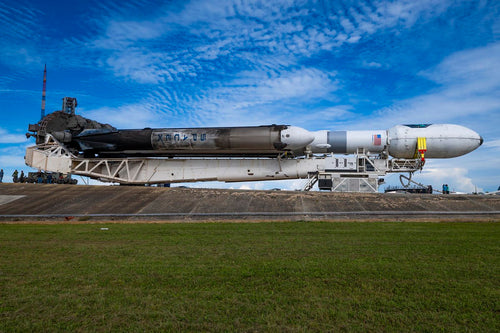
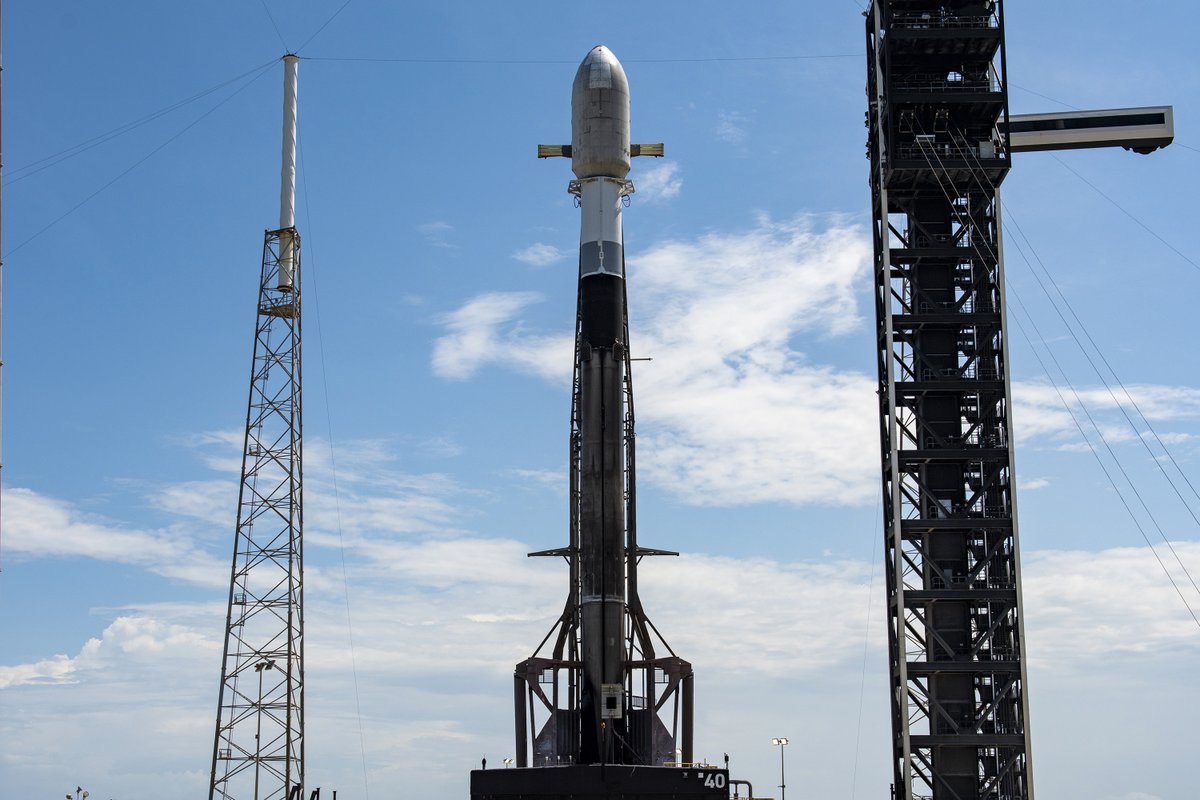
SpaceX confirmed both Falcon 9 boosters are standing vertical — one at Space Launch Complex 40 (SLC-40) at Cape Canaveral Space Force Station in Florida, and one at Space Launch Complex 4E (SLC-4E) at Vandenberg Space Force Base in California. Running simultaneous pad operations on opposite coasts is a routine demonstration of SpaceX's launch cadence, but it's still worth noting: these are independent missions with different customers, different payloads, and different landing profiles happening within the same evening window.
2. First Up: Globalstar 2-R Launch 1 From Florida
The Florida mission carries nine Globalstar HIBLEO-4 satellites into low Earth orbit. The 15-minute launch window opens at 9:12 p.m. ET from pad 40, with a backup opportunity Sunday, August 16, opening at 8:54 p.m. ET. Weather is favorable — according to SpaceX's forecast, there's a 90% chance of "Go" conditions. The booster supporting this mission, B1090, is on its 14th flight. After separation, it will attempt a Return to Launch Site (RTLS) landing at Landing Zone 40, adjacent to the pad itself.

3. Second Up: USSF-366 From Vandenberg
The California mission is a classified payload for the United States Space Force, launching from SLC-4E at a targeted liftoff time of 6:50 p.m. PT. Note that the Background Research lists an earlier target time of 2:52 p.m. PT — the official SpaceX tweet supersedes that with the updated 6:50 p.m. PT target. A backup opportunity exists Sunday, August 16, at 2:38 p.m. PT. Unlike the Florida mission, the booster will not return to land — it will touch down on the "Of Course I Still Love You" droneship stationed in the Pacific Ocean.
4. Booster Experience on Both Missions Is Significant
Neither of these is a new booster. The Globalstar mission flies B1090 on its 14th flight. The USSF-366 booster is on its 18th flight — a meaningful data point for a classified national security mission. The U.S. Space Force's willingness to fly a heavily-used booster on a USSF mission reflects the confidence that's built up around Falcon 9 reusability over years of operational history. An 18-flight booster on a government national security payload would have been unthinkable a decade ago.
5. Sonic Boom Possible for Southern California Residents
If you're in Santa Barbara, San Luis Obispo, or Ventura counties in California, there's a moderate chance you'll hear a sonic boom during the USSF-366 launch, according to SpaceX. This is a standard byproduct of the booster's supersonic descent toward the droneship recovery zone in the Pacific. No action is needed — just don't be startled if you hear a sharp crack in the evening sky. It means the booster is on its way to another successful recovery.
Both missions have backup windows on Sunday if anything scrubs tonight, so the double-header could slip by 24 hours. Keep an eye on SpaceX's official X account for real-time updates on both countdowns — the Globalstar window opens first, just after 9 p.m. ET. For more on SpaceX missions and launch coverage, see our SpaceX coverage.
Sources & reporting notes
The links below identify the material source records used for this report.
- @SpaceX on X (2026-08-15T21:39:14.000Z) — Direct source
- @SpaceX on X (2026-08-15T21:40:56.000Z) — Direct source
- @SpaceX on X (2026-08-15T21:43:09.000Z) — Direct source
Source links are preserved as published or accessed. See our editorial standards and corrections policy.
The BASENOR Editorial Desk covers Tesla, SpaceX, and related technology, curating reporting from primary sources — official accounts, regulatory filings, and software release data. Every article passes source-record and fact-checking review before publication. About the newsroom.
This report was curated by the BASENOR Editorial Desk from the sources listed above. Read our editorial standards or email editorial@basenor.com to report an error.