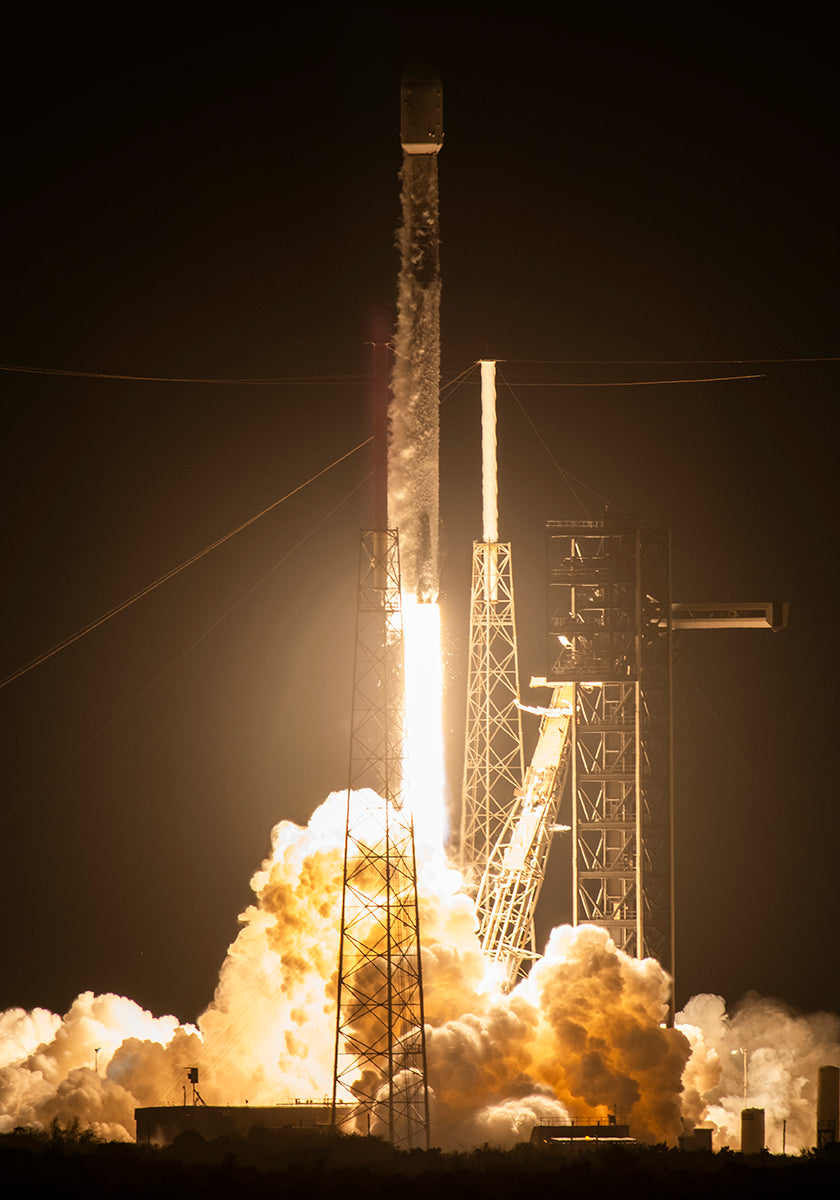
SpaceX lifted off from Space Launch Complex 40 at Cape Canaveral early Wednesday morning, sending three commercial satellites into low Earth orbit on a booster making its 30th flight. Here's a breakdown of what happened, what was on board, and what's coming next from the same pad.

What launched this morning?
A Falcon 9 rocket carried three AST SpaceMobile BlueBird Block 2 satellites — designated BlueBird 11, 12, and 13 — into low Earth orbit. According to Space.com, these are among the largest commercial satellites ever deployed in LEO, designed to provide direct-to-cell broadband service to standard smartphones without any special hardware on the user's end. Liftoff occurred at 3:50 a.m. EDT (0650 GMT) from SLC-40 at Cape Canaveral Space Force Station.
How did the booster perform?
The Falcon 9 first stage completed its 30th flight — a significant milestone for a single booster. Approximately 8.5 minutes after liftoff, it landed successfully on the A Shortfall of Gravitas droneship in the Atlantic Ocean. SpaceX's booster reuse program has made this level of flight heritage routine, but a 30-flight booster still represents a meaningful data point for the reliability of the reusable launch architecture.

What are BlueBird satellites and why do they matter?
AST SpaceMobile's BlueBird Block 2 satellites are purpose-built for direct-to-cell connectivity — meaning they can communicate directly with unmodified smartphones already in consumers' pockets. According to reporting from Space.com, the Block 2 generation represents a significant step up in capability from the company's earlier test hardware. Deploying three at once via Falcon 9 accelerates AST SpaceMobile's path toward a commercially viable global coverage network.
What's next from Pad 40?
SLC-40 doesn't sit idle for long. According to launch schedule data from SpaceLaunchSchedule.com, SpaceX is targeting August 10 for the next Falcon 9 mission from the same pad — a Starlink Group 10-19 mission carrying 29 Starlink V2 Mini optimized satellites. The launch window opens at 10:49 a.m. EDT. That booster will be on its 18th flight, and the landing target is again the A Shortfall of Gravitas droneship.

Why does Pad 40 handle so many missions?
SLC-40 is SpaceX's primary workhorse launch pad at Cape Canaveral, handling the bulk of commercial and Starlink missions out of Florida. Its rapid turnaround capability — often just days between launches — is central to SpaceX's high-cadence launch strategy. The August 5 and August 10 missions, separated by just five days, illustrate exactly how hard the pad is being worked. For context, SpaceX has been averaging more than one Falcon 9 launch per week across its combined Florida and California facilities.
With the BlueBird constellation growing and Starlink Group 10-19 queued up for next week, Pad 40 shows no sign of slowing down. For the latest from SpaceX, follow our SpaceX coverage.
Sources & reporting notes
The links below identify the material source records used for this report.
- @SpaceX on X (2026-08-05T09:43:05.000Z) — Direct source
Source links are preserved as published or accessed. See our editorial standards and corrections policy.
The BASENOR Editorial Desk covers Tesla, SpaceX, and related technology, curating reporting from primary sources — official accounts, regulatory filings, and software release data. Every article passes source-record and fact-checking review before publication. About the newsroom.
This report was curated by the BASENOR Editorial Desk from the sources listed above. Read our editorial standards or email editorial@basenor.com to report an error.